EYE ON THE NEWS – LET’S MAKE EVERY DAY “WORLD TURTLE DAY”!

For the last 20 years, on May 23, turtle lovers everywhere have emerged to honor these shelled reptiles that have roamed the Earth for more than 200 million years. The over 350 known species of turtles alive today are found on every continent, except Antarctica. But despite their wide distribution, most turtles are endangered due to loss of habitat, illegal wildlife trade, and hunting and fishing. World Turtle Day aims to change that by raising awareness about their plight and encouraging conservation efforts.

Visit this website and find out how you can help.

https://www.tortoise.com/

EYE ON THE NEWS CORONAVIRUS, YOUR FURRY COMPANIONS, AND WILDLIFE! LETS KEEP EVERYONE SAFE!

Photo credit: JC Gellidon from unspash.com

We are all doing our part to help others stay healthy – but does that include others’ companion animals as well? In these jarring quarantine times, social distancing and isolation can really make one go a bit stir-crazy. Those of us with companion animals are quite lucky. Our little friends are delighted that suddenly their humans don’t have to come and go all the time, leaving them for hours to go to their mysterious outside-world jobs.  In return, we get to revel in their sweet affections and adorable antics.  Of course, we can cuddle on the couch while we read or Skype our friends, but they only have us. [BTW, if we only have one dog or cat, we might want to consider adopting another now that we realize how important companionship is. For me, as much as I love animals, I would not want to be the only one of my own species forever.]

When Covid first started making headlines, the general consensus was that cats and dogs could not contract COVID-19. But later, the first American case of a companion pet diagnosed with COVID-19 was discovered.

A sweet pug in North Carolina, Winston, was living with his four-person family, three of whom contracted the virus as well.  A story appeared on www.wbur.com that said, “One may assume Winston got sick because pugs are known for having respiratory issues due to their short snouts, but Winston’s family also owns another pug and a cat — who both tested negative.”  

Then, according to the same source, two companion cats who had been living with a Covid-19 positive human also became Covid-19 positive. 

After that, eight tigers and lions at the Bronx Zoo also tested Covid-19 positive.  Their zookeeper was Covid-19 positive! 

The question that’s still unanswered is whether humans  can get the virus from Covid-19 positive companion animals.

According to a CNN report,  Dr. Anthony Fauci, the nation’s top infectious disease specialist, said in a press briefing last week that “there is no evidence whatsoever that we’ve seen, from an epidemiological standpoint, that pets can be transmitters within the household.”

Currently, the CDC reports here

https://www.cdc.gov/coronavirus/2019-ncov/daily-life-coping/pets.html :

CDC is aware of a small number of pets worldwide, including cats and dogs, reported to be infected with the virus that causes COVID-19, mostly after close contact with people with COVID-19.

Based on the limited information available to date, the risk of animals spreading COVID-19 to people is considered to be low.

It appears that the virus that causes COVID-19 can spread from people to animals in some situations.

Treat pets as you would other human family members – do not let pets interact with people or animals outside the household. If a person inside the household becomes sick, isolate that person from everyone else, including pets.

This is a rapidly evolving situation and information will be updated as it becomes available.

In a CNN article, William Schaffner, a professor of preventative medicine and infectious disease at Vanderbilt University School of Medicine in Nashville, said that it is extremely rare for a virus to jump from an animal to a human.” However, Schaffner also asserted that “it would be a good idea for people who are sick to social distance themselves from their pets, as well as their family members.” This is tragic news for anyone with companion animals, but loving them means keeping them safe.

And, what about wild animals?  The CDC website states, “Because wildlife can carry other diseases, even without looking sick, it is always important to enjoy wildlife from a distance.”  Because of the chance of transmission between wildlife and humans, and the fact that still so little is known, we should be avoiding contact with animals in nature, not only are we protecting ourselves, but we are protecting them as well.  

Show your love for your companion animals and wildlife by securing their health – everyday!

By the way, CNN ends their article with this uplifting note: “Winston is also doing well. He is getting lots of walks, and enjoying following his family around the house to keep an eye on what they’re doing.”

Here are some websites to visit for more information. 

https://www.cdc.gov/coronavirus/2019-ncov/daily-life-coping/pets.html

https://www.cdc.gov/coronavirus/2019-ncov/faq.html#COVID-19-and-Animals

https://www.cnn.com/2020/04/28/us/coronavirus-us-pug-wellness-trnd/index.html

https://www.wbur.org/hereandnow/2020/04/30/pets-coronavirus

https://www.cnn.com/2020/04/02/health/cats-dogs-ferrets-coronavirus-wellness/index.html

WORLD’S FIRST MARINE CEMETERY

WORLD’S FIRST MARINE CEMETERY

MARINE WOES

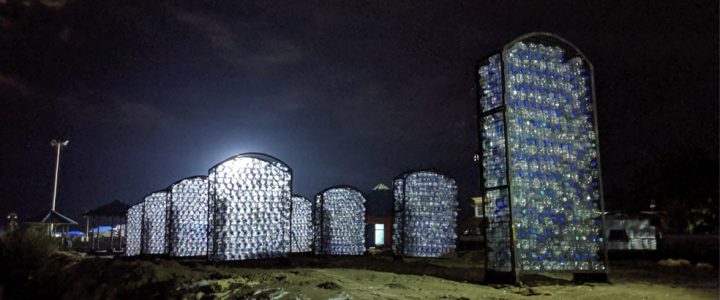
The world’s first Marine Cemetery at Kozhikode in Kerala, India is making a compelling statement on the state of the marine life of the country and the world.

Did you know that the amount of plastic we have generated on earth is actually enough to create a walkway to another planet? Well as startling as it sounds, this is true and what is disheartening is that water and plastic pollution along with overexploitation and climate change have caused the extinction of 15 marine species and threatens the lives of 700 more currently.

CONSERVATION CUES

World Wildlife Conservation Day is celebrated in 4th December every year and this year the southern state of Kerala opened the world's first Marine Cemetery. Made out of single-use plastic bottles the cemetery is located at Beypore beach, Kozhikode. Built by Jellyfish Watersports and Beypore Port department, the effort has been driven by climate activist Aakash Ranison. The idea behind this place is that it aims to spread awareness about the devastating effects of single-use plastic, urban and industrial pollution and overfishing. Aakash Ranison, climate activist says “This Marine Cemetery is built to jolt mankind, to make them realize the blunder they have done. Parallelly we want to educate them about the fact that flora and fauna in and around our rivers and oceans are on red alert and let them know it is time to take steps towards course-correction.” Incidentally more that 50 percent of beach litter is plastic waste. This Cemetery pays respect to eight critically endangered marine species as well as the endemic freshwater fish, Miss Kerala (Sahyadria denisonii). The marine species representing their endangered marine family includes Seahorse (Hippocampus), Parrotfish (Scariidae), Leatherback turtles (Dermochelys coriacea), Eagle Rays (Aetomylaeus vespertilio), Sawfish (Pristidae), Dugong (Dugongidae), Zebra shark (Stegostoma fasciatum) and Hammerhead shark (Sphyrnidae). S. Sambasiva Rao, District Collector, Kozhikode, opined, “the marine cemetery is a reminder of the destruction that we are bringing upon our planet in the name of convenience and this initiative is part of the Clean Beach Mission to spread awareness about the effects of single-use plastic. We also want for Kozhikode to become a sustainable travel destination.”

PRESERVATION MATTERS

Jellyfish Watersports, a local organization has been combining recreational water activities with spreading awareness about plastic pollution for the last six years. Over 100 paddlers cleaned the Chaliyar River while paddling a 68 km stretch and pledged to give up one single-use plastic use. Over 80 people collected about 800 kilograms of garbage from Beypore Beach and over 200 people participated online and pledged to give up a single-use plastic with the aim to create healthier ecosystems. The team chose the Beypore beach as the place to set up this Cemetery, since this is where the Chaliyar River merges into the sea. Thanks to the Beypore Port department and Clean Beach Mission, District Administration, Kozhikode, for it was their support that made sure the team got all the approvals and managed to open the gates to this cemetery on the World Wildlife Conservation Day.

NO TO PLASTIC

The organization’s philosophy Paddle to Preserve believes that you preserve only what you love and paddling is a way to build a strong connection with water bodies. Between August and November 2019, they initiated the drive to collect garbage in Chaliyar River Paddle and joined hands with Aakash Ranison a climate activist and involved paddlers and locals to clean the Beypore beach. The team has worked to encourage people to pledge to discard one single-use plastic from their lives as a start. After the devastating floods in Kerala August 2018, Kaushiq Kodithodi, founder Jellyfish Watersports was kayaking in the Chaliyar River and was horrified to see the volume of plastic in the surrounding areas.

“We, humans, are digging the graves for these marine species, literally. We have used and abused single-use plastic creating havoc in our water bodies and rapidly pushing marine life towards mass extinction. So we thought let us show people exactly what they are doing, by creating an installation that acts as a constant reminder,” says Kaushiq. The team wants people to stop and reflect on the damage that we all have done. At the same time, they want to drive people to take action, to reject single-use plastic. The team is encouraging people to pledge to discard at least one single-use plastic item from their everyday lives. “Over 500 people have joined hands in this fight against plastic pollution. Let us all pledge to reject plastic, and let us all start doing it now because our marine species have been waiting for us to wake up from our slumber," signs off Kaushiq. With an aim to spread awareness about the devastating effects of single-use plastic, urban and industrial pollution, and overfishing, the Marine Cemetery is open to the public and there are no tickets for entry.

Website: www.themarinecemetery.com

------------------------

Bindu Gopal Rao is a freelance writer and photographer based in Bangalore in India.  This is her second article in the Wildlife Watch Binocular.  Wildlife protection is close to her heart. She is particularly interested in conservation and rehabilitation of wild animals. Her work is documented on Instagram: @bindugopalrao and her webpage: www.bindugopalrao.com

Welcome to Goatham City

At the home range in Rhinebeck, NY Fenced 8 acre goat field. Photos © Green Goat Farm used with permission.

By Lily Lavender Wolf

Imagine this: strolling through the beautiful oasis of Riverside Park on the Upper West Side of Manhattan – the planted trees and straight walks wedged in between the street, the highway, and the brilliant Hudson River. Saunter uptown in the park starting at the 97th street entrance, past the playground with human-sized plastic dinosaurs and laughing children; past the dog run and the outdoor seating of the restaurant overlooking the sunset; into the Wild, the part of Riverside left the most to wilderness abandon, spanning at least ten blocks worth of tree roots, a small brook running downhill, and narrow overgrown paths. Emerging from this area, there is a fenced-off zone, and suddenly the air smells of hay. The first time I stumbled upon the region it was nighttime, and I saw strange creatures stirring in the shadows. Upon closer inspection I found the most delightful surprises – goats!

Photos © Green Goat Farm used with permission

Welcome to what the park coalition dubs “Goatham City”. From May 21st to August 30th the summer of 2019, twenty-five goats were brought to a two-acre section of Riverside Park, spanning from 119th street to 125th street. They were let to roam in their space to scour the land, ravenously devouring invasive vegetation, particularly the egregious poison ivy. Watching the goats climb their hale bales, eat the plants they so covet, and tenderly play with each other proved such a delight for viewers, drawing quite some crowds this past summer. People were charmed by the friendships the goats had with each other, the way they trekked around the acres they lived upon, learning their names and gaining favorites – to the point that on www.riversideparknyc.org there actually was a poll for the most beloved goat (the winner was Massey)!

Photos © Green Goat Farm used with permission.

Green Goat Farm in Rhinebeck, NY, has been loaning out their goats to different parks and farms in order to allow them to clear the areas of invasive species and undesirable plants – that are definitely desirable to the goats themselves. As their website www.green-goats.com  states, the goats get “a chance to live the American Dream – they eat for a living!” The farm’s owner, Larry Cihanek, absolutely loves working with goats every day. The goats on the farm are gifted to them by local farmers who can’t keep their goats anymore, or from the ASPCA taking them from alleged facilities that provide less-than-satisfactory conditions for their animals. Green Goat Farm works to save goats from the meat market; over thirty-five years, Cihanek has worked on two farms, and reports “we only take friendly goats. We leave the goats until all the vegetation is gone.”

The farm has loaned out the goats to six different states, the farthest travel being 620 miles, or a three-to-four-hour drive. Coordination mainly consists of making sure of the goats’ access to periodic washing and veterinarians. The goats are never used for milking and always given the space to enjoy themselves as they “work” to clear the land. Keeping the goats for the love of animals certainly gives back to the lovely creatures, and Green Goat Farm is doing a fantastic job; the goats are happy, parks and farms have their spaces cleared, and people get to watch the sweet animals in public spaces like Riverside Park. Goatham City was certainly a magical summertime experience to all who stumbled upon it.  You can contact the farm here www.green-goats.com to find out where their goats are so you can say “hello.”

----------------------

Lily Lavender Wolf is a writer and avid lover of nature and animals. She hails from Manhattan but has wandered upstate to the beautiful Hudson Valley of New York State, where she revels in the wooded mountains.  She studies Environmental Psychology at the State University in New York (SUNY),  New Paltz campus.

The goats on their daily walk. Photos © Green Goat Farm used with permission.

HOW AND WHEN TO TAKE A BABY BIRD UNDER YOUR WING

By Patrick Kuklinski

All baby animals are fragile. But to many, baby birds in particular seem vulnerable. They typically hatch naked, with eyes closed, peeping helplessly. They appeal to our instincts to nurture the defenseless. Unfortunately, while many do their best to help, there are many misconceptions about baby birds and the best way to help them. Before trying to do something with good intentions, it’s important to first be sure you aren’t causing more harm than good to the bird.

SOME MISCONCEPTIONS:

All baby birds need help!

One of the most common problems people encounter when trying to help young birds is misidentifying them as birds that belong in the nest. Fledgling birds commonly are found on the ground; they jump out of the nest and will spend up to a week on the ground, clumsily practicing flying, with their parents attending them. This is perfectly normal - and removing a fledgling bird from the eyes of its watchful parents does more harm than good. Typically, fledglings can be identified by their feathers - they will have more developed feathers and will be more fully feathered across the body than a nestling, with very few to no down feathers. If a fledgling bird is in a dangerous area, such as by a busy road or a yard neighborhood cats frequent, you can carefully move them to another space, but be sure you do not move them where they can’t be found by their parents.

Photo credit: ©Patrick Kuklinski Reprinted with permission.

A baby bird is on the ground - I need to move him somewhere safe!

Although in some cases, moving a baby bird to a safer location is the right thing to do, many times there is a simpler solution. Nestlings frequently push and shove at each other within the nest while begging for food - which sometimes leads to a baby or two falling out of the nest entirely. If you find a nestling on the ground, first try to find the nest he came from before moving him to a new location. Unless he was pushed out by a predator or brood parasites such as the brown-headed cowbird, placing the baby bird back into the nest is typically the best option. If you find more than one or two nestlings on the ground, it is more likely that the nest was destroyed and abandoned.

The baby bird I found is hungry - I should feed him!

Many well-intentioned people who find a misplaced or injured baby bird attempt to feed the bird. But if they are inexperienced, this is actually extremely dangerous for the baby. If the syringe or spoon used for feeding is not placed at exactly the right angle, droplets of food can enter the lungs and asphyxiate the baby. If the food is too hot, it can burn the esophagus and crop. If too much is fed, it can cause the crop to distend, which is rarely treatable. There’s also the issue of feeding an incorrect diet, which can cause nutritional deficiencies or be indigestible or even fatal to the bird. It’s best to not feed unless instructed otherwise by a professional.

If I move the baby bird, the mother bird will smell me and reject him!

Many people fear moving baby birds under the impression that the smell of a human on the baby will make the mother keep away from the nest entirely. Most birds, with the exception of birds who rely on their sense of smell such as vultures, have a weak sense of smell. Even if the bird does catch your scent on their babies, it won’t make them reject the nest. Typically, the only way you could cause the parents to abandon the nest is by hanging around the nest excessively; quickly placing the baby inside the nest or briefly being in the area will most likely not cause problems. If you leave the nestling on the ground, he will almost certainly die; if you place him back into the nest, there is a very, very slim chance it will cause problems. 

In general, it is best to leave care of baby birds to wildlife rehabilitators. You can temporarily place baby birds in a box lined with cloth (not cloth that will entangle the claws) or paper towels, and keep them in a quiet, safe location until they can be taken in. In situations where there is not a local rehabber, contact veterinarians (if possible, avian vets) or other animal care centers to see if they can help. Use common sense when taking care of any wild animal - if it wouldn’t be safe for your pet, it probably isn’t safe for them. Don’t expose birds in your care to loud noises, bright lights, or dangerous situations - including lung irritants such as household cleaning sprays, other animals such as dogs or cats, or objects within the bird’s container that could hurt him. If you are unsure about any aspect of the bird’s (temporary) care, try calling your local wildlife rehabilitation center and seeing if they can help.

-----------------

Patrick Kuklinski is a longtime freelance writer working towards a Bachelor’s in Zoology, with experience writing for animal publications including Reptiles, BirdTalk, and more.

PIG EARS AND BACKYARD CHICKENS? NO THANKS!

Yikes folks, think about going vegan for the sake of the planet. With all of the great plant-based protein products out there, it has become so easy!

According to a Centers for Disease Control and Prevention report, two people have died and hundreds are ill linked to backyard chickens and pig ears.

If you’re in the Hudson Valley area, or would like to visit, be sure to put these two places on your list:

The Catskill Animal Sanctuary: https://casanctuary.org/ you’ll see how to become vegan at that site!

WOODSTOCK FARM SANCTUARY: http://woodstocksanctuary.org/

At both of these wonderful sites, you’ll see so many photos of their wonderful charges who fortunately still have their ears attached – and still have their lives -  and who are now ambassadors for animal protection

PHOTO FROM: WOODSTOCK FARM SANCTUARY

Let’s Go Wildlife Watching: THE GREEN SEA TURTLES OF THE RAS AL JINZ TURTLE RESERVE IN OMAN

By Bindu Gopal Rao

Words & Photos: Bindu Gopal Rao

It is close to 9:00 pm and a small group of people gather together at Ras Al Hadd on the eastern shores of the Arabian Peninsula in Oman. If you are wondering what is happening at this hour, well, this group of wildlife enthusiasts is waiting to start a guided tour to see the nesting of the endangered green turtles at the Ras Al Jinz beach. Renowned for being one of the nesting concentration sites of the endangered green turtle (Chelonia mydas), on the Indian Ocean, this is the only place where you can see the entire nesting process of these animals. Established by Royal Decree in 1996, the Ras Al Jinz Turtle Centre was started in 2008 to help in the conservation activities of the green turtle. The reserve is within a 45 km coastline and is an International Union for Conservation of Nature (IUCN) Category IV protected area created with the specific aim of protecting sea turtles. The turtles are currently endangered as they face several threats from humans and nature too. However while the centre cannot help with threats like birds, crabs, sharks or foxes predating on the eggs and hatchlings, they work with the Ministry of Environment and Climate Affairs to control human induced threats like commercial harvesting for turtle meat and shells and littering.

Ras Al Jinz Turtle Reserve in Oman is doing its bit for the conservation of the Chelonia Mydas or the Green Turtles.Photo copyright Bindu Gopal Rao

Survival Stories

As we follow our guide, the only light happens to come from a brightly shining moon and the torch held by the guide. Trooping in line behind him on the sandy beach I wonder if we will have a chance to see the turtles at all. After what seems like a long wait, our guide gestures to us to remain quiet as a large female turtle emerges from the ocean. She then finds herself a dry spot where she starts digging a hole using her flippers to scoop out the sand, and then she places herself inside and starts laying her eggs. It is fascinating to see how she starts laying the eggs one after the other – some turtles lay over a 100 eggs at one time. We are asked to watch silently without using a flash for pictures and once done the turtle actually covers the eggs with sand to protect them and allow them to incubate. She then moves ahead and starts digging another pit, and before we assume it is for another set of eggs our guide tells us that this is an artificial pit for predators to believe that the eggs are laid here. Amidst gasps in the group one thing we all agreed was the intelligence of these gentle beings and how nature has a way of protecting itself. The incubation period ranges from 50-60 days depending on the weather conditions. Heat generally ensures incubation happens sooner and warm sands usually produce more females. From here on the mother just goes back to the ocean and the eggs hatch and finally make their way to the ocean. It is this walk back that we were fortunate to see the next early morning, when the guides dug up the sand and found baby turtles that scrambled into the sea. To my utter horror I also saw one of them being eaten by a seagull but my guide tells me this is the natural cycle and there are many that make their way back to the ocean. The Ras Al Jinz Turtle Reserve hosts an average of 30000 nesting green turtles every year and this place is known for some of the most varied and biologically productive water.

Photo copyright Bindu Gopal Rao

Photo copyright Bindu Gopal Rao

Turtle Tales

Although sea turtles spend most of their lives in the sea, they nest on land and return to nest on the same beach on which they themselves hatched decades earlier. They reach maturity between 37 and 49 years and nesting may happen five times in a season with intervals of upto 14 days between nesting and 2-3 years between seasons. At Ras Al Jinz the peak season for egg laying is June to September, but for every night throughout the year at least one turtle emerges from the seas of Oman onto its beaches to lay eggs. A stay at Ras Al Jinz is arguably one of the best eco holidays you can take; it’s a break like no other.

[Editor’s Note: Sea turtles are endangered due to human activity.  Please visit: https://conserveturtles.org/ ]

Fun Facts

  • Marine turtles have no teeth instead they have beaks that they adapt for feeding.
  • Adult green turtles are herbivorous feeding on seaweeds and sea grass, although young green turtles eat tiny marine animals.
  • The green turtle cannot pull its head inside its shell.
  • They have a keen sense of smell but not of taste, and their hearing is restricted to low frequencies.

Bindu Gopal Rao is a freelance writer and photographer based in Bangalore in India.  Wildlife protection is close to her heart. She is particularly interested in conservation and rehabilitation of wild animals. Her work is documented on Instagram: @bindugopalrao and her webpage: www.bindugopalrao.com

THE JACKSONVILLE HUMANE SOCIETY’S STELLAR WORK DURING HURRICANE DORIAN

By Denise Deisler

When the Jacksonville Humane Society (JHS) first learned that the forecast indicated Hurricane Dorian would hit the east coast of Florida, they began planning and preparing. During the last two hurricanes to hit Florida, a neighboring community’s shelter had flooded out and put animals at great risk. This time, JHS took action well in advance of the storm by arranging the evacuation of that shelter and transport of their animals to shelters out of harm’s way. JHS was able to evacuate some of their own animals on the same transport – in total 43 cats and 19 dogs. The following day, JHS put out a plea for community members to foster animals during the hurricane. On Sunday and Monday of Labor Day weekend, 140 cats and 70 dogs went into homes to ride out the hurricane with their Storm Trooper foster families!

Photo of Transport Preprations

Melony, FeLV cat, with her foster-to-permanent Mom.

Photo of “Storm Troopers” lining up outside to give foster the dogs

One woman who came to JHS to foster a dog decided to foster a FeLV positive cat named Melony after she learned all of the dogs had already gone into foster homes. She fell in love with the cat and adopted her! We are grateful to our animal loving community. By responding to our pleas for help, animals rode out the storm in loving arms in the comfort of a home and JHS was positioned to help respond to those directly impacted by the hurricane. We are equally grateful to dedicated volunteers and staff who worked tirelessly through the holiday weekend to ensure nearly 250 animals were prepared for transport and foster in order that they remain safe and comfortable.

Denise Deisler is the  CEO of the Jacksonville Humane Society.  To help JHS, please visit their website: https://www.jaxhumane.org/

AS FOREST- A Haunting Work of Creative Nonfiction

By Fiona M. Jones

First printed by Folded Word

This was our territory once. Every lifetime our places and times of day diminish, but as long as food sources offer we will stay here and adapt—learning to cross carefully the hard grey roadways and the daylight hours, the noise and movement, the human-frequented spaces.

We still have night, which rarely falls fully into darkness any more: even the hills hold on to a faint orange-whiteness of city-glow. We have dusk, when we can move through forests and fields unseen by the walkers and talkers whose flashlights obscure more forest than they illuminate. We own the long summer dawns, best times in the year, when humans go to ground inside their rectangular hideouts, and even roadways lie quiet.

Across an ever-changing landscape of sound/scent/sight, under the roll of seasons, we learn and relearn our world. The heights and widths of hedgerow, the freshest grazing-grounds, the thickest cover and the safest routes between. We know when to disappear, where best to spend the slowness of the day in hiding from rushing sound and movement.

Dissolving into dappled patches of light and shade, we turn invisible, inaudible, invulnerable to danger. We are undergrowth ourselves, or bracken, stone and shadow. While autumn rules, my very antlers conform to the branching trees above me until I and all of mine become as forest as the distant generations before us and after.

Fiona Jones is a writer of creative nonfiction who lives in Scotland.  Please see her work on www.facebook.com/FiiJ20/  You’ll find her on Twitter and Thinkerbeat as well.

Folded Word ( https://folded.wordpress.com/2019/05/29/as-forest/ ) holds "non-exclusive rights to publish the work electronically in perpetuity".

Copyright Jim Robertson. Elk became extinct in Scotland due to hunting.

THINKING BEYOND THE IMMEDIATE NEED IS WHAT BEING HUMANE IS ABOUT

Can coyote or fox urine attract coyotes or foxes?   This is a question asked by gardeners who wish to repel wild animals who love their gardens as much as they do.

A supplier of coyote urine responded this way:

Coyote urine is commonly used as a scent to alert or repel nuisance wildlife like rabbit, squirrels, ground hogs or chipmunks. This urine is almost always collected from males and if female urine is used, any that are in heat are ignored and intentionally not used. For this reason, coyote urine will not attract other coyotes. In fact, it mostly has the other impact; urine in the wild serves as a “marker” or “territory border” designed to alert other coyotes to stay away. So, the use of coyote urine on your property will tend to repel nuisance coyote, small wildlife and even stray dogs or cats. It won’t much affect pets that live or reside on the land since they instinctively know this is “their land” but other animals from the neighborhood will probably tend to stay away from where it’s been applied.

While that sounds like good news for people who wish to repel chipmunks, groundhogs, etc., without attracting coyotes, Wildlife Watch’s concern is how the urine was obtained.

Photo by Jim Robertson

It turns out that the collection of urine is pretty brutal.  Please visit this website to learn the gory details and some tips on how to humanely garden.  This book will be of interest to you if your concern is for the welfare of the wildlife as well:  https://www.humanegardener.com/category/buyer-beware/

If someone would like to write a review of this book, we’d love to hear from you!   Please email Anne at wildwatch@verizon.net

THE REGAL BEAGLE The Duchess and Guy

Author Nancy Furstinger is a prolific writer of children’s books with built-in humane messages.

Here’s the description of  Nancy’s newest book:

A heartwarming tale about a beagle and the Duchess who adopted him, this picture book is inspired by the true story of Meghan Markle and her rescue dog, Guy. When he was a pup, Guy was just like any dog in the shelter; he liked to bark and follow his nose, and dreamed of a forever home above all things. But when Guy met Meghan, he had no idea he was about to star in his own Cinderella story. Guy can now be spotted escorting Queen Elizabeth and frolicking in Buckingham Palace.

This rags-to-riches story of how one regal beagle got a second chance at life will charm and delight.

You’ll love Nancy’s many other books, and we’re sure you’ll love her newest book. You can guess that Nancy’s message here is that forever homes are badly needed, so if you’re looking for a furry companion, please go to a kill shelter and find your best friend there.

------------------------

Thank you to Nancy Furstinger for writing and sharing this inspiring true story with Wildlife Watch. Learn more about Nancy and see where you can meet her as she tours to promote her new book by visiting:

www.nancyfurstinger.com/

To Know About OPOSSUM SOCIETY OF THE UNITED STATES

This photo is reprinted with permission of Nathaniel Kidd, please visit his website to see his beautiful nature photography www.nathanielkidd.com

The Opossum Society is quick to point out that opossums are not related to rats.  They are marsupials, or “pouched” mammals, and are more related to the kangaroo. 

--------------------

To learn more about these adorable animals, please visit their website at  www.opossumsocietyus.org

…and we humans think having one is difficult.


Barry Kent MacKay is a bird rehabilitator and painter of exquisite bird art.

Each meticulous painting is accompanied by a detailed description of the bird, and the environment in which he thrives. Barry is also accessible for any questions.

Visit his website: www.barrykentmackay.ca/ 

CAROLINA WATERFOWL RESCUE

As you can see, the Carolina Waterfowl Rescue helps all kinds of birds, kittens, opossums, etc.  CNN gave them a well-deserved HUGE shout-out and posted many photos of their very successful latest campaign in which they put out their need for small nests for their bird orphans.  The response was overwhelming with people from all over the world knitting little nests for them.  They literally have thousands of nests now, so they are giving them away to other rehab groups that need them in addition to using them for young kittens! 

You can see the article here:

www.cnn.com/2019/05/03/us/carolina-waterfowl-rescue-bird-nest-trnd/index.html

Please visit their website www.cwrescue.org/  and Facebook page: www.facebook.com/cwrescue/

FRIENDS OF THE FEATHERED AND FURRY WILDLIFE CENTER TO THE RESCUE AGAIN!

Back in January, Wildlife Watch started getting hotline calls about a black vulture who was unable to fly (but could he run!)  We rushed out with our cat carrier and trusty gloves, after enlisting the caller who said he could catch him if we brought the paraphernalia.  The chase started with several people who were certain they could outsmart an incapacitated vulture, but he turned the tables on everyone and managed to get away by hopping, skipping, sprinting, and sort of flying over brambles and hilly, stony areas. Eventually he ended up in a neighborhood, blocks from where we had started off.  Alarmed neighbors came out to see what was going on with so many people in their backyards. Then, they too became involved in trying to catch this wily bird.  All efforts were to no avail. Days later, another call came in from folks who spotted the bird behind a restaurant, and by this time we suggested they call the best wildlife and domestic animal catcher in the business: Kevin Hindman.  Kevin works with Missy Runyan of FFF Wildlife Center. He’s brilliant at humanely capturing the toughest cases and bringing them to FFF for treatment and release. Sure enough, after the fifth sighting, and Kevin’s relentless spirit,  the bird finally found himself in a vulnerable place, and Kevin was able to capture him.

Missy sent this photo when he first arrived,  and it appeared that the vulture was still strong.  Missy reported that he had an old fracture and infection. Later she reported that “The fracture healed with nice alignment and the wing may be completely salvageable with physical therapy and antibiotics.”   Well, we guess so since he was released in New Paltz sometime in April.  She said he was a “tough one.” “Eat, puke, bark, bite…like treating a rabid dog.”

------------------------

Missy Runyan is founder of the Friends of the Feathered and Furry Wildlife Center.  If you wish to help out with donations, you can visit these sites:

www.fffwildlifecenter.com/  and  www.facebook.com/fffwildlifecenter

EYE ON THE NEWS

Alec Baldwin says: THE PATH TO A BETTER PLANET GOES ACROSS YOUR PLATE

Reported by CNN, Alec Baldwin uses his fame once again to talk about what’s needed to reduce the impact of our meat-based diet.  The antidote?  Veggies.  It’s so simple. 

Alec states that animal-based foods take up more than ¾ of the world’s agricultural land. Per gram of protein, producing beef requires 20 times more land than producing beans.

He points out that environmental degradation and destruction is caused by “extractive industries – mining, logging, and oil and gas exploitation, but points out that THE SINGLE LARGEST DRIVER OF LAND CONVERSION THAT’S PUTTING PRESSURE ON THE PLANET IS ACTUALLY MUCH LESS SINISTER: FOOD!!

He states that a shift to a more plant-rich diet can help save the planet. 

And he asks, “Now what are YOU going to do about it?”


WARNING:

THIS PRODUCT “MAY CONTAIN FECES.”

Physicians Committee for Responsible Medicine (PCRM) wants the government to require meat distributors to put that notice on the food they send out to grocery stores!

The recommendation is tongue-in-cheek, but the group is serious about notification. The group represents 12,000 physicians whose mission includes promoting plant-based diets and ethical scientific research.

The truth is that animals are processed so quickly that it’s impossible to catch the fecal matter, which may or may not be visible.

To see more, visit:

www.cnn.com/2019/04/17/health/usda-fecal-matter-in-meat-trnd/index.html


WORLD PEACE DIET by Dr. Will Tuttle is a book that’s not to be missed.  Please contact Dr. Tuttle to order and read about his many activities to spread the good effects of a plant-based diet. 

Please visit: www.worldpeacediet.com/  and you can contact Dr. Tuttle from that website.

Thanks to Humane Westchester for sending this encouraging news:

Pleasantville, a village in Westchester County, NY, is being true to its name by educating homeowners about how to live with coyotes, and how to recognize and avoid creating a dangerous situation.

The local government recognizes that residents need to keep pet food away from doors and not leave it outside.  They are fair in pointing out that coyotes are very seldom aggressive toward humans. There’s more to it, and the full article can be read here:

www.lohud.com/story/news/local/westchester/pleasantville/2018/10/15/pleasantville-looks-into-how-deal-coyotes/1612337002/

Wildlife Watch sees this approach as being evolutionary in that the knee-jerk reaction has been to immediately kill any coyote who ventures into a suburban area.


“Fearsome Fake Coyotes” Don’t Help Their Image. 

These fake coyotes are being used by the City of Newport Beach, CA, to keep sea lions from climbing aboard boats and docks at night, where they reportedly hold noisy parties. 

To prove the accusation, someone grabbed the photo below.

Apparently, when many sea lions climb aboard, the boat sinks, which doesn’t exactly thrill the owners.

Marilyn Leybra, a coyote devotee, was furious to see that coyotes are being further demonized - and in such a wierd seting.  She pointed out that coyotes are not natural predators of sea lions, but dogs could be.

A growling dog would be a more realistic deterrent.

A fake growling dog! How about it, Newport Beach?

Thanks to Gail Clark for sending the link.  Please visit:

www.mnn.com/earth-matters/animals/blogs/newport-beach-california-plastic-coyotes-scare-away-sea-lions

Let’s Go Wildlife Watching CAPITOL REEF NATIONAL PARK A Desert Landscape Preserve in Torrey, Utah

Photo by Cynthia Hacker

By Cynthia Hacker

America’s national parks are our greatest treasure, and one oft-overlooked but unusually beautiful gem lies in the Red Rock country of Southern Utah.  It is Capitol Reef National Park and it is not to be missed.

The Navajo called this beautiful parcel of colors “The Land of the Sleeping Rainbow.” I like to call it “Southwestern eye candy.” This 100-mile rainbow of towering rock is replete with canyons, cliffs, domes, and arches, plus waterfalls, streams, a river, and fruit orchards.  It is great for wildlife watching since it is home to over 100 species of mammals, reptiles, amphibians, and fish; 239 species of birds; 900 species of plants (including some very rare, protected species) and 33 ecological systems.


Designated a national park in 1971, the park’s sculpted sandstone monoliths attract more than 784,000 visitors per year—maybe small compared to Bryce’s 1.5 million, but perhaps because it is not as well known. Must see attractions include the “Castle,”  “Hickman Bridge,” “Cassidy Arch,” and “The Temple of the Sun” and the “Temple of the Moon” in Cathedral Valley.  Just taking a scenic drive around Capitol Reef will dazzle the senses.

Dubbed “Capitol Reef” because its domes resembled the Capitol Building in Washington and its miles-long colorful ridge reminded prospectors of an ocean reef, the park is a time capsule of geologic history. Formed by a “waterpocket fold,” or “wrinkle” on the earth, the multiple layers of rock remain in time order, unlike other parts of the same Colorado Plateau, where time periods intermingle as mixed rock.  The strata were formed by deposition, burying layers upon layers of the changing climates dating back to hunter-gatherer days—including desert, swamps, rivers, and even ocean! Later, plate tectonic uplift caused great monuments of colorful rock to rise from the earth’s surface, exposing nearly 200 million years of history.

Each period of time is another hue, colored by the minerals inside. There are the brilliant reds of sandstone, colored by iron oxidation (sometimes called “nature’s paintbrush) ; the limonite yellows of Dakota and Navajo sandstone; the seafoam green of the chinle layer (representing a time of swamps and lakes); the bright white layer of the Moenkopi and Carmel Formation;  and finally the sprinkling of the grey basalt boulders, formed by a volcanic eruption in nearby Thousand Lakes Mountains.

Water is the major force that created this artist’s landscape: water erosion made the Swiss cheese-like holes that dot the landscape; water freezing and thawing pulled loose rocks down; water built the beautiful arches, domes and bridges that we enjoy today. And the landscape is forever moving and changing…centuries from now, it will not look the same.

Hiking here is a treat because of this diversity. The Freemont River and its waterfalls provide an oasis in the hot summer months. The orchards, originally began by Mormon pioneers in the 1880s, are well maintained and give visitors such delicacies as peaches, apricots, pears, and plums.  The trails are well established and very different from each other. The landscape will change dramatically from the popular Hickman Bridge hike to the areas known as the “Goosenecks.”

During my August visit, I was graced with the presence of the gorgeous Monarch butterfly. They seemed to be everywhere I looked, their distinct orange and black pattern complementing perfectly with the hues of the rock they perched on. I was also treated to a visit from a friendly little chipmunk. Tired from the summer heat himself, he stretched his little body out on the rock and had a little nap right next to my crew and I as we rested our tired legs on the hike to Hickman Bridge. Mule deer are aplenty here, along with big horn sheep and mountain lions who also reside here, though sightings are not as frequent due to their furtive nature. Desert lizards scamper about and marmots sometimes pop up among the rocks. In the summer months, wildflowers abound in this amazing wilderness.  No matter what month you visit, your camera will be busy snapping. And much like a river, you will never see the same view twice. It is always changing. It is always in motion.

Photo by Cynthia Hacker

Who knows what “The Sleeping Rainbow” will look like in 100 years, as the environment continues to shape and reshape itself?

Go see it now; it is not a place you will forget.

------------------------

Cynthia Hacker lives in New Paltz, NY. She spends her free time exploring the many wild places that grace the area. She is a writer and lover of nature, and an environmentalist.

------------------------------------------------

Editor’s Note:

The good news is that hunting is not allowed in the Capitol Reef National Park with its 241,904 acres, thus allowing the animals to live their lives in peace. Unfortunately, cattle-grazing is allowed. You will see cattle grazing along trailing routes. Wildlife Watch has found that some of these peaceful animals have starved to death for lack of the food they require.  Using public lands for cattle grazing has been extremely controversial. With climate change being the number one concern of Americans, hopefully this practice will change. For everyone’s sake, it had better.

------------------------

For more about the controversy surrounding cattle grazing at the Capitol Reef National Park, please visit the following links:

www.stgeorgeutah.com/news/archive/2018/08/01/letter-to-the-editor-recent-cattle-deaths-illustrate-need-to-ban-livestock-from-capitol-reef-national-park/#.XMwuauhKg2w

www.westernwatersheds.org/2018/10/national-park-at-risk-as-trump-administration-approves-expanded-livestock-grazing/

Let’s Go Wildlife Watching THE MAGIC OF ESOPUS MEADOWS PRESERVE

Photo by Lily Wolf

With spring in full swing, it is such a pleasure to have a natural space, free of human interference, to meld with when the forest calls. Located on River Road, just ten miles outside of New Paltz, NY, and encompassing ninety-six acres, the Esopus Meadows Preserve is a beautiful oasis of trees, pathways, and shoreline, all woodsy and left to wild abandon. On the quietest days you will see large hawks and falcons sailing on placid winds far overhead. As the sun dips to earth, you can hear coyotes crooning to each other in the twilight. Nobody arrives armed with guns; this is not a place for man’s massacre. It is a forest for strolling on their endless trails, or going off-route to notice a still pond and listen for peepers, to pet moss, to watch chipmunks and squirrels wrap themselves around trees gracefully and play statue at the first sign of movement.

When you first enter the preserve, you immediately face a choice: a path that takes you along the coast of a huge shimmering lake, or a path that draws you into the forest. As you walk by the shore there are miniature beaches with shells, driftwood, and occasionally a bench where you can sit and feed ducks. If you choose to trek into the woods, there are no seats, no signs of human interference aside from a few trail markers on trees that you can follow or disregard. Deep into the forest you can hear birds chortling, squirrels unearthing their acorn bounty, and the chorus of frogs.

I climbed a large boulder to find a clearing where I saw, high up, a red-tailed hawk soaring so gracefully on a tailwind, as close to the clouds as she could touch. Peering toward my feet I saw enormous ants working hard to carry food to their queen. The natural and nearly primal feeling of being surrounded by wildlife never ceases to amaze me, to awaken an urge to succumb to the woods. This spring, if you get a chance, saunter through the heavenly Esopus Meadows Preserve. You just may find magic there.

------------------------

Lily Wolf was born and raised in New York City. While a student at SUNY (State University of New York) New Paltz, she experienced the beauty of the New Paltz area.  After graduating and returning to NYC, she missed the natural world.  So, rather than yearning for nature, she moved to the area to make nature a part of her daily life.

THREE YEAR OLD CASEY HATHAWAY AND HIS BEAR FRIEND – THE AUTHORITIES DIDN’T QUITE BELIEVE IT, BUT WILDLIFE WATCH DOES!

For three days an adorable little three year old boy was missing.  He lived in a rural area of North Carolina and was out playing with friends when he disappeared.  Authorities, including the FBI, NCIS, volunteers and the US Marine Corps, joined forces to find the little guy.

As the days passed, concern grew for Casey who faced vines, thorns, and inclement weather that dipped to 20F at night and rained during the day.  You can imagine that the family was frantic.  Fortunately, on the third day, Casey was found when rescuers heard him call out for his mom.

When he was asked about what happened, he said that he had a friend with him  - a bear!

The authorities were in disbelief and thought perhaps he had become delusional from the trauma, so they gave him a “forensic psychological exam.”  They found nothing conclusive to verify his report, or to show otherwise.

Photo published with permission of photographer Rona Schwartz  

www.photosbyrona.comwww.instagram.com/ronaschwarz • ronaschw@purdue.edu

But we ask why that would be so difficult to understand.  Black bears are vegetarian animals.  I can vouch for the fact that they can be playful and not threatening.  Alone in a remote area of what used to be the Catskill Game Farm, I noticed a bear teenager who darted behind trees and poked his head from behind a tree as I was walking.  He kept pace with me and continued to move from tree to tree poking his head from behind the tree as though to play hide-and-seek. He even seemed to have a little grin on his face.

Yes, I believe that Casey had a friend out there, it wasn’t unlikely, and the bear could have helped Casey get through those days by keeping him company.

The sheriff apparently took it seriously also.  Considering the conditions, he said he believed the kid was looked after and his survival was a miracle.  “I don’t know if that meant he saw a bear,” Hughes told WCTI. “I don’t know if that meant a bear embraced him or what it meant. I thought it was a very cute story, and if that’s what helped that child survive through this, you know what, I’m to going to embrace that story that came from a three-year-old, to his mom, to us.” Wildlife Watch has put a call in to the Sheriff’s office to see if they had the result of the test back, but we haven’t heard from them yet.

His mother was later interviewed and she was asked if she believed his story that a bear had kept him company, and she said matter-of-factly, “If he said that, it has to be true.”

See this great news report:

www.insideedition.com/did-bear-really-take-care-missing-north-carolina-boy-50698

Photo published with permission of photographer Rona Schwartz  

www.photosbyrona.comwww.instagram.com/ronaschwarz • ronaschw@purdue.edu

LIFE BEYOND PLASTIC

Photo put out by the Greensboro, NC,  government.

Everyone has now seen the famous internet photo of the beached whale with a stomach full of plastic bags, the heartbreaking photo of the sea turtle with a blue plastic bag protruding from his mouth, or worse yet, the video of the poor sea turtle, in obvious pain, getting a plastic straw removed from its nostril. We know there's a problem—there's a plastic garbage patch in the middle of the Pacific Ocean the size of Texas—but what can we do? It is only growing worse, with 800 million tons of plastic being produced every year, it is said that in the future, we will have more plastic than fish in the ocean. Let that sink in for a moment.

How does it get there?

When we throw our household garbage out, we expect it to go to landfills, not the ocean. So how did it all get there? There is an excellent “mockumentary” on the internet called “The Majestic Plastic Bag.”

https://www.youtube.com/watch?v=GLgh9h2ePYw&t=25s      

It shows the journey of a plastic bag as it makes its way “home” to the Pacific, the satire being that this is indeed, not its home. It doesn't belong there. Over 80 percent of the garbage in oceans comes from the land—our beaches, streets, highways. Wind blows our everyday household trash into storm drains, and waterways, and eventually out to the ocean. Trash that awaits disposals in landfills often sits on harbors, waiting to be shipped, and is blown right into the water. Even trash we tie up can become unsecured, and be caught by wind as it is transported to what we think is the proper spot.

The Impact

Over 100 million marine animals are killed each year due to plastic debris in the ocean. This includes sea turtles, whales seabirds, fish, and coral reefs. If a sea turtle consumes plastics, they become trapped in their stomachs. Because of their downward facing spines, they cannot regurgitate them, nor can they swallow anything else. Horribly, they begin to float because of the gas it causes their system, and they die of starvation or from predators who can now see them. Conversely, a whale or dolphin that becomes entangled in a fishing net that has drifted will also starve. The process will take months because of the amount of fat their bodies have stored.

The most sinister aspect of plastics is that they are truly forever. They take years to break down, and when they do, they break down into smaller, more toxic pieces. They are ingested easier and are perfect hosts for species which are then carried out to other parts of the ocean. In addition, as they decompose, they release toxins into the water, which become part of the food chain.

Humans “get back” the plastics we’ve thrown out in not only the fish we eat, but through the animals we eat who eat the fish! Plastic can never truly be “thrown away” and forgotten.

What can we do?

Again, most of the trash in the ocean is recognizable: it's our plastic bags, straws, bottled water, To-Go cups, packaging, even balloons. The first, most important thing we can do is reduce our consumption of single use plastics. Carry a reusable bag, drink water from a reusable container, and think hard about not using straws anymore. Even chewing gum has a type of synthetic plastic in it! It takes effort to change our habits but many communities have already banned plastic bags and straws, and many restaurants are moving toward biodegradable packaging for To-go items. Innovators have begun to produce alternatives to plastic products. You can reduce your impact by buying biodegradable products like bamboo toothbrushes, or reusable straws, cutlery, and containers for travel. If you have a baby, consider washable cloth diapers.  

For ideas on products that are alternatives to plastics, visit https://www.onyalife.com/. There are many more sites like this out there. This is just one place to start.

Other ways you can help include:

  • Properly secure garbage
  • Participate in beach clean ups and other community clean up events
  • Support bans on single use plastics like straws and plastic bags
  • Even though you think it might be a nice commemoration, do not release balloons in the air
  • Volunteer at marine life conservation and rescue organizations. www.wildhawaii.org offers internships and opportunities to volunteer during a visit to Hawaii.


Photo put out by the Greensboro, NC,  government.

Sources

https://conserveturtles.org/information-sea-turtles-threats-marine-debris/

https://wastelandrebel.com/en/how-on-earth-does-all-the-plastic-get-into-the-oceans/

www.wildhawaii.org

------------------------

Cynthia Hacker lives in New Paltz, NY.  She spends her free time exploring the many wild places that grace the area. She is a writer and lover of nature.

VEHICLE-WILDLIFE DEATH: INADVERTENT OR INTENTIONAL?

BY LILY WOLF

According to reports by researchers, drivers in relation to animals hit and killed by cars can be lumped into three categories: those who lament seeing roadside corpses, those who are indifferent, and those who go out of their way to deliberately injure animals in the road. When it comes to the latter group, their motivation may be construed as being within the realm of “population control”, but in many cases, it is a streak of pure cruelty. An innocent creature navigating through modern man’s world is at an unnatural disadvantage, and some drivers may take advantage of their opportunity to injure or kill them. The evil of man never ceases to amaze. An experiment involving fake reptiles put this cruelty to the test.

A 2017 study by Mark Rober explores the relationship between species and intentional hit-and-runs. Using rubber animals as stand-ins for the real thing, he placed ersatz turtles, snakes, and tarantulas on the shoulder of the road to prove his hypothesis that people will swerve to hit more turtles than snakes. While 3.2% of drivers aimed for the tarantula, only 1.8% went for the snake, and a mere 1.0% for the turtle – statistics which Rober says proves they are “cold-blooded rubber animal killers.” The good news is that a higher number of drivers attempted to rescue the animals: 4% tried to save the turtle, and 1.7% reached out to the snake. Even animal control pulled over to help! He had to reject his own hypothesis, but was all the same pleased to see some people reaching out with care. You’ll find Rober’s findings at faunalytics.com: “Intentional Vehicle Wildlife Collisions.”

The formation of Rober’s hypothesis was based on a 1989 Kansas experiment by scientists Langley, Lipps, and Theis “using black snake models, blue snake models, and a black hose.” This time the fake creatures were placed on the mid-strip of the road to ensure that drivers were in fact going out of their way to hit the animals. 2.7% of drivers intentionally ran over the models, while 3.3% stopped to rescue them. When model turtles were introduced to the lineup in a 2007 Canadian study by scientists Ashley, Kosloski, and Petrie, it showed the snake was hit 1.4 times more than the turtle, but also saved 1.1 times more.

In a 2011 Australian study by Beckmann and Shine suggested another possible outlet for drivers’ hit-and-runs was their rationalizing and self-aggrandizing belief that they were invasive species cleansing. Drivers were asked if they would intentionally run over snakes, turtles, or cane toads. The latter are considered to be an invasive species in the area. A whopping twenty-five percent attested they would run over cane toads. However, in the set-up experiment, it was found that cane toads were hit no more or less frequently than turtles and snakes. It would seem the claims people made about their “noble” desire to hurt animals did not quite hold up under scrutiny.

Though there are people who will go to lengths to kill animals, there are even more who care enough to keep animals away from harm. It appears so bizarre that people would harbor hatred in their hearts to the extent that they would kill a fellow creature, but inspiring that there are those who help to rescue – proving that more humans have good in their hearts than not.

You can see the full article here:

https://www.huffpost.com/entry/drivers-intentionally-run-over-turtles-college-experiment_n_2371485

------------------------

Lily Wolf lives in the Hudson Valley in New York State.  She researches and writes for Wildlife Watch and works with other animal protection organizations.