WILDLIFE WATCHING REVENUE FAR EXCEEDS HUNTING

While we at Wildlife Watch care about individual birds, their well-being, their relationships, their health, we can totally understand the thrill that so many have when they see a new or rare species of bird.

In an article titled:  A SINGLE BIRD CAUSED A $220,000 BOOST TO THE US ECONOMY by Ryan Mandelbaum in gizmodo.com, birding is called better than Pokémon Go because it’s real!

You can read all about it here.

Wildlife Watching is generous.  It allows everyone to share the same animal.   Best of all, when done respectfully, it doesn’t harm the animals or the environment.

But, if you don’t have time to traipse around the world looking for birds to view, one of the best magazines we’ve found is Birds & Blooms:   You can find them here:

https://www.facebook.com/BirdsBlooms/

Speaking of birding, there is no one who combines a love of birds with knowledge of their care more than Barry Kent MacKay.  Barry’s paintings are extraordinary. Here is just a peek. Sadly, our newsprint can not do justice to the paintings.

Barry also works politically in Canada for animal protection!

You can see more about Barry, his life, and art at: www.barrykentmackay.ca

Inca Terns © Barry Kent MacKay

A PLANT-BASED FOOD OPTION IN EVERY PUBLIC SCHOOL

A PLANT-BASED FOOD OPTION IN EVERY PUBLIC SCHOOL

This year, a bill was introduced to amend the education  law  in  relation  to  requiring  public schools to offer plant-based food options. The bill was initiated by the League of Humane Voters® (LOHV®) and introduced  by  Assembly Member Richard Gottfried.

It reads as follows:

The  People of the State of New York, represented in Senate and Assembly, do enact as follows:

Section 1. The education law is amended by adding a new section 915-a to read as follows:

3  §  915-a.  Plant-based  food  options. 1. Upon request by a student or

4  person in parental relation to the student, every  public  school  shall

5  offer  the  student a plant-based food option as an alternative to every

6  meal or snack offered in food service to the  student.  The  plant-based

7  food option shall be offered at no additional cost to the student beyond

8  what would be charged for a comparable non-plant-based food option.

9  2.  The  school  shall  respond in a reasonable manner and time to any

10  request made under this section,  consistent  with  guidance  by  school

11  authorities.  The  request  shall  be effective for every school meal or

12  snack in which the student is reasonably expected to  participate.  This

13  section  does  not  preclude the offering of plant-based food options to

14  students who have not requested it, and does not preclude an  individual

15  who  has requested a plant-based food option from selecting a non-plant-

16  based food option.

17  3. As used in this section:

18  (a) “Plant-based food option” means food or beverages that are free of

19  animal products and, as relates to the  “protein”  portion  of  a  meal,

20  recognized  by  the  United  States  Department of Agriculture as a meat

21  alternate for purposes of the national school lunch program.

22   (b) “Animal product” means meat, poultry, seafood, dairy, eggs, honey,

23  and any derivative thereof.

24  4. In implementing this section, the  school  and  school  authorities

25  shall  consult  with  the  school  district nutrition advisory committee

26  under section nine hundred eighteen of this article, where applicable.

27    § 2. This act shall take effect immediately and shall apply to  public

28  school  food  service  beginning with the school year, as defined in the

29  education law, beginning one year after it shall have become a law.

————————

Please contact Jeffery Termini, Legislative Director of LOHV® to see how you can help this bill to pass.

jefferytermini@gmail.com

IF YOU NEED TO DISSUADE GEESE FROM YOUR PROPERTY, THIS PROMISES TO DO IT!!

IF YOU NEED TO  DISSUADE GEESE FROM YOUR  PROPERTY, THIS PROMISES TO DO IT!!

We totally get that it’s not the geese, it’s the poop, but we at Wildlife Watch promote only non-lethal methods of goose dissuasion and are more than happy to let our readers know about anything that helps our mission to humanely resolve human-wildlife conflicts.

On the site of the Goosinator, you will see this little machine work on grass, sand, water, snow, even ice.

They say it’s “affordable,” and they appear to have a lot of happy customers. I would check it out at https://www.goosinator.com

ANIMAL TESTING – TOO SLOW!

ANIMAL TESTING – TOO SLOW!

In a report put out by Citizens for Alternatives to Animal Research and Experimentation (CAARE), researchers at Johns Hopkins University show that computers can predict the safety of chemicals better than animal testing, and at a much lower cost. The software program is called REACHAcross™  and it uses big data and Artificial Intelligence to analyze tens of thousands of chemicals to evaluate how they might react in the human body.

To see the full report and many others, please contact: Barbara Stagno, President CAARE, at

barbara@caareusa.org

and visit: https://www.caareusa.org

A BEAR SHOT…

A BEAR SHOT…

BY JIM ROBERTSON, AN ETHICAL PHOTOGRAPHER

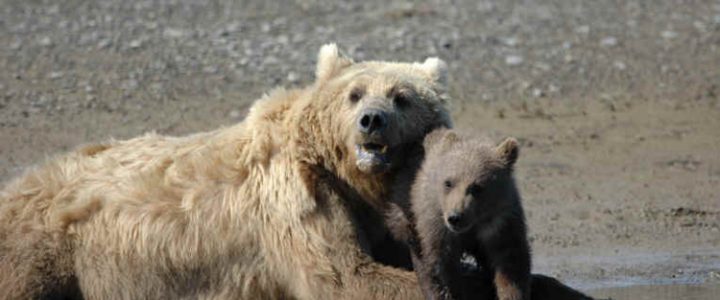
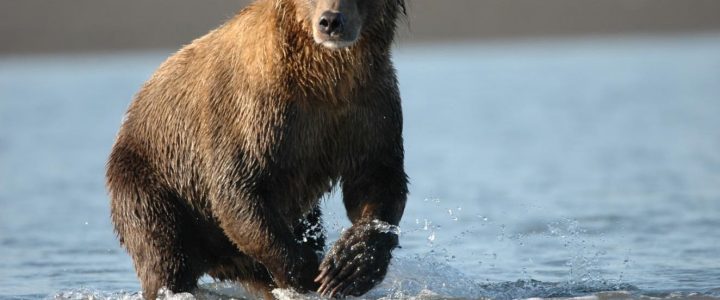
This grizzly bear (aka Alaska brown bear) whose image I “captured” here was never confined, prodded or restricted in any way for this “shot.” She was in fact going about her business as though I weren’t even there, cashing in on a bountiful salmon run following the incoming tide off the Shelikof Strait. Although it looks like she’s staring into the camera, she’s actually focusing on a fish struggling upstream beyond where I was crouched nearby.

To a hunter, the temptation to blast away and take home the trophy head or hide would have been overwhelming. But as a wildlife photographer, I got all I could hope for from the encounter, including the satisfaction that the bear would live out her life free of human greed and exploitation while passing her genes, knowledge and know-how on to future free-living ursines.

————————

To see more amazing photography by Jim Robertson, please visit: http://www.animalsinthewild.org

EYE ON THE NEWS: NO JUSTICE FOR CECIL THE LION

EYE ON THE NEWS: NO JUSTICE FOR CECIL THE LION

Zimbabwe decided not to charge the American dentist, Walter Palmer, after it emerged he had legal papers allowing him to hunt.

Further, Zimbabwe has dropped charges against the professional hunter Theo Bronkhorst, who led the expedition that killed prized lion Cecil last year.

The hunt provoked worldwide outrage after it emerged that Cecil was not only a popular attraction for visitors to Hwange National Park, but that he wore a collar as part of an Oxford University research project.

Bronkhorst was charged with "failing to prevent an illegal hunt" when American trophy hunter Walter Palmer, a dentist, paid $55,000 to shoot the lion with a bow and arrow in July last year.

Bronkhorst said he had the required permits to kill an elderly lion that was outside the national park boundaries. Cecil, who was 13 years old, was killed outside the reserve, which is not fenced.

Brent Stapelkamp a researcher with Oxford University’s lion project in the Hwange National Park for nine years said, “He was not really playful – more regal,” said Mr Stapelkamp. ”He was a lion and he knew it, and everyone else be damned – he was the biggest cat on the block, and didn’t have to be playful.

“…. He was a total lion experience.”
http://www.telegraph.co.uk/news/2016/11/11/charges-dropped-against-hunter-who-led-expedition-to-kill-cecil/
To read more and view truly horrifying photos of Walter Palmer’s killings, visit:
http://www.dailymail.co.uk/news/article-3670202/Not-care-world-dentist-slaughtered-Cecil-Lion-bow-arrow-exactly-year-ago-wave-revulsion-world.html

As reported by http://www.alternet.org/environment/bigger-story-behind-killing-cecil-lion-media-overlooked : Dr. Walter Palmer was a member of Safari Club International (SCI). As Sea Shepherd's Paul Watson said, SCI glorifies a culture of death by celebrating
the slaughter of animals — a ritual supported by an elaborate system that rewards killing.
He writes: What is truly despicable about this organization is that it encourages slaughter through awards. SCI’s record book system ranks the biggest tusks, horns, antlers, skulls and bodies of hunted animals. Hunters are rewarded with trophies
for completing a “Grand Slam.”
------------------------
Just one such “slam” is killing the following: The African Big Five Club (African lion, African leopard, African elephant, African buffalo and African rhinoceros).

Wildlife Watch is proud of the NYS legislators who are trying ban the import of the African Big Five trophies from coming through New York’s popular ports.

EYE ON THE NEWS: ATLANTA, GEORGIA, POLICE OFFICER WANTS TO HELP ANIMALS, THE COMMUNITY AND PEOPLE

After a young boy was killed by a dog who was running loose, the dog was shot and the dog’s “owner” and abuser was charged with manslaughter.  Amy Soeldner, who is with the Atlanta Police Department, thought of a way to help.  Not by banning or killing dogs, but by stopping cruelty and irresponsible people from having dogs. 

She said, I want to educate officers on using nonlethal methods on animals.  And I also want to educate them and the public about the link between animal cruelty as a precursor to more violent crimes such as domestic violence or school shooting.  If someone abuses an animal and they’re not punished or caught or redirected, it emboldens them to go onto other crimes.

She’ll be investigating any kind of cases of animal cruelty.  Her love for animals started when she found a dog in a box with a broken leg.  She was able to get him veterinary care, and he became her companion animal for 16 years! 

Officer Amy Soeldner, Courtesy of Atlanta Police Department

When we emailed Carlos Campos, Director of Public Affairs of the Atlanta Police Department, for permission to use the photographs, not only did he send us other photos, but he added this heartening response:

As an animal lover myself and proud dad to two dogs, I can tell you Amy’s passion, care and love for animals is unmatched. And so is her belief that people who abuse animals will also abuse humans. So this is important work.

Wildlife Watch totally agrees!

Visit: www.atlantamagazine.com/news-culture-articles/meet-the-atlanta-police-officer-whose-job-is-to-end-animal-cruelty/

NEW ZEALAND PRIME MINISTER JACINDA ARDERN’S POLYDACTYL CAT, PADDLES, KILLED IN CAR ACCIDENT

Just as we were delighted to hear the news about the animal-friendly, newly elected Prime Minister of New Zealand, and felt a certain glow upon learning that her cat, Paddles, had been adopted, and just as this was to be an upbeat story about the antics of Paddles in the inner circle of the government of NZ, our follow-up revealed some sad news:  Paddles had been killed by a car shortly after she became First Cat.

Is it better to let a cat have freedom to run and roam in spite of the dangers they both face from other animals and pose to other animals?  Does the danger from cars or humans outweigh the freedom I wish for them? Following several heart-stopping near misses, and one fatal side-swipe of our adorable cat rescue “Smudge” with his sloppy milk-mustache on otherwise all black fur, I resolved not to let our cats out again.  That and the little animals they would bring back dead or severely wounded led to this decision.   I’ve committed to caring for my rescues inside.  One thing that helps them to stay occupied is having another cat or two or three around. 

  We were so sorry to hear about Paddles and hope that the NZ PM will think about another adoption after the grief related to losing Paddles fades.

Here’s Paddles showing off his beautiful paws on the left, and the Prime Minister and Paddles on the right:

WHAT HAPPENED TO VINNY NUNU?

Thank you to Laureen Straw who reached out to Wildlife Watch following the article that appeared in People.

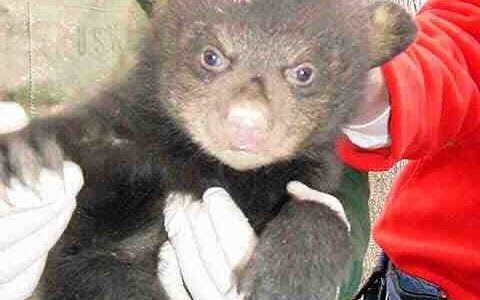
Vinny Nunu, was a little bear in NYS who was nursed back to health after he was hit by a car that also killed his mom.

Sadly, the NYS Dept. of Environmental Conservation (DEC) removed him from the rehab facility where he was staying and he has not been heard from.  We hope this mystery can be solved by the next issue.

Noble and compassionate wildlife rehabilitators need to be able to protect the wildlife that they are caring for without interference and the oppressive authority of those in the business of seeing the value of wild animals only for hunting.

Let’s Go Wildlife Watching IN GEORGIA

Savannah Coastal Ecotours provided by Fran and Kathryn Lapolla

Captain Fran Lapolla operates small boats for the Skidaway Institute of Oceanography and acts as part-time naturalist and host for The Ossabaw Island Foundation. Kathryn Lapolla is a Georgia native and an avid kayaker and is trained in coastal interpretive tours..

For more information: 912-220-6092; sceboating@gmail.com  or scekayaking@gmail.com

Ebenezer Creek, kayaking through ancient bald cypress.

If you wish to stay closer to Atlanta and yet enjoy nature and wildlife, please visit Cascade Springs Nature Preserve Trail at this link:

www.atlantatrails.com/hiking-trails/cascade-springs-nature-preserve

It is described this way: Inside the park’s 120 acres of green space, a wide trail network explores a tumbling waterfall, a wildlife-filled forest, and trickling springs that feed the park’s many streams. The hilly forest is a retreat from the surrounding city, and home to wildlife including deer, birds, and turtles.

WHO WILL HELP THE WILDLIFE WHEN THERE’S FIRE, MUDSLIDES, AND DEATH? THE SANTA BARBARA WILDLIFE CARE NETWORK (SBWCN)

Thank you to Julia Parker of SBWCN for filling us in on the nightmare that torched the Santa Barbara area and the mudslides that buried homes, people and wildlife.

We reached out to the Santa Barbara Wildlife Care Network and asked to know more about the state of the wildlife there.  Julia Parker who returned our call was kind enough to write the following from the frontlines.

During this challenging time within our community, multiple species of wildlife have been directly impacted by the Thomas Fire and subsequent mudslides. SBWCN has received reports from the public about deer that are challenged as grazing areas are now barren. Predator species have also been significantly impacted, losing a large amount of lucrative hunting area as many species are forced to move into alternate territories due to the catastrophic events. The Santa Barbara Wildlife Care Network has received reports of dead bears found on local beaches as well as mountain lion sightings close to individuals’ homes. To date, the SBWCN has admitted a gull and raccoon for rehabilitation that were both found in the Montecito area post Thomas Fire and mudslide.

The raccoon in care has burn lesions on his paws and tail. He was discovered in Montecito by a fireman after the mudslide. With the vast amount of land now void of vegetation, chaparral, oaks and grasses, surviving wildlife must relocate in search of new habitat, food, and shelter while competing with established wildlife in these areas.

The native Western pond turtle (WPT) has been found on local beaches, after being carried away from their habitats during the mudslide. Five WPT are in care, one with burns on his leg and another healing from a broken leg.

Santa Barbara Wildlife Care Network is the only general wildlife rehabilitation center in Santa Barbara and Ventura Counties, the region affected by the disaster. We are entering our 30th year and have noticed that the need for our work to rescue wildlife increases every year.

 We cannot yet comment on the repercussions to songbird and raptor populations, as surviving species will have to establish new territories on the heels of the breeding season that is quickly upon us. We suspect that this domino effect for wildlife in the loss of habitat, food supply, shelter, and territories will have a significant impact on our local ecosystem for years to come.

National Geographic has titled 2018 to be the “Year of the Bird”, in recognition of the centennial anniversary of the Migratory Bird Act. For the team at the Santa Barbara Wildlife Care Network, this description could not be more fitting. Now more than ever, our attempt to preserve wildlife species in Southern California will be invaluable while our community continues to repair their lives in the wake of this disaster.

Please visit the Santa Barbara Wildife Care Network at: https://www.facebook.com/SBWCN/  Not only will you see the extraordinary rescues done by the SBWCN, but you will also see videos of ANIMALS RESCUING OTHER ANIMALS!

On the SBWCN Facebook page you will see the innovative and life-saving work of Dr. Jamie Peyton of the UC Davis Veterinary College. She treated this poor bear and other wild burn victims the way human burn patients are treated, with fish skin mainly from tilapia.  Dr. Peyton said that its use for bears was for the first time.  She and her colleagues stitched tilapia fish skins on the animals’ feet to sooth the burns.  She said the bears soon were up and walking around in their bandages and will be released as soon as they are ready.

Wildlife Watch is happy to report that synthetic skin is now being developed in the US and Australia for treatment of severe burns, but as of now it is not available for use.

EYE ON THE NEWS: LARGEST MEAT PRODUCER BUYS VEGAN “MEAT” COMPANIES

RECENTLY, “FIELD ROAST,” a company that produces vegan meat analogs, was ACQUIRED BY CANADA’S LARGEST MEAT PRODUCER FOR $120,000,000.  “LIGHTLIFE” WAS BOUGHT by the same company LAST YEAR FOR $140, 000,000! 

Maple Leaf Foods Inc, the largest distributor of packaged meats in Canada, has announced it has purchased U.S. vegan meat producer, the Field Roast Grain Meat Co, for $120 million.

Michael McCain, Maple Leaf Foods’ CEO, said this move is part of the company’s shift toward achieving its vision of becoming a leader in sustainable protein.

“The acquisition of Field Roast complements and expands our portfolio in the fast-growing North American market for alternative proteins,” McCain said in a statement. “It also aligns with our vision to be a leader in sustainable protein and create shared value through making a positive social impact. Field Roast has built brand leadership through focusing on quality, craftsmanship and taste, and its acquisition will allow Maple Leaf to fuel growth in the category through investment, brand building and innovation.”

Seattle-based Field Roast produces a range of vegan plant-based meats, including roasts, sausages, frankfurters, deli slices. The company also recently launched a line of nondairy cheeses called Chao, and frozen foods, including vegan mac and cheese. 

Animal agriculture accounts for 18% of global greenhouse gas emissions.

Field Roast is the second plant-based company Maple Leaf has acquired this year. In February, the packaged meats company bought another U.S. based plant-based protein company, Lightlife Foods, for $140 million.

 Lightlife Veggie Turkey Slices is my all time favorite!  The slices are super thin, and make a great sandwich.  Best of all, my dog, Chico, LOVES it more than meat!!  I wrap his heart medication in a quarter of a turkey slice and he gobbles it down without a struggle!!

Visit: https://www.livekindly.co/field-roast-meat-company-aquires/ 

…AND IN THE NORTH POLE, STARVING POLAR BEARS HAVE ALMOST NO PLACE LEFT AT ALL

In the Arctic, polar bears are dying because they are being forced to travel farther, which results in loss of body fat relative to their caloric intake.  Global warming or climate change caused by CO2 emissions are the problem. 

Polar bears are particularly susceptible to changes in sea ice because of their hunting strategies: the bears eat as much as they can in the spring and early summer, when seals are having their pups, putting on lots of fat that will help them get through pretty much the rest of the year. But if sea ice is missing or is thinner, drifting longer distances, polar bears can’t catch as many seals, using more energy than they take in. That affects their health and their ability to make new pups: the number of polar bears in the Beaufort Sea has already declined by 40 percent from 2004 to 2007, likely because of changes in sea ice. 

EYE ON THE NEWS: BREEDING CATASTROPHE IN ADELIE LAND

Terre Adélie (Adélie Land) in eastern Antarctica is home to a significant colony of Adélie penguins. The over 18,000 pairs of penguins have recently suffered a breeding catastrophe in which all but two of the colony’s chicks have died. The cause of this tragic event is most likely abnormally vast amounts of sea ice surrounding the colony, thus forcing the adult penguins to travel farther for food, said the World Wildlife Fund. “The impact of this catastrophic event is confined to this specific colony of Adélie penguins, predictions are that the Antarctic will get warmer and this may pose different challenges in the longer term” said Rod Downie, Head of Polar Programs at WWF. As if the penguins didn’t have enough to worry about, and this is not the first time for disaster to strike the colony. Four years ago, every one of the colony’s chicks froze to death when a cold snap followed a rain event. We are hopeful that there may be a light at the end of this bleak tunnel for the Adélie penguins. Environmental groups and officials are meeting to discuss the creation of a new Marine Protected Area (MPA) for the waters off eastern Antarctica. If this protection zone were to be enacted, it would make the area off limits to krill fisheries which is great news for the penguins since krill is an important part of their diet. This protected area would ultimately form a safer breeding ground for the penguins, something that it seems they are in much need of these days. According to Yan Ropert-Coudert, lead researcher on the Adélie Penguin Program at France’s National Center for Scientific Research (CNRS), the breakup of the Mertz glacier since 2010 is causing other environmental changes in the region as well. Ropert-Coudert said “An MPA will not remedy these changes but it could prevent further impacts that direct anthropogenic pressures, such as tourism and proposed fisheries, could bring.” This is good news considering research by oceanographers at the University of Delaware found that 60% of Antarctica’s Adélie penguin habitat may become unsuitable by the end of the 21st century due to warming seas and rain. 

SAD FOLLOW-UP:

PROPOSED MARINE PROTECTED AREA GETS DENIED AT 2017 MEETING OF THE COMMISSION FOR THE CONSERVATION OF ANTARCTIC MARINE LIVING RESOURCES (CCAMLR)

By M.R.Guercio

Above, we featured a story about a colony of Adélie penguins who tragically lost all but two of their chicks. A hopeful proposition to create a new Marine Protected Area (MPA) around eastern Antarctic waters would lessen anthropomorphic stressors on the areas that the penguins breed and fish in. At last year’s meeting the Ross Sea MPA, which is the largest in the world, was successfully negotiated and CCAMLR was hopeful that this positive momentum would carry the decision to approve another large MPA covering one million square kilometers in eastern Antarctic waters. Not only would this MPA be beneficial for Adélie penguins, but also would protect unique marine ecosystems.  Unfortunately, this proposition was denied during this year’s meeting due to the lack of consent from Russia and China. The meeting of representatives from 24 countries plus the European Union, must all be in agreement in order for the MPA to be approved.

Fishing is a common excuse used by parties who oppose the creation of protected waters, as it can be used to exert power and geopolitical control over this neutral area of the world. It is important to note, that the proposal for the Eastern Antarctic MPA did not explicitly ban all fishing in the protected area, and accommodations for fishing have been made in the past in other protected areas - - in spite of the fact that the ecology will suffer along with the individual sea animals.

However, there were positive strides made in protecting Antarctic waters at this year’s meeting which include protection of exposed waters after the Larsen C ice shelf split (Larsen A collapsed entirely in 1995 and Larsen B did the same in 2002); approval of an MPA around the Arctic Peninsula, and the approval of a research and monitoring plan for the Ross Sea MPA.

If you wish to look into this more, please read the articles below:

Why are talks over an East Antarctic marine park still deadlocked? By Cassandra Brooks

https://theconversation.com/why-are-talks-over-an-east-antarctic-marine-park-still-deadlocked-86681

Plans rejected for East Antarctic Marine Park By April Reese

https://www.nature.com/news/plans-rejected-for-east-antarctic-marine-park-1.22913

EYE ON THE NEWS: BOILING LOBSTERS ALIVE IS BANNED IN SWITZERLAND

CNN reports that the Swiss government has banned throwing lobsters into boiling water while they are still conscious.  They also have banned keeping lobsters on ice while still alive.

That has been done based on studies that “suggest” lobsters are sentient with advanced nervous systems that “may” feel pain. [Those of us at Wildlife Watch KNOW that lobsters feel pain.] The painful solution? Knock them out first!

These changes in law are based on a series of experiments by Professor Robert Elwood, Emeritus Professor in Ecology, Evolution, Behavior and Environmental Economics at Queens University, Belfast.

Wildlife Watch reached out to Prof. Elwood, but has not yet heard back.  We have many questions and will report in the next issue if we do hear from him.

Recently, I was in a supermarket and witnessed a lobster reaching up to the worker who seemed to be playing with him by pulling at him with tongs.  The photo we chose here shows what the lobster looked like.   To me, he looked like a child asking to be helped, not realizing that he was asking for help from someone who regarded him merely as food.

Wildlife Watch believes that the best solution to cruelty is veganism, a plant-based diet.  Veganism alone would relieve much suffering of our wild land, water, and air animals.

DID YOU KNOW?

Raccoons and opossums that find themselves onto our properties usually move along due to their nomadic nature. However, if you find that these critters are posing a hazard to your property and themselves, a great natural repellent to keep them away is a simple solution of about 1 part cayenne pepper, about 8 parts water, and a drop of dish soap. Spray this on lawns, around vegetable gardens, and around trash cans. The sensitive noses of these animals will be deterred by the spice. This is just one way to live in harmony with our wildlife. From the Facebook page of SBWCN.

Evidence of Rodenticides Found in California Owls

By M.R.Guercio

Anticoagulant rodenticides (AR) are poisons that are unfortunately used to kill rodents, such as rats and mice, and are widely available for use by farmers, homeowners, and large agribusiness alike. A paper published in Avian Conservation and Ecology examined the effect of ARs on populations of northern spotted owls and barred owls in remote forest lands of northern California. Many similar studies have focused on the presence of ARs in wildlife that live in urban or agricultural settings, where it was believed rodenticide use would be more prevalent. This study, though, found increasing amounts of ARs present in remote forest settings where it is hurting non-target forest carnivores. The route of exposure for such animals is by consuming a rodent who has been exposed to the poison. The study found that 40% of barred owls and 70% of northern spotted owls that they tested were exposed to at least one of eight ARs. Also, the use of what are called second generation ARs is prohibited in agricultural settings without human dwellings, yet there were owls collected in such areas that tested positive for secondary AR. While most of the ARs detected in the owls were at trace levels and not the cause of death, it is still alarming that this poison is being found in these remote areas and that secondary ARs are being used illegally. Even more alarming is that the northern spotted owl is listed under the Federal Endangered Species Act and listed as threated under the California Endangered Species Act, and is being further negatively impacted. There are plenty of non-lethal effects of ARs which include reduced clutch and brood size, fledgling success, slower blood clotting time, and residual AR transfer to eggs that lead to the suffering of many owls and other birds of prey.

Earlier studies concerning ARs have found extremely high concentrations in fishers, and have linked this exposure to thousands of illegal marijuana cultivation sites on public and tribal lands. Heading into the future as marijuana becomes legalized, this is something to be concerned about and warrants examination for a safer alternative to poisoning animals that are simply living and behaving as they naturally should. A creative alternative to rodent “problems” in agricultural settings is being implemented by California’s Hungry Owl Project, founded and directed by former wildlife rehabber Alex Godbe. In 2013 Godbe had groups of barn owls in 25 vineyards working to naturally reduce the rodent population that had been damaging their crops, without the use of rodenticides. This can be the case for other predators too such as coyotes, foxes, skunks, raccoons and opossums, to name a few. A good point made by Godbe is that we are killing off nature’s own rodent control by the second-hand poisoning of rodent eating predators (Williams).

While the use of pesticides such as ARs is a large issue that may sometimes seem out of our direct control, there are still things we can do in our daily lives that can either lessen or add to the existing problem. Pesticides have a wide-reaching effect that isn’t always in the forefront of a person’s mind when they decide to use them. Before you use Ars, keep in mind that you are killing not only mice that live in or around your home, but you are potentially poisoning many other animals and their offspring as well.  Friendly options are available that are safer for humans and animals such as catch and release mouse traps.  For more detail, please visit:

Gabriel, Mourad W., et al. “Exposure to Rodenticides in Northern Spotted and Barred Owls on Remote Forest Lands in Northwestern California: Evidence of Food Web Contamination.” Avian Conservation and Ecology, vol. 13, no. 1, 2018, doi:10.5751/ace-01134-130102.

Williams, Ted. “Poisons Used to Kill Rodents Have Safer Alternatives.” 

------------------------

Marissa Guercio is a biology graduate from SUNY New Paltz who is interested in conservation and animal behavior.

STUDY FOUND THAT HUMAN-MODIFIED LANDSCAPES SHRINK MAMMAL MOVEMENTS BY UP TO HALF

STUDY FOUND THAT HUMAN-MODIFIED LANDSCAPES SHRINK MAMMAL MOVEMENTS BY UP TO HALF

Reprinted with permission

from Field Museum 

Please visit the link for a complete list of the authors and their affiliations.

http://science.sciencemag.org/content/359/6374/466

Human beings take up a lot of real estate — around 50-70 percent of the Earth’s land surface. And our increasing footprint affects how mammals of all sizes, from all over the planet, move.

A study recently published by Science found that, on average, mammals living in human-modified habitats move two to three times less far than their counterparts in areas untouched by humans.

What’s more, this pattern persists globally: from African forest elephants to white-tailed antelope squirrels in North America, the human footprint infringes upon the footprints of mammal species both big and small. The study, led by Marlee Tucker of the Senckenberg Biodiversity and Climate Research Centre in Germany, is the first of its kind to log movement behaviors for such a wide range of mammals globally.

“All organisms need space,” Bruce Patterson, a co-author of this study and MacArthur Curator of Mammals at The Field Museum in Chicago, explained. “They need space to gather their resources, find mates, and perform their ecological services.” For instance, bats need room to find and consume insects and pollinate plants (which amount to $3.5 to 50 billion worth of agricultural labor annually in the US alone), and apex predators need room to hunt and control other species’ populations.

In the study, more than 100 researchers contributed information on 803 individual mammals representing 57 species in total. Patterson offered up data on the movement of lions in a pristine wilderness area of Tsavo, Kenya. From 2002-09, he followed three lions using high-tech collars that continuously tracked individuals’ movement via GPS — the data he contributed to the Science study. One of those lions, in its natural habitat, patrolled an area twice the size of Chicago (1400 km2) to find food, attract mates, and repel intruders.

But habitat loss and fragmentation disrupt these critical animal behaviors. Clearing rainforest is an example of habitat loss — the destruction and loss of usable area for a given species. Constructing a road through the savannah, on the other hand, constitutes habitat fragmentation — the division of habitat area into smaller, discontinuous spaces. When suitable habitat spaces become too small or too isolated, animals can no longer afford to visit them, changing their space use.

As habitats become compromised, resources like food and living space that animals rely on become scarce. Sometimes, when resources are limited, animals traverse larger areas to get what they need — if there’s not enough food in a five-mile radius, they might move to a ten-mile radius. However, this study shows that on the whole, that sort of additional movement tends not to be an option — if there’s no uninterrupted landscape available, then the affected animals simply can’t live there.

To that end, the Science study found “strong negative effects of the human footprint on median and long-distance displacements of terrestrial mammals.” Patterson put it more simply: “Human dominion over Earth’s landscapes gets in the way of animals doing their thing.” Some species, like mice, can make do with less room, but animals that need lots of space, like lions, tigers, and elephants, simply can’t live in areas with lots of humans.

“It is important that animals move, because in moving they carry out important ecological functions like transporting nutrients and seeds between different areas. Additionally, mammalian movements bring different species together and thus allow for interactions in food webs that might otherwise not occur. If mammals move less this could alter any of these ecosystem functions,” says lead author Marlee Tucker.

Across the wide array of species its data encompasses, the study points to a singular, and grim, conclusion: For mammal species, the effects of habitat loss and habitat fragmentation don’t discriminate by geographic location, body size, or where that species sits on the food chain — the human footprint threatens most other mammals.

Still, Patterson remains hopeful that the Science study can guide further research and change our approach to human land use. “Ultimately, it would be good to know whether there are critical thresholds in the human footprint for the species living around us. Are there specific points beyond which resources become limiting and species are excluded?” he asked. “As we continue to transform the landscape and as the human population expands, we’re limiting the space and resources that other mammals need to live.”

https://tinyurl.com/alligatorgolfcourse

Wildlife Watch thanks Jim Robertson for obtaining permission to reprint the article.  Photos are the addition of Wildlife Watch.