LET’S GO WILDLIFE WATCHING at the Olana State Historical Site in Hudson, NY!


PHOTO © MATT ARNOLD ON UNSPLASH T


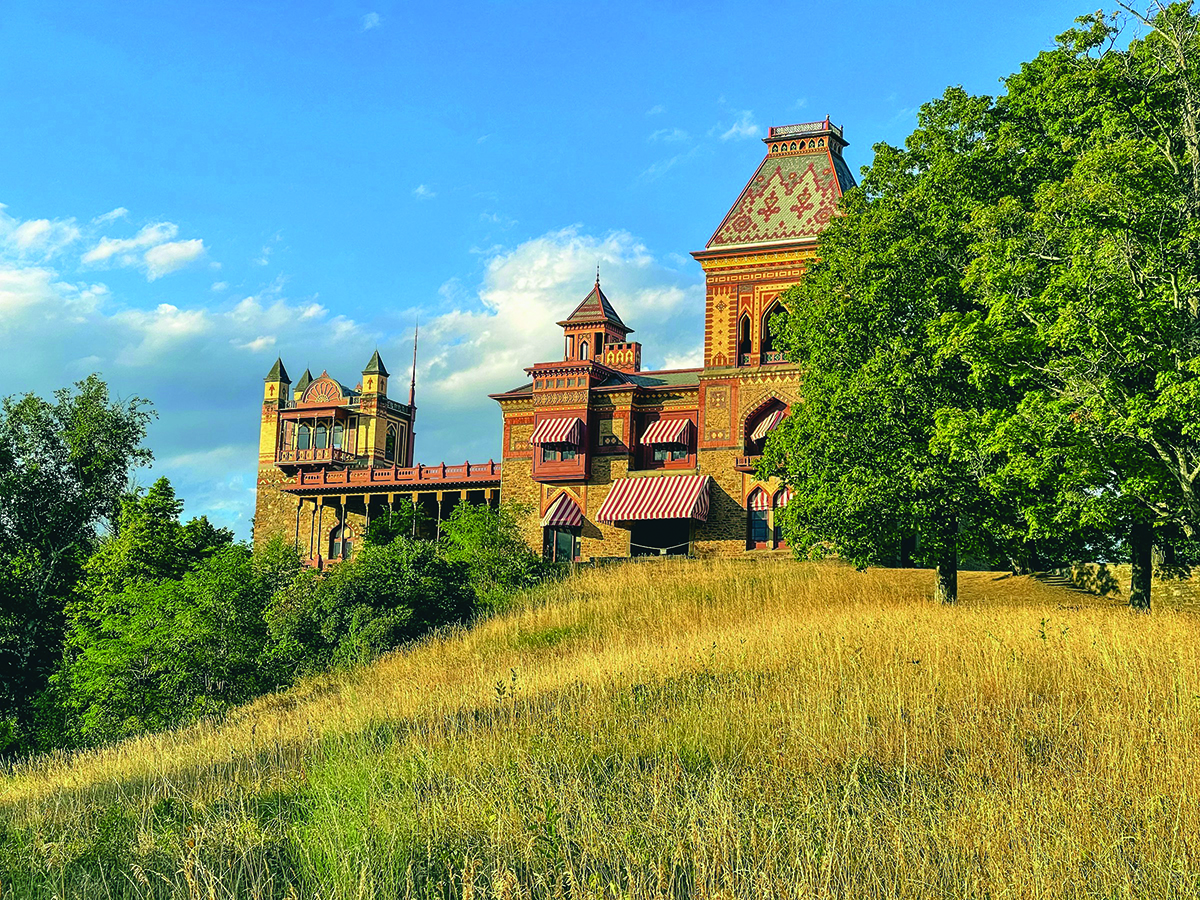
Olana, the former home of artist Frederic Church, is an architecturally significant house set on beautiful grounds above the Hudson River. The main house, visible from the Rip Van Winkle Bridge, is known for its combination of Victorian and Middle-Eastern architectural aspects. But I personally have never set foot inside the building despite visiting the property close to 10 times in my life. Instead, I go to Olana for the wonderful nature – forests, fields, a marshy pond… and, most of all, the beautiful birds!

As a kid, I often joined my mother and grandmother on the Columbia County Birdathon that took place each May. Along with various other strategic stops, we always took time to go to Olana to see what might be flying around. This stop made sense due to its variety of habitats and, therefore, diversity of potential bird species that could be present at any time.

When you first pull into the Olana grounds below the house, you will drive right next to the pond with sections of high reeds. There, you can keep an eye out for species that stay close to water, such as herons, ducks, and, if you’re lucky a kingfisher. Next you may follow the walking path into the woods to where you have the best view of the house looking over the pond. These woods are home to woodpeckers, woodcreepers, and various thrush species. Next to the barn house is a field that acts as a habitat for sparrows, as well as hunting grounds for raptors. I have distinct memories of watching multiple kestrels circling over the high grass on the same visit. Finally, there is a long, steep lawn, leading up to the house. This is a great area to spend time searching the trees along the edges for warblers in the spring and fall. We were also able to reliably find yellow-throated vireo in this habitat during the birdathon visits.

Along with these species that are usually present on the grounds, there is always the possibility for an exciting surprise. One time, a Common Gallinule was found wading in the pond and another time a rare Cuckoo was spotted close to the house. Lastly, while in the area, you can take a few minutes to walk across the Rip Van Winkle Bridge, where, in addition to incredible views of the Hudson River, you can often see Bald Eagles flying overhead or sitting on branches close to the flowing water. And, if you are so inclined, on weekends you can take a tour of the main house at Olana to see the real reason most visitors make this a stop on their trips in the Hudson Valley. You can learn more here: olana.org

Joe Anderson specializes in social media marketing. He enjoys birding in his spare time.


OUR LOUD, WILD NEIGHBORS: LEARN TO LOVE THEM

PHOTO © DEB DOWD ON UNSPLASH

By Cynthia Bracken

Some call them loud, a nuisance. Pests, they say.

The cicadas are coming, and no one seems to be looking forward to their arrival.

One newspaper headline asked: “How long will they be around, and when will they leave?” while another bemoaned “When will they go away?” But I, for one, cannot wait!

This year, for the first time in over two hundred years, according to U.S. News and World Report, two large cicada broods—brood 13 and 19—will emerge from the ground simultaneously. This is not happy news to those who find their singing simply ear shattering. Since there will be two broods, their symphony will be even louder than ever, apparently beating out the volume of the lawn mower!

But I say we welcome them. Cicadas are harmless to humans, and there are many reasons to like them. Cicadas are an essential part of our web of life, and they are sure something to behold. They immerse you in sound while they play out the most primal act of living—the mating ritual. Their moment in the cycle of life is one loud, raucous party that ends with their bodies littered across the forest floor. They are a wonder!

I actually enjoy the sounds of cicadas, and I marveled at their last “invasion” here in New York in 2013. Yes, it was loud, but it was beautiful, too. To me, the sound is like a strange, primordial orchestra, and I want to hear it. That spring, I continuously looked for opportunities to be close to them and listen to their song, and luckily, here in the Hudson Valley, there were plenty of spots. While walking in the wooded areas where they had gathered, it was fun to spot their fiery orange accented bodies and see them buzzing through the air.

The cicadas are set to be seen in about 14 states this summer, and some have already begun. They won’t emerge at once but will decide when they want to come to the surface when the soil temperature feels right, and will only stay in one given area for four to six weeks. Why not catch it?

They come to the surface of the earth for what is really one short, miraculous moment.


Males will sing their hearts out while females select their favorite singer. They mate, lay their eggs, and then the adult cicadas are no more. After about two months, the eggs hatch, then the nymphs fall to the ground, sink into the soil, and the cycle starts again.

Cicadas throw big, wild parties, but they are good neighbors, too. The shells the adults leave behind when they molt can be used in medicinal ways, including the treatment of sore throats and skin irritation. In addition, as the cicadas tunnel to the earth, they become natural soil aerators, Their holes create conduits for oxygen, water, and nutrients to be absorbed into the ground and used by several other organisms, such as trees. In addition, the eggs they lay in tree branches actually prune the trees! By making some of the branches fall off, they encourage more growth. Even when the cicadas themselves die, they become food for other living things, and since they die so close to the tunnel they emerged from, they actually nourish the very trees that fed them as nymphs (nymphs live off a liquid diet of xylem fluid from tree tissue and roots).

So, there are many more reasons to welcome the coming of these “pests.” Even scientists have been looking to them to solve human-sized problems. Their wings are a veritable engineering marvel since they can self-clean, kill bacteria, and repel water. Both chemists and engineers seek to harness properties like that for both disease control and better solar panel technology.

The 2024 cicadas will not be seen in my part of New York this year, but news reports say we will see Brood 14 in the spring of 2025. Until then, I will be waiting. And listening.

Cynthia Bracken lives in New Paltz, NY.  She spends her free time exploring the many wild places that grace the area. She is a writer and lover of nature.


R.O.C.K. – Rehabbers Offer Care and Kindness


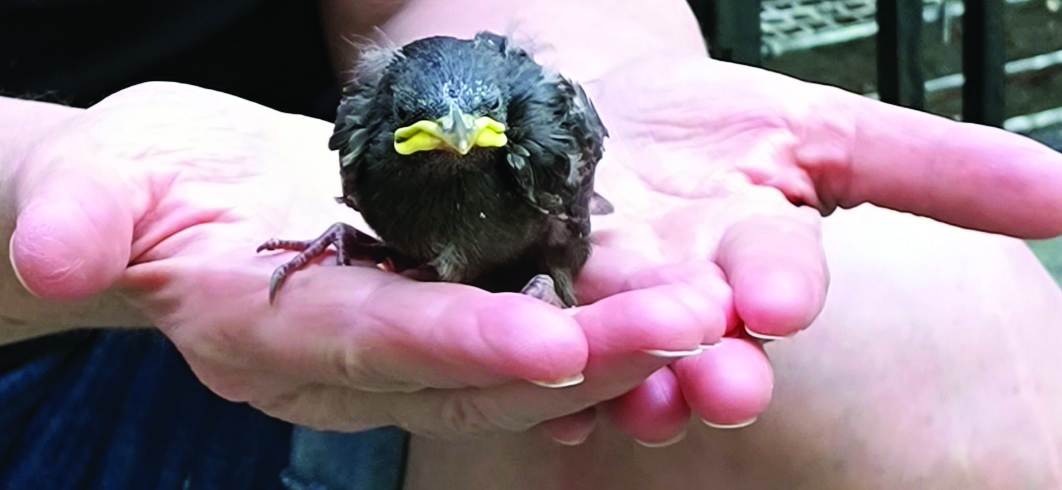
This baby starling has the same expression we would have after hearing our lives weren’t valued. PHOTOS BY ANNE MULLER


I was elated to finally meet one of my heroes: wildlife rehabilitator “C.”  Sadly, I can’t use her name because she could lose her wildlife rehabilitation permit, so I’ll call her C.  Why would she lose her permit?  Because she rehabs little birds who need help – but the Bureau of Wildlife (BOW) prohibits the rehabilitation of some bird species.  Sadly, they label starlings, sparrows, and pigeons “invasive species.”

Starlings are considered invasive because they aren’t native, though they’ve lived in the country since 1890, and yes, they eat crops, but so do other birds.  They have no protection from people who want to kill them in unlimited numbers, and rehabbers who care about individual wildlife and wish to help them are denied the ability to do so.

Wildlife Watch’s Hotline – 877-WILDHELP – brings many calls from compassionate people who find injured or orphaned starlings and sparrows, yet, understandably, few rehabbers will take the risk of losing their permits.  Wildlife Watch asks how in the world a rehabilitator who helps a little starling to survive can be a threat to the environment, farmers, and the planet?  Let’s get real, we are talking about one little bird who, without help, would die and whose individual life can’t possibly harm the environment and could even help it!  According to Wild Birds Unlimited, starlings play an important role in reducing the numbers of some of the major insect pests that damage farm crops:    Fun Facts About Starlings

In spite of C’s vulnerability, she puts the birds’ lives before the potential consequences of helping them.

The little bird above was in C’s caring hands for only a short time.  Two compassionate people who saw him walk into a store soaking wet, although it wasn’t raining, called our Hotline.

I volunteered to drive the bird to C as I had been wanting to meet her for a very long time.

When I arrived, C took the little disheveled being out of the box and the first thing this brave and compassionate rehabber told the little bird was how much she valued him.

Then C began to alternately remove the debris between the bird’s feathers and feed him, something his mother would have done.

C’s recently built flight cage was to be his final home before his release.  He would have found a little family and would have been released with them to enjoy his life in the wild.   Sadly, he didn’t make it. But, before he passed, C made sure that he knew his life was valued and that he was loved.


GARDENS FOR INSECTS

Read more here: Why You Should Let Insects Eat Your Plants

PHOTO © ARJUN MJ ON UNSPLASH

“They’re not just your plants – they’re someone’s dinner”, Chris Baraniuk from the BBC writes, referencing the little herbivores munching away in gardens across the world. Recently, there is an influx of green-thumbed individuals that embrace a new form of gardening – planting to feed insects. According to a study done by the Proceedings of the National Academy of Sciences of the United States of America, “insect populations are declining at a rate of between 1% and 2% every year”. Gardeners are recognizing that insects are a crucial part of our ecosystems and are coming to their rescue. A survey from 2022 states, “one in three US adults purchase plants to help wildlife”. A spokesman at the UK’s Royal Entomological Society, Luke Tilley, states, “a garden managed for biodiversity can support potentially thousands of species over a year.” In the instances of “compensatory growth”, feeding insects can even allow plants to bear more flowers and fruit. Gardens for insects may just be the revolutionary idea needed for a better world, for us and for wildlife. 

MITIGATING MAN-ELEPHANT CONFLICT IN CHHATTISGARH

MITIGATING MAN-ELEPHANT CONFLICT IN CHHATTISGARH

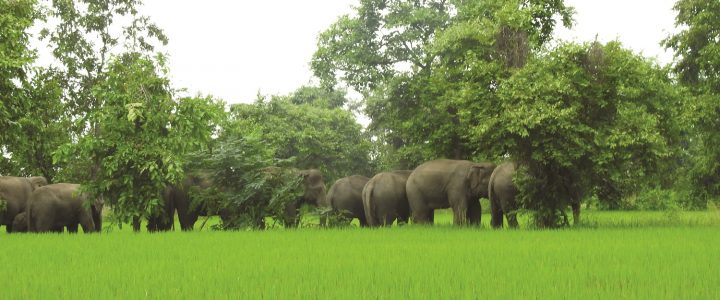
PHOTO © WILDLIFE SOS

As people encroach on forest land, instances of man-animal conflict are on the rise, but there are ways this can be mitigated.

In the context of human-elephant conflicts (HEC) in Chhattisgarh, people were not used to living in a landscape with wild elephants, because of which people faced crop damage, property damage and often even death. Wildlife SOS decided to intervene to resolve the issue, saving an entire herd from being trapped, poisoned, or killed.

Cause of the Conflict: Habitat Loss

Due to the presence of a large coal mine in Orissa, the activity around the mine disturbed the ancient corridors that many generations of elephant herds had used.  The herds had no choice but to move away from the area and they ended up in Chhattisgarh. “As a result, the state that hardly had any presence of elephants in 100 years in the landscape was suddenly seeing wild elephants. One among them was the Van Devi herd comprising 21 individuals,” says Kartick Satyanarayan, Co-founder and CEO, Wildlife SOS. It is important to realise that the elephants did not choose to raid the agricultural fields. They were forced out of their natural homes and put in this position because of human interference and damage to their habitat, which was mainly due to a coal mine. “Deforestation also played a role in causing habitat fragmentation and habitat destruction, including those done for constructing infrastructure,” adds Satyanarayan.

Corridor Barred

When these kinds of habitat loss happen without considering elephant corridors and the movement patterns that herds have been following for generations, they often cause elephants to raid settlements. “In Chhattisgarh, elephants were not merely indulging in opportunistic raiding but being the intelligent mammals they are, they were raiding with an intention.

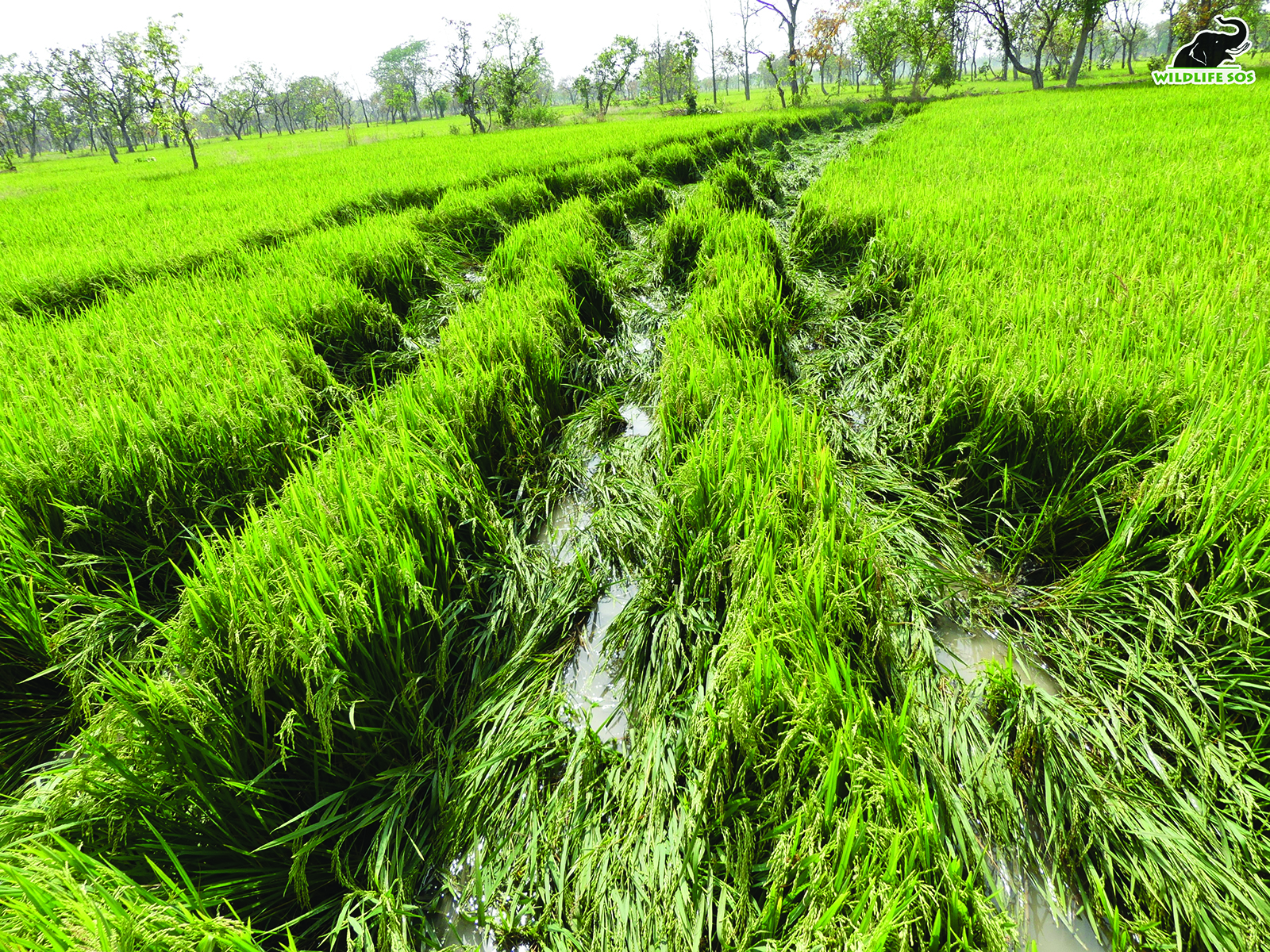
Paddy is the most common crop raided by elephants because it is preferred by these wild pachyderms. And in Chhattisgarh, paddy is the primary grown crop,” says Swaminathan S, Senior Biologist with Wildlife SOS.

Radio collaring of the matriarch, Van Devi - PHOTO © WILDIFE SOS

Tech Help

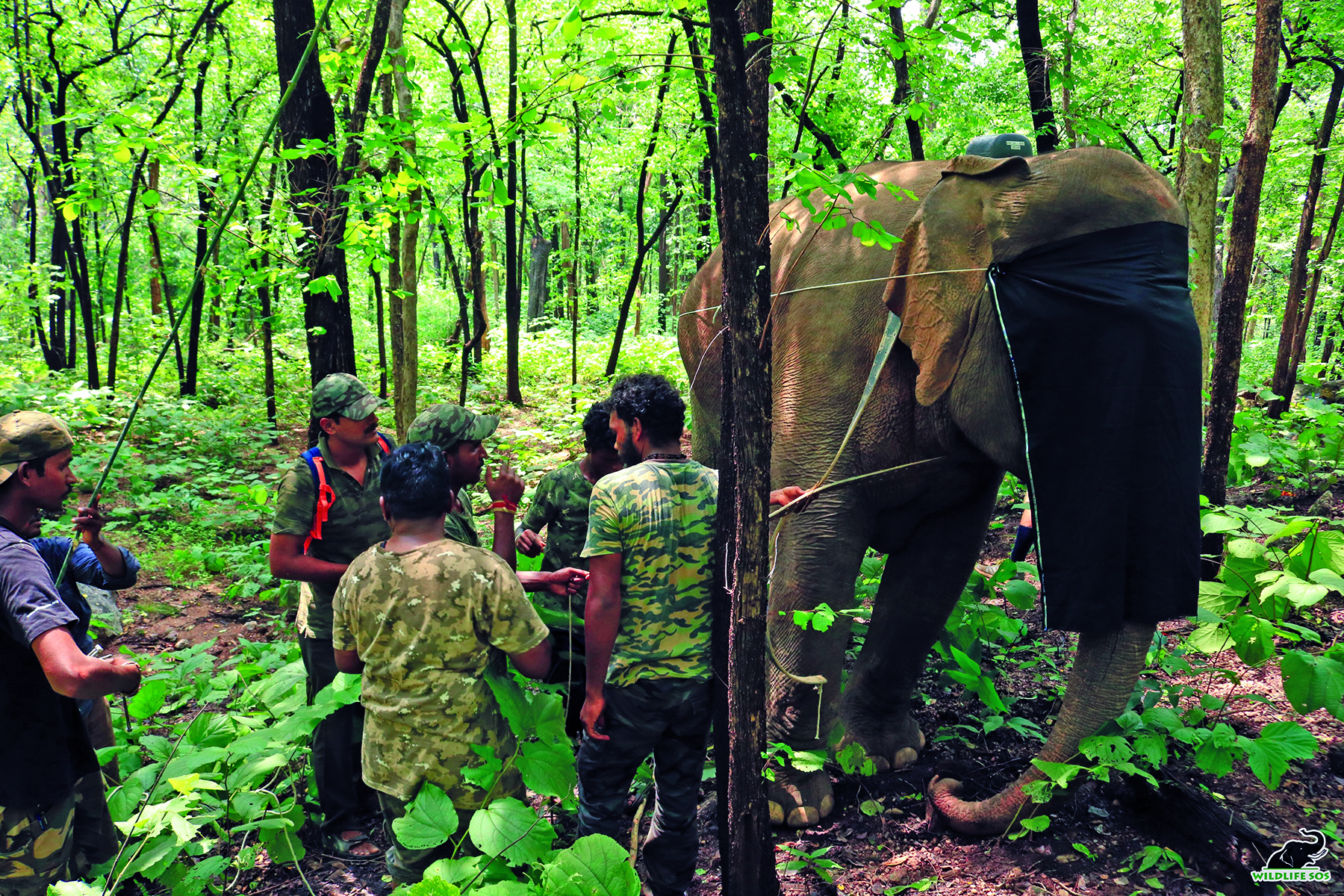
The Wildlife SOS was requested by the Chhattisgarh Forest Department to find a practical solution. This is when the team studied the problem and found out the reasons that caused the Van Devi herd to move from Orissa to Chhattisgarh. “People were not aware of elephant avoidance behaviour. We worked in multiple villages with the local community in Mahasamund and surrounding areas and motivated the youth to become part of a rapid response group,” says Satyanarayan. Radio-collaring the matriarch Van Devi, of the Van Devi herd to track the entire herd’s movement also played a crucial role in enhancing the Early Warning Alert System (EWAS). “Our team tracked her on foot for weeks and it was a high-risk operation for us. They were finally able to tranquilise the female, and once the radio-collaring was done successfully, the team administered the reversal injection to put her back on her feet,” explains Swaminathan.


PHOTO © WILDIFE SO


Understanding the Issue

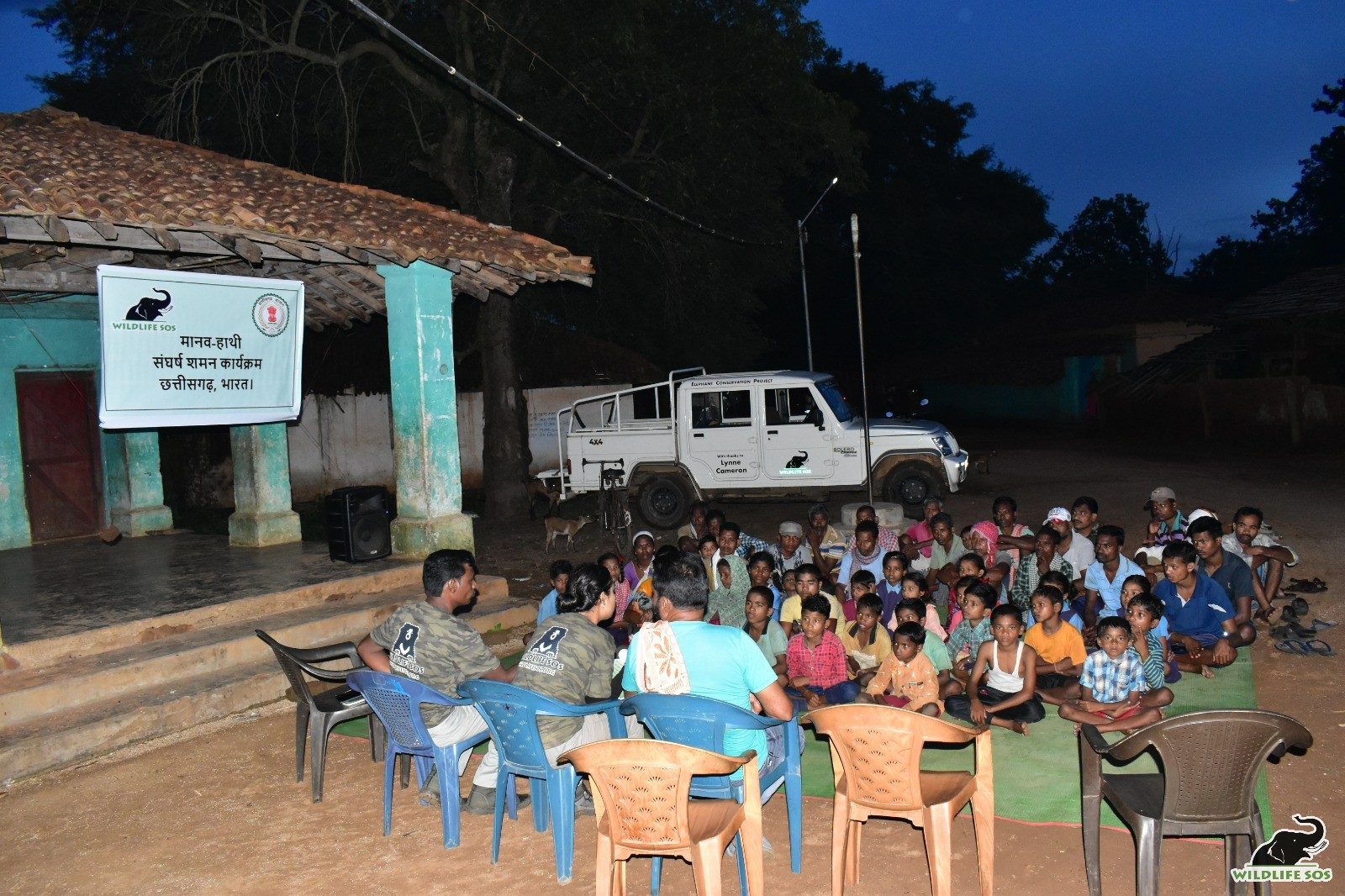
One of the most crucial steps to mitigate interaction with wild elephants is learning about elephant avoidance behaviour. As part of that the Wildlife SOS laid down some commonly used strategies to safely deter elephants, which include, using noise such as pots and pans being banged together, loud yelling, screaming and chillies being burnt on the edge of crop fields. The villagers were advised to use lights, because when elephants see a place that is very brightly lit, they avoid that area. Organic deterrence is by changing crop patterns through yielding crops that will not attract elephants, such as replacing paddy with a crop that is not palatable for elephants. The conflict mitigation workshops focused on ensuring that every farmer and villager was armed with ways to protect themselves and their fields. The workshop began with a brief talk about the Asian elephant, its characteristics, and its behaviour.

Warning Signs

PHOTO © WILDIFE SOS

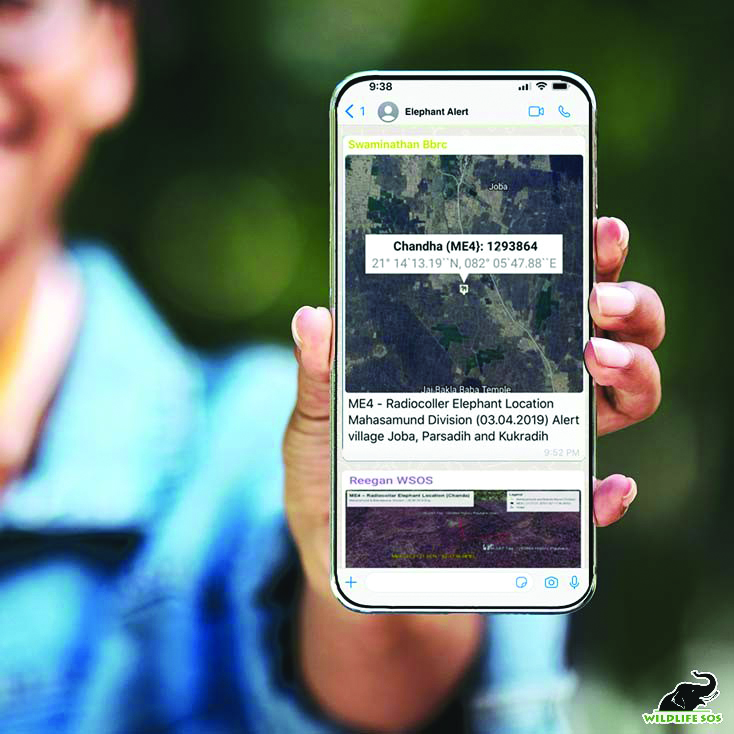
A system was set up so that Van Devi’s movements are relayed to the forest department who relays the information to a rapid response ‘flying squad’. The squad is a crew specially trained to safely deter elephants and work with local community leaders and volunteers to keep people and elephants safe and informed via WhatsApp groups. “The idea of our team was to communicate measures to the local communities to avoid unforeseen interactions with elephants. Locals were informed about basic measures if elephants entered their village. They came out of their house with various utensils and created loud noises on the fields. The villagers were also advised to light small fires around their houses. The elephants then took a detour and went to the nearest forest instead of entering the fields,” says Satyanarayan.

The Impact

In 2019, the number of crop damage cases was nearly 4,800. But in 2020, a few years after the successful radio-collaring, setting up of the Early Warning Alert System and training workshops, the numbers dipped to a little over 1,500 cases. That is nearly a two-thirds drop in the number of cases. Before the project started, there were about 90 human mortalities. There was a dip in the number of human mortalities as well. One of the study areas, Mahasamund, which saw 10 human mortalities in 2021, did not experience a single case in 2022. “By looking at the above figures, we can conclude that it was extremely successful. Through the EWAS, Wildlife SOS was able to combat the elephant and human fatalities, and save the lives of both,” concludes Satyanarayan.

For more information, people can visit the following link and support our human-elephant conflict mitigation project: give.wildlifesos.org/page/135182/donate/1

Bindu Gopal Rao is a freelance writer and photographer from Bengaluu. She enjoys birdwatching and environment, as well as taking the offbeat path when traveling. You can follow her on Instagram
@bindugopalrao and find her work on bindugopalrao.com


Live Animal Markets

A NEIGHBORHOOD WINDOW INTO THE HORRORS OF ANIMAL FARMING

By Rebecca Sunshine

I am sure that most of you who are reading this publication are animal lovers.  And that you likely have had one or several experiences related to the inhumane treatment of animals that have left indelible images in your mind. My first came as a child who loved going to game farms and feeding and petting the deer. And then seeing a dead deer strapped to the roof of a car on the drive home. Another heart-sinking moment came as an adult when I passed a live animal market in the neighborhood where I worked.

PHOTO © DONNY MOSS – THEIR TURN

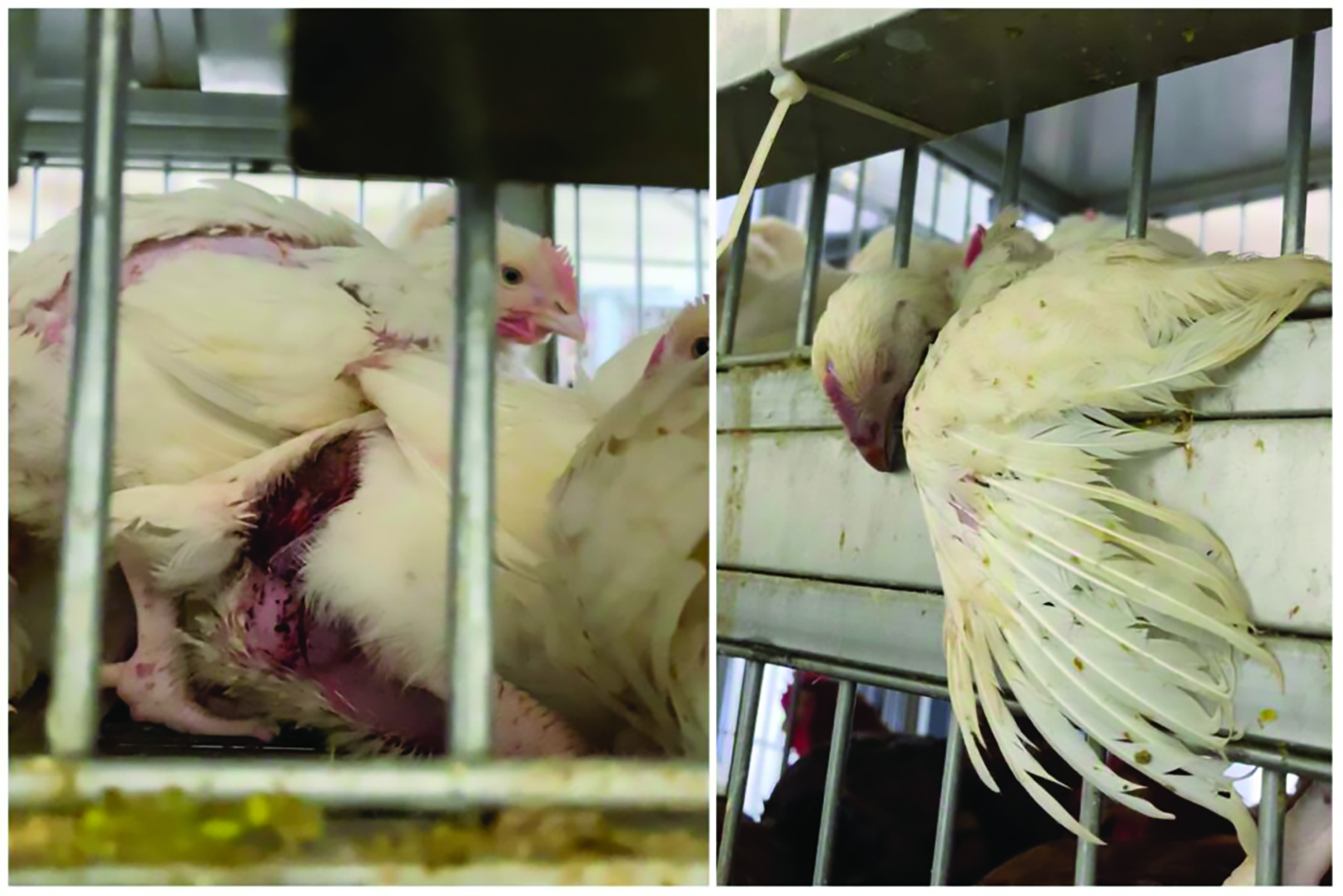
Did you know that in New York City alone there are about 80 of these markets? Species sold in these markets include chickens, ducks, guinea fowl, turkey, quail and rabbits. And although against regulations, sometimes goats, sheep and cows are sold. These animals are kept in cramped, overcrowded, and squalid conditions. The small animals are often stored in cages piled on top of each other where they defecate and urinate on the animals in cages below them. They are not fed or given water, and some are already sick and dying. The suffering continues until they are sold and slaughtered.

Unannounced visits to these markets and inspection reports attained through the Freedom of Information Law (FOIL) show flagrant repeated violations. To list just a few: Cages were encrusted with feces and feathers; animals were seen cannibalizing each other; live animals were able to witness the kill area where other animals were being killed; garbage, stagnant water, animal parts and blood were found outside these markets attracting rats and mice; and noxious foul odors wafted into the adjacent neighborhood. 

In 2020, in response to the Covid-19 pandemic, with the backing of many animal welfare organizations and those in the medical field, a bill was introduced in NYS to prohibit these markets. Allowing these markets to operate in congested urban neighborhoods was seen as a risk that should not be taken.  

In the four years since this bill was introduced there have been avian flu outbreaks in live markets in Brooklyn and Queens. Residents living in the neighborhoods where these markets exist continue to file complaints. Yet violations of unhealthful conditions and animal cruelty are not enforced, and these dangerous and inhumane markets continue to operate with impunity.

And of course, many of these horrors and more exist on much larger scales in factory farms and slaughterhouses throughout the country. 

Speaking out against this cruelty and adhering
to and promoting a plant based diet may save the animals we see, and those suffering out of our sight.

Please contact me through Wildlife Watch and I will be happy to let you know how you can help to support the NYS LIVE ANIMAL MARKET BAN.

THE WHOOPING CRANE

(Reprinted with permission of the author.  The full article has been shortened. Contact the author for the full text.)

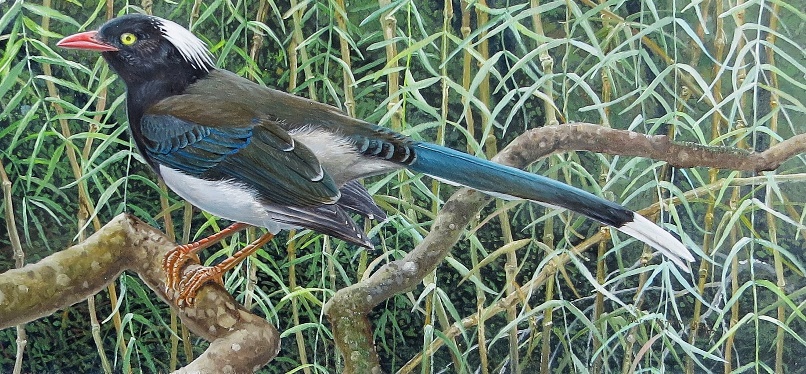
Painting and text by Barry Kent MacKay

Years ago, I had the wondrous privilege of standing face to face with these magnificent birds inside one of the large enclosures away from public view at the International Crane Foundation, at Baraboo, Wisconsin. The Foundation is part of a massive, binational network of various government and non-government agencies and organizations that have, by dint of enormous effort over more than 80 years, and at great cost, prevented this species from going extinct. It is still endangered, and still in perilous need of help from humans.

The International Crane Foundation estimates that nearly 20 percent of Whooping Crane deaths among the birds re-introduced in the eastern migratory population are from shooting. High tension wires and storms, droughts, and other extreme weather events that are resulting from climate change or other hazards take their toll.

My personal view is that there is great need to focus on protecting all wildlife, including the most common, to prevent them from becoming endangered in the
first place.

This is an oil painting on compressed hardboard and is approximately 30 by 24 inches.

Barry Kent MacKay
Bird Artist, Illustrator
Studio: (905) 472 9731
mimus@sympatico.ca


LET’S GO WILDLIFE WATCHING AT THE SILK FARM WILDLIFE SANCTUARY IN NEW HAMPSHIRE

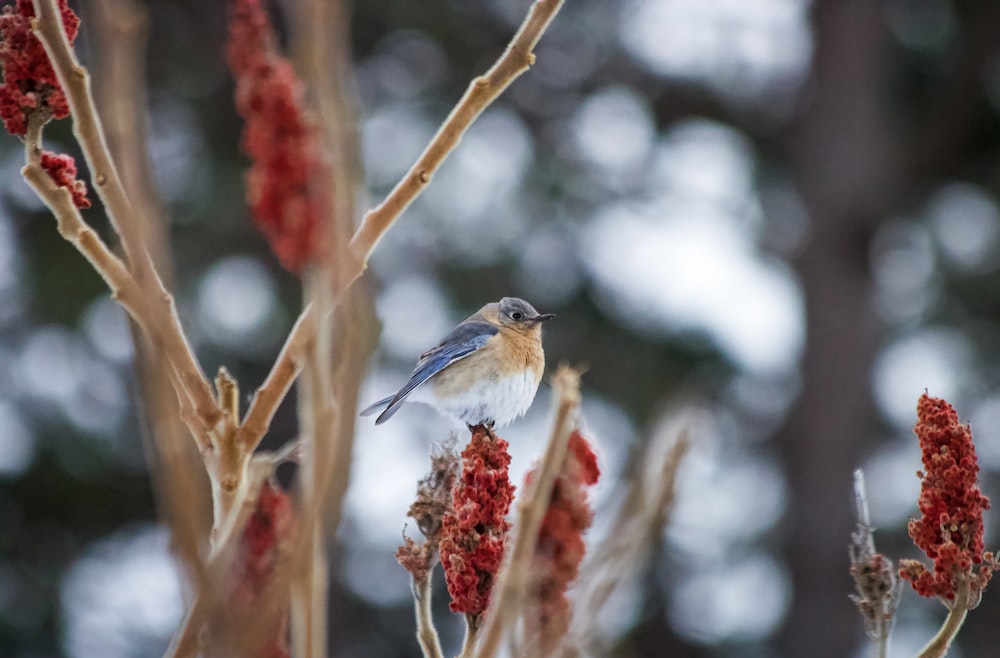
An Eastern Bluebird sits on top of Staghorn Sumac. This little bluebird was seen on the
seacoast of New Hampshire, foraging on these plants.

PHOTO © BRIAN YURASITS ON UNSPLASH

New Hampshire is a great place to spot a variety of wildlife species. With a surprising tourist boom in autumn for ‘leaf-peepers’ (tourists traveling to New England to look at the array of fall leaves), you quickly realize after living in NH that there’s many natural beauties to be appreciated. With a biodiverse environment hosting animals ranging from hermit crabs along the shore to moose and Purple Finches, New Hampshire has a lot to offer when it comes to wildlife watching.

One of my favorite spots to visit year-round is the Silk Farm Wildlife Sanctuary, in Concord, NH. nhaudubon.org/lands/sanctuaries/silk-farm-wildlife-sanctuary/

A portion of the property hosts the center for the McLane Audubon chapter, who maintains the trail system. During visitor hours, you can also stop by and see the pollinator garden & rescued birds of prey that were unable to be rehabilitated, that now live in mews viewable by the public for educational purposes.

The Silk Farm sanctuary offers three miles of trails; the trails are of varying difficulty, so whether you’re a casual birdwatcher or experienced hiker, there’s something to offer. Audubon maintains nest boxes for American Kestrels, Eastern Bluebirds, and Tree Swallows along the property, which are often busy in spring. On the lake, you can spot a variety of waterfowl including one of New Hampshire’s most beloved birds, the Common Loon. To offer the wildlife a safe place to exist in peace, hunting and fishing are not allowed; dogs are also not allowed in the sanctuary, with the exception of one dog-friendly bike trail.

If you plan on visiting the Silk Farm Wildlife Sanctuary, be prepared for some bumpy trails and potentially a few ticks. The ruggedness of portions of this sanctuary is what makes it special; despite being fairly popular, the trails let you feel truly immersed in the wilderness despite being so close to the city.

Patrick Kuklinski is a published nature writer and bird fanatic currently residing in New Hampshire while he works towards a Bachelor’s in Zoology.


THANKS TO NYC MAYOR ADAMS…VEGANISM IS IN THE SPOTLIGHT

A new campaign called “Eat A Whole Lot More Plants” has launched in New York City to encourage citizens to adopt a healthy, balanced diet.

Ads for the campaign will run on television, radio, subways, NYCLink, outdoor media, and digital channels. The ads will explain the benefits of whole plant foods such as fruits, vegetables, whole grains, beans, and nuts, highlighting their nutrient density and lack of sodium, added sugar, or unhealthy fats.

Please see this link for more information about Mayor Eric Adams: nyc.gov/office-of-the-mayor/bio.page

As longtime vegans, we, at Wildlife Watch, are very excited to hear this news.

Meanwhile, at a state level…

The Physicians Committee for Responsible Medicine (PCRM) partners with the League of Humane Voters®/NY (LOHV®/NY) to push for S996/A3708, the NYS bill that would mandate nutritionally complete plant-based food options in public schools. While the bill didn’t pass this year, we will continue efforts into 2024!  Its success is inevitable!


A PERSONAL NOTE: By Anne Muller

The Wildlife Watch Hotline, 877-WILDHELP fields hundreds of calls starting late March and lasting through August when it slows down as baby season comes to a close.

While a “hotline for wildlife” may sound a bit impersonal, the calls that come our way can bring immense joy or grief at a personal level. They also bring the satisfaction that Wildlife Watch is helping animals in distress.

Some calls will always be remembered. On June 22, a woman in North Carolina called about a fawn who didn’t sound well. She had left him alone assuming that the Mom would return to nurse. Something about the description raised a red flag, and I asked her to go back to check.

She did, and texted the following: “When I went out to pick up the drenched, cold, bug-covered fawn, who seemed barely alive, the mom gave a huff in alert.  I had seen her approach the fawn several hours before and hoped all was well.”

She carried the fawn back to her house planning to give him an electrolyte solution that we had suggested, and we were both looking forward to good news.  Instead, she later texted, “The little deer has died.” The words struck hard.

She then asked if she should take the fawn back out for the mom to have closure, or would it not matter. I had never been asked that question, and thought, yes it matters, yes put him out so his mom understands that her milk will not be drunk, and so that she can mourn. We don’t know for sure what a deer mom feels who loses her offspring, but we can easily extrapolate from how we would feel. One thing that is certain, our callers are the most compassionate people on the planet.

The Beloved European Starling is Treated Shabbily in the U.S.

PHOTO © unsplash.com/@philbaum

If you’ve ever tried to find a rehabber for a starling, you know how difficult it is. Starlings, sparrows, and pigeons are considered “invasive species” by the NYS Bureau of Wildlife.   Why would the bird, whose praises were sung by Wolfgang Amadeus Mozart, be so maligned? Do you know that Mozart had a pet starling for three years? The bird even learned to sing certain bars of Mozart’s music! Mozart loved him so much that he held an elaborate funeral –including a procession–
for him when he died. Please see more at: en.wikipedia.org/wiki/Mozart%27s_starling

In Wildlife Watch’s search for a rehabber who would take these smart and adorable birds, we discovered Karla. Karla has brought much relief to our many callers who are fortunate to live in the Hudson Valley of NY. Some of our callers have even risked their own lives to rescue starlings from busy roads, though we don’t recommend it.

In the next issue, Karla will talk more about why she specialized in the rehabilitation of starlings, sparrows, and pigeons. We are looking forward!

In Loving Memory of Sheila Milkowski, a longtime Wildlife Watch member.

Sheila’s full obituary can be seen here: legacy.com/us/obituaries/gazettenet/name/sheila-milkowski-obituary?id=52021595

 Sheila sadly passed away on April 20, 2023. Her obituary, published in the Daily Hampshire Gazette on May 25, 2023 said that she lived in NYC for many years where she taught school and had an after-school art program for underprivileged children.

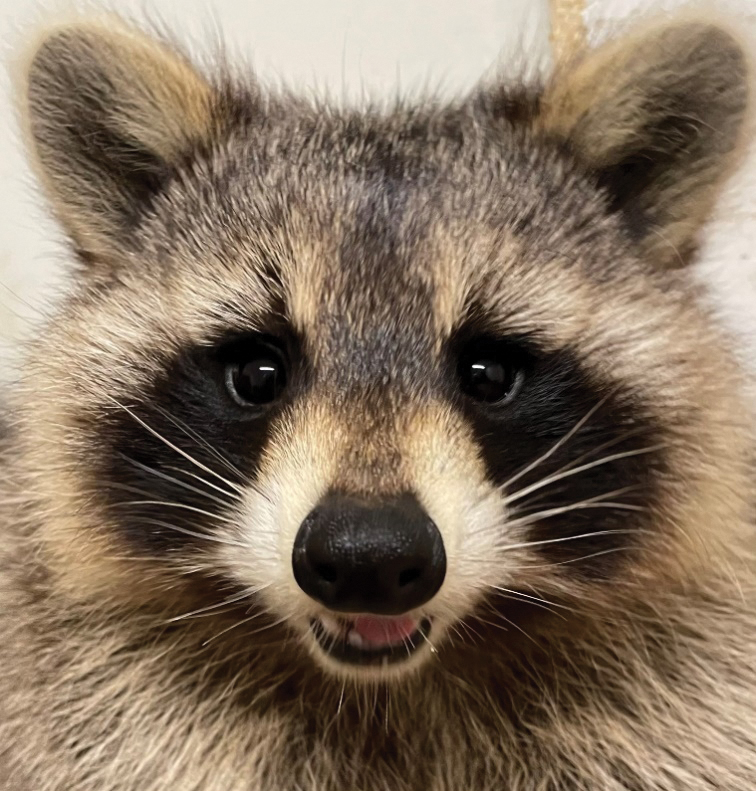
She was an animal activist and became involved in the rescue of many cats, as well as a beloved raccoon. We wish people as kind as Sheila would live forever.

Wildlife Watch first heard about Sheila’s passing from her close friend, Jackie Compton. Please see Jackie’s letter against trapping in the C.A.S.H. COURIER, Summer 2023, on page 6.

A WORTHWHILE GOOSE CHASE

Capturing a Canada goose who was gravely injured by fishing line, and a metal cuff placed by wildlife managers.

     By Stephanie Thompson

PHOTO © STEPHANIE THOMPSON

while scrolling the Nextdoor app one day, I saw a post about a goose at Overlook Park in Dutchess County, NY.  His leg had gotten tangled in fishing line and he was unable to put his foot down. The post was filled with comments of people trying to leave information that could help, others expressing their sadness, and many stating their anger towards whomever left the fishing line. When I realized this post had been made 5 days before, I commented, “Has anyone helped the goose yet?” The next morning, I quickly got a notification from a woman who said that the goose was still at the park. At this point, I was so upset knowing that the goose had now been in pain, stuck, and hopping on one foot for at least a week with no relief. I knew I had to go to the park and help the goose.

I went online and came across the Wildlife Watch hotline. I got a call back and found out about a woman who lived two minutes away from the park. I called her and she said she had actually been to the park earlier that day trying to catch the goose, but couldn’t get him because he kept flying into the water. I felt discouraged, but when I told her that the goose was now in the football field far away from the water, she told me, “Stay there and keep sight of the goose, I’ll be right over."

She showed up almost immediately, and we both got out of our cars in spite of the torrential downpour. My boyfriend Jeremy also showed up to help.  We all walked towards the field, trying our best not to scare the goose as we got closer. At first, the goose tried to just hop away slowly, but as the rehabber got close enough to catch him with her net, the goose took off and flew to the other side of the field. We tried running towards the goose in different directions, and even took turns with the net, but the goose used all his energy to keep flying far away from us. Running back and forth in the rain, we began to think that catching him would be impossible.  Then, as he made one more attempt to fly into the woods, where we wouldn’t have been able to get him, miraculously he landed at the edge of the field, allowing Jeremy to catch him with the net.  When the rehabber picked up the goose up to inspect him, my heart sank to see that not only was the fishing line still wrapped around his leg, but the leg was barely hanging on as the goose had been pulling endlessly at the fishing line to try to get it off. We rushed down the street to a rescue and sanctuary where they finally took the fishing line off the goose and bandaged his leg temporarily.

I was told that the leg would have to be amputated, but that the goose could still live just fine without it and would be sent to a rehabilitator.  I was relieved to know that the goose was safe now and was on his way to healing and living a much happier life.  Jeremy and I went home with the biggest mix of emotions, switching between being proud that we actually saved the goose, to feeling devastated that he went through so much suffering over something so careless and preventable.

It takes a village, and I’m so grateful to Wildlife Watch, the Hudson Valley Animal Rescue, the woman who helped, Jeremy, Lorie (who posted about the goose), Kim for trying to help all week, and everyone else who cared enough to try and help. I’m glad this story had a somewhat happy ending, but I hope that it can help inspire change so that animals can live freely in their habitats without having to suffer from the carelessness of humans.


PHOTO © STEPHANIE THOMPSON

ROANNA’S NURSERY: CONSERVING CORALS

By Bindu Gopal Rao

Conserving Corals

Coastal Impact is a non-governmental organization (NGO) that works on marine conservation, education, and research; it studies and monitors Goa’s marine ecosystems, spreads awareness, and initiates research and conservation actions. It also helps build interest and engagement among local communities and visitors about Goa’s extraordinary marine ecosystems.  It has just completed a coral
micro-fragmentation transplantation project that seeks to rejuvenate coral reefs.

The Case for Corals

Among the most diverse ecosystems in the world, coral reefs have seen a rapid decline in the last few decades. The coral cover that had already taken a very bad beating because of global warming, then they took another hit in April and May 2020. About 80 to 90% of the corals in Goa were bleached!

 Bleaching causes the corals to become white as algae is flushed outside but the coral is still alive - barely. “That is when we realized that we should do something urgently about this,” explains Venkatesh Charloo, Founder Trustee of Coastal Impact. “So, we applied for a grant with The Habitats Trust and with the blessings of the Forest Department of Goa, we transplanted a species of hard coral called Turbinaria (commonly known as table coral). It is a very resilient coral and yet it was suffering from bleaching, so we decided to start with that.”

The Specifics

Beginning in January 2020, Charloo and his team have transplanted 192 pieces of coral over a year. They made metal frames that could hold 12 ceramic tiles each of a square foot. Each tile was secured to the frame with cable ties. These frames were then lowered at a site off Grande Island, a popular diving and snorkeling site opposite Goa’s airport. Then four fragments of coral were secured with an eco-friendly epoxy-based adhesive to the corners of each tile. The broken but alive pieces of coral were found on the seabed and gently placed in a bag and brought to where the frames were, so there was no additional stress on the corals. The team has since regularly monitored coral growth and rate of growth is encouraging, mirroring the pattern elsewhere in the world where coral regeneration projects have been attempted. The Habitats Trust project was completed in December 2020, and the team is now looking for fresh funding to help with new projects as well as to continue monitoring the transplanted corals, which is a long-term process. The coral growth is being monitored monthly and the tiles are brushed and cleaned to remove sediment build up.

Micro Fragmentation

The process used is called Micro Fragmentation Technique for Coral Regeneration and uses small coral fragments that are about two or three centimeters in dimension. These tiny fragments of corals can grow 25 to 40 times faster when compared to any other regeneration technique. So far more than a million pieces of corals have been transplanted worldwide using this technique. “The idea now is to build on this and transplant reef building corals of other endemic species where growth will be more rapid,” says Charloo. “Once the corals grow, they merge into each other and immediately increase the collective rate of growth—they become bigger very quickly. The success rate is very high in this non-invasive technique.”

YOU CAN ADOPT A FRAGMENT OF CORAL - Pooling Resources

The 192 transplanted coral fragments monitored by Coastal impact have been put up for adoption. Anyone can adopt a fragment of the coral for Rs. 5500 (67 USD) or adopt a tile that has four pieces for Rs. 20000 (245 USD). These funds are then used exclusively for transplanting new corals as well as monitoring existing corals. “The corals are renamed with the name chosen by the person adopting each coral fragment, who then receives a Certificate of Adoption, an 80G certificate Tax Exemption Certificate for 100% of the amount paid, as well as a photograph of the coral—and follow up photographs, says Charloo. “This project is called the Coral Crusaders Program.” Thus far nearly 100 fragments of coral have been adopted. The first coral was adopted by 10-year-old Samira Ram from Mumbai whom Charloo describes as the “first official Coral Crusader.” A couple of startup garment companies also adopted a few fragments to gift to their regular customers.

Saving the Corals

As corals were being damaged when boats unintentionally dropped their anchors on them, Venkatesh and his team decided to put mooring buoys at different places around three islands. “We put cement blocks on sandy ocean beds and attached these to a large drum with ropes and chains,” says Charloo.

 “The diving site also has an old shipwreck that was being damaged every year, so we also placed two mooring buoys there. One buoy was put at Roanna’s Nursery, named after the first volunteer who worked with us” The Coastal Impact team realized last year that, if more than one boat anchored to these mooring buoys, then the cement blocks were dragged along
the seabed. “After a bit of research, we got helical anchors manufactured locally,” adds Charloo. “These screw into the sand and can each absorb a pull of
1000 pounds.”

Making the Connect

The team is also starting a Citizen Science Program named Marine Monitors where divers will be taken to conduct surveys on the transplantation sites and taught the techniques in maintenance, monitoring and fresh transplantation of corals. In addition, they would also conduct biodiversity surveys and monitor fish stocks which will assist in regular and long-term collection of data, and the uploading of the data onto web-based databases. Charloo says, “it is great as divers can come back repeatedly for dives and see how the corals have grown as well as monitor changes to the dive sites in terms of diversity.” A few weeks ago, a fish sculpture made of cement by another company was installed near the transplantation site on which several different species of reef building corals were transplanted. Sea Urchins were also introduced to keep the algae from taking over to use nature to help nature and this seems to be working well so far. Charloo was honored by National Geographic on Earth Day as one of the Changemakers in India, and a short film featuring him was aired by NatGeo. Currently, Coastal Impact is in advanced discussions for funding three projects with corporates under their Corporate Social Responsibility programs. Meanwhile, the corals are growing slowly yet steadily, and the team is also seeing aggregations building with more fish species inhabiting the area. Marine life is seeing a lot of threat and the regeneration of coral with Micro Fragmentation is a great way to help this immensely valuable building block of our planet.

THINK GLOBALLY, ACT LOCALLY

PHOTO © catchalure.com/blogs/news/cmon-bro-dont-leave- me-hanging

DEBRA MUCCI is forever on the lookout for wild animals who may need help, especially in her neighborhood.  Unfortunately, it doesn’t take long for her to find them.  Debra doesn’t mince words when she enlists the support of those who can help achieve permanent change. Her letter was emailed to: County Executive, Aileen Gunther, NY Assembly Member; Congressman Patrick Ryan, parks@orangecountygov.com Sean Patrick Maloney; the DEC; and Bridget Fahey of the Fish and Wildlife Service.

The subject line read:

Fishing Line in Thomas Bull Memorial Park Killing Wildlife

Debra wrote:

Good Afternoon

I am writing because I just took a robin off of a bush that was caught up in fishing line. Its leg was broken so badly that the foot was twisted in the opposite direction and the line cut clear to the bone. The robin must have been there for some time as he was gasping for air and appeared exhausted. The bird was finally cut loose and took off. Unfortunately it will die.

While I was there I also noticed fishing lines hanging from a tree near the lake! It is obvious to me that people have no idea what they are doing but are allowed to fish anyway.

You may not have noticed, but there are fewer birds than normal this year, and now one robin and perhaps her clutch of eggs–are dead due to ignorance and a total disrespect for wildlife. 

I feel that nothing is being done to check the lakeshores for fishing line. Last year, my dog and I were walking along the lake and she got caught up in fishing line! Thank God that turned out okay or you would have a lawsuit on your hands!

I spoke to several park employees, as well as the person in charge at Thomas Bull Memorial Park, but came away with the knowledge that no one cares! 

As a tax payer and someone that cares about our wildlife, I would like to have park employees scan the lake area for animals caught up in fishing line on a daily basis as they have to empty the trash cans in that area anyway. This is not the first time I have come across this situation.

I am asking for you to intervene and do something about this situation. There is no reason for animals to die unnecessarily.

By the way, is anyone checking for fishing licenses?

Sincerely,

Debra Mucci 

To see how to remove fishing line or monofilament, visit:

catchalure.com/blogs/news/cmon-bro-dont-leave-me-hanging

One’s Too Few— How About Adopting Two!

By Anne Muller

Photo Credit: Anne Muller

Not only will you doubly be helping animals who need homes, but you’ll be providing quality of life for the guys you adopt!

My Mom used to say, “How would you feel?” and I’ve lived my life always asking that question.  Early on, I realized that as much as I love animals, I’d hate to be the only human animal among other species– forever.  A stuffed toy of a human wouldn’t satisfy me for more than 5 minutes.

With my Mom’s question in mind, I always had at least two of a species.  It allowed me to be guilt-free when I had to leave for the day, and it also taught me the deep bonding between animals, their interactions, and their deep grief over the loss of their companion. 

Starting in the middle of a long sequence of pairs of our precious dogs, we adopted Taco to be a friend for Suni, and when Suni passed away, we adopted Lulu (Louie) to be a companion for Taco, and when Taco passed away, we adopted Chico.  Chico and Louie loved each other in their own way.  Skipping over many of the wonderful moments they had with each other, while Louie was in her final hours Chico did not stop licking her face.  He knew she was going to die, and he stayed near her and continued to try to bring her back.  I left for a bit to let them be with each other when Chico let out a loud, prolonged  howl. I knew it was the moment of Louie’s death.  

Please double your adoptions, and by providing your companion a friend of his or her own species, it will exponentially increase the amazing joy and fascination that will be brought into your life as well.

Let’s Go Wildlife Watching – Time Well Spent

By Cynthia Hacker

PC: Wood Frog Virginia Herpetological Society

I love frogs! In the Hudson Valley, and in much of the east coast stretching from Georgia to Canada, we have “wood frogs,” whose sounds resemble that of clucking chickens! I have a few places where I love to catch this amazing chorus. In a curious location on the Crag Trail and Bonticou Road intersection of Mohonk Preserve’s Springfarm area, there lies a small body of water called a “vernal pond” that forms each spring. The wood frogs that gather there put on quite a show. The sound is almost deafening! But make too much noise yourself, and they will stop. Give it a few minutes and they will forget you are there and once again begin to sing. I have found many of these vernal pools with singing frogs on other trails in Mohonk Preserve, as well, including the Overcliff Carriage Road, where I encountered clear cold waters with a whole slew of frogs at play. 

To learn more about frogs, their habitats, and the calls they make, visit:

https://animaldiversity.org/collections/frog_calls