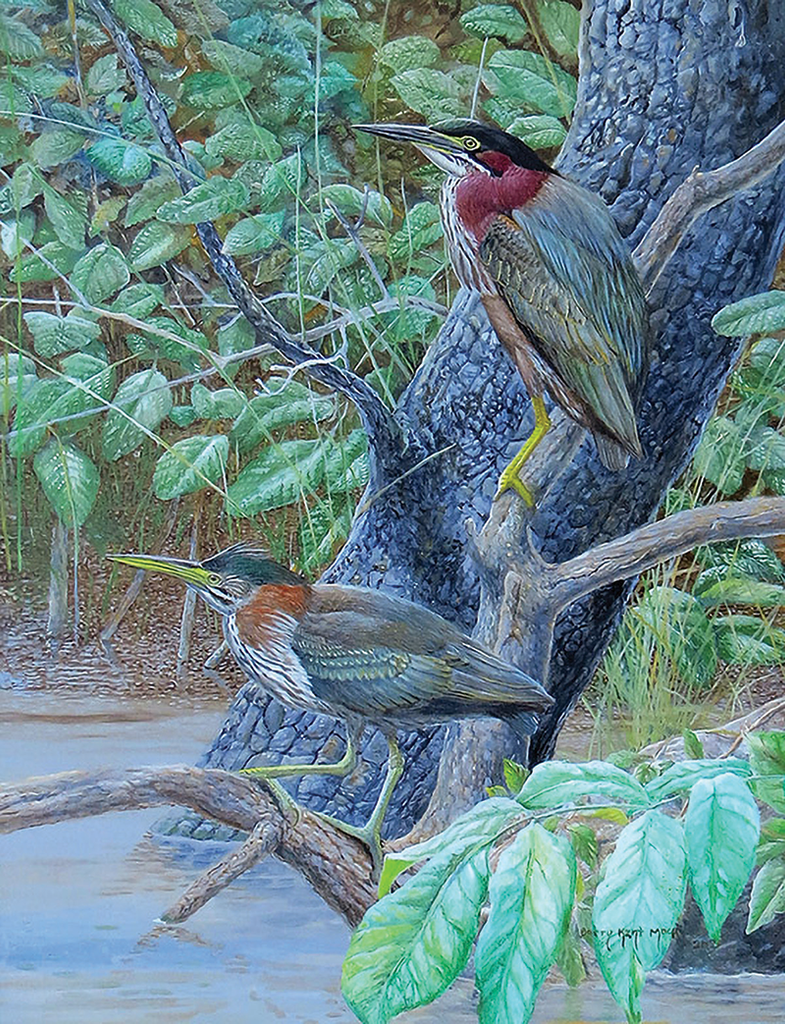
The Green Heron (Butorides virescens) has often been described as “crow-sized,” and I think that is a fair comparison, although it is a crow with a disproportionately large front end, a long dagger-like bill, and long legs. Like all herons, it is something of a shape-changer. When resting it draws its neck tightly into the shoulders, giving the bird a compact, hunched appearance, but when alert it can extend that surprisingly long neck in an instant to strike at prey.
Although less colourful than the adult, the young bird is readily recognizable. Adults weigh about 240 grams (8½ ounces). The mature bird has a glossy black cap and rich chestnut neck, contrasting beautifully with the greenish upperparts.
Green Herons are generally more solitary than most other North American herons. They favor quiet waters where they hunt patiently from the water’s edge or from low branches overhanging the water. At other times they stalk their prey one deliberate step at a time through the shallows, at times using tools to bait to attract fish within striking distance. Their diet includes almost anything small enough to swallow and profitable enough to pursue: fish, frogs, salamanders, small reptiles, crayfish, aquatic insects, worms, leeches, and many other invertebrates.
Green Herons are seasonally monogamous. Although they usually nest as isolated pairs, they occasionally join loose colonies with other herons. The nest is a rather bulky platform of sticks, usually placed in shrubs or trees over or near water, although occasionally on the ground. Typically, two to six pale greenish-blue eggs are laid, and both parents share incubation and the care of the young. The juvenile in my painting is approximately one month old.
This painting, done in oils on compressed hardboard, is approximately life-size. I donated the original to a charity before recording its exact dimensions.
Yellowstone, a hotspot of the US park system, is known for sitting above a huge caldera that creates its famous geysers, hot springs, and bubbling sulfur pools. It is also a tourist hotspot as it draws people in from all over the world for a variety of reasons. Along with the mesmerizing volcanic activity, stunning landscapes, and world-class hiking, Yellowstone is one of the best places in the country to experience wildlife first-hand.
On my visit to the park in 2022, I had some up-close encounters with animals that I was seeing for the first time. Generally I am very careful to keep a safe distance from all wildlife but I did not have the opportunity to move away when I awoke to the shadow of an elk on the side of my tent. Despite large antlers, these majestic creatures are not aggressive and can be seen easily in Yellowstone’s fields and woods.
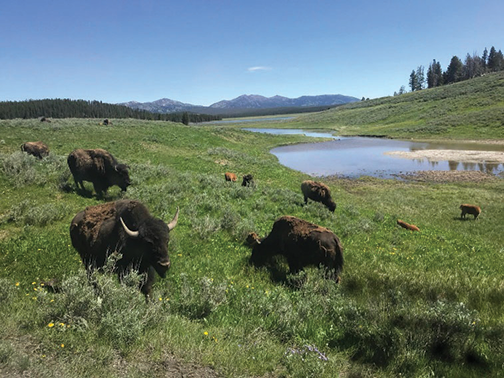
Later that morning an American Bison grazed peacefully a few hundred yards away from our campsite. These quintessential American animals were nearly driven to extinction by hunting in the late 1800s. They can now be seen in large herds within the park and are best viewed from the protection of your car. However, this particular Bison walked straight through our campsite as we ate breakfast. We had our eyes on it and made sure to move away slowly before it approached.
Another species nearly driven to extinction within the United States was the Grey Wolf. Reintroduced into Yellowstone in 1995, they are safe from hunting within the park. However, a recent executive order aims to strip them of their endangered species protections. They face the destructive reality of open-season trophy hunting when they cross outside of park boundaries. In my tent that evening, I could hear the distant howl of one of the park’s wolfpacks. Laying within earshot of this ghostly predator was both a reason for hope and a moment of grief. We know all too well what can happen when our precious wildlife is hunted for “economic” reasons.
Aside from these large mammals, Yellowstone is home to some unique birds. One common but spectacular species is the Lazuli Bunting. These small birds stand out due to their bright blue heads and orange chest patches. While on hike the next day we walked through a patch of forest home to Clark’s Nutcracker. These large birds can hide thousands of seeds in hidden caches and return to feed on them when food is scarce in the winter.
The diversity of animals, and relative ease by which they can be seen, make Yellowstone one of our country’s best places for wildlife watching. But we must be careful and vigilant to ensure these wildlife viewing pleasures can be enjoyed for decades to come.
Joe Anderson is an avid wildlife watcher, and enjoys sharing his favorite locations with others.
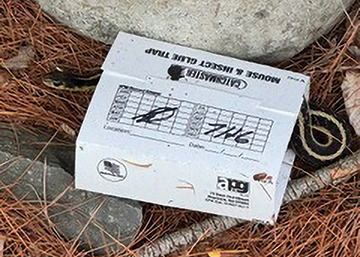
Caller Supplied Photo of an Unfortunate Snake Caught in a Glue Trap
Normally Intended for mice, these traps are a nightmare for any animal who becomes adhered to the sticky substance of the trap. People have put glue traps in trees to kill insects, instead birds have become adhered to the glue inside the traps. As mammals, reptiles and amphibians, and avian species alike struggle to get free, they tear their insides out and suffer for hours or days.
A caller to the Wildlife Watch Hotline sent this photo of a snake that had gotten into a glue trap intended for mice. What can rehabbers do to help the victims?
If you find an animal in a glue trap, the first thing to keep in mind is that you don’t want to pull the animal off. It will take a very gentle approach of de-gluing. (Glue, by the way, is usually made by boiling animal by-products.)
We called the rehabber, Michele Gallo, to find out how she released him. She said that VERY GENTLY she worked some vegetable oil between the snake and the glue, while keeping some cardboard under the unglued part of the snake, and with a Q-Tip, she gently worked the snake free and he took off immediately.
Wildlife Watch believes that traps that kill or maim animals should be made illegal for the suffering they cause. There are highly effective non-lethal traps that are excellent. To the right is one with which Wildlife Watch has had a lot of success.
Once the mouse is caught, he has enough food (peanut butter or corn flakes and some water) for at least 12 hours. We then release him in a safe area and continue to release others in the same location in case they’re all related.
How the DRC’s Ebola Outbreak Could Devastate Gorilla Populations
by Samuel Peters
A new Ebola outbreak is spreading through the Democratic Republic of Congo. Scientists and conservationists are watching closely, because the last time Ebola arrived, it nearly wiped out its gorilla country.
On May 15, 2026, the Congolese Health Ministry confirmed a new outbreak of Ebola in the eastern Democratic Republic of Congo (DRC). The strain involved is Bundibugyo virus, one of six forms of Ebola virus within the Filoviridae family, and one for which there are no approved treatments or vaccines. The disease quickly spread into Uganda as more than 676 human cases were recorded and the death toll passed 136. The World Health Organization swiftly declared it a Public Health Emergency of International Concern (PHEIC).
As the human response mobilizes, a second alarm is sounding — quieter, but no less urgent — among the scientists, veterinarians, and park rangers who work to protect Africa’s great apes. The eastern DRC is home to some of the world’s most endangered gorilla populations. The overlap between the outbreak zone and gorilla habitat is not yet direct but it is close, and it is narrowing.
In 2002 and 2003, Ebola swept through the Lossi Gorilla Sanctuary in the Republic of Congo. Researchers monitoring the population watched as 91% of individually known gorillas in their study groups disappeared within a matter of months. Most were dead, as mortality rates ran high, up to 95%. Across a 5,000km2 study area, an estimated 5,000 western lowland gorillas perished. A subsequent 2004 outbreak in Odzala-Kokoua National Park extended the damage. In 2007, partly in response to the scale of those losses, the International Union for Conservation of Nature reclassified the western lowland gorilla as critically endangered: one category from extinction.
Researchers who studied the outbreaks described Ebola accurately as “a threat to the survival of African great apes.” That assessment has not changed. Today, all four gorilla subspecies sit at either endangered or critically endangered status. The western lowland gorilla is the most numerous, with about 316,000 remaining, the majority in the Republic of Congo. The other three subspecies exist in far smaller numbers and in far more precarious conditions.
Why Gorillas Are So Vulnerable
Gorillas live in close social groups, typically eight to ten animals gathered around a dominant silverback, with several adult females and their offspring. They spend hours each day in physical contact with each other: sleeping, grooming, and playing together. This closeness is central to their social structure and their wellbeing. It is also one of the primary reasons Ebola moves through gorilla groups so rapidly.
Damien Caillaud, a behavioral ecologist at the University of California, Davis, was in the field during the Lossi outbreak. He documented how the virus spread within groups through direct physical contact, particularly during rest and grooming. Nearly all gorillas in an affected group would disappear within a few weeks of the first death. Solitary males — those living apart from family groups — survived at far higher rates, which confirmed the link between social contact and transmission.
The behavior of gorillas around death compounds the risk. When a gorilla dies, the others do not simply move on. Healthy gorillas will stay near a dead body and will approach and touch the remains of individuals they encounter in the forest, even from other groups. Mothers have been observed carrying the bodies of dead infants for days, sometimes weeks. These responses are well-documented by scientists. But in the presence of Ebola, a carcass can remain infectious for several days, meaning that this behavior likely contributed to the spread of the virus across group boundaries during the early 2000s outbreaks.
Mountain gorillas are the subspecies under the most immediate threat from this outbreak. They live at the precise intersection of DRC, Uganda, and Rwanda: the same geographic corner where the current outbreak is concentrated. Their population has recovered significantly from a historic low of fewer than 300 in the 1980s and now stands at just over 1,000. It is one of the few genuine conservation success stories in great ape protection.
Dawn Zimmerman, a wildlife veterinarian at Yale University and the Smithsonian Institution, modelled what would happen if Ebola entered the mountain gorilla population through a single infected individual. Her findings, published in Scientific Reports in 2023, projected that fewer than 20 percent of the population would survive past 100 days post-infection. One case, introduced into a population of just over 1,000 animals, could effectively destroy decades of conservation effort.
The Grauer’s gorilla; the world’s largest nonhuman primate, also known as the Eastern lowland gorilla, lives exclusively in eastern DRC, the same region where the Ebola outbreak is now unfolding. Their population is estimated at fewer than 3,800, but that estimate is more than a decade old. Armed conflict across the region has made accurate monitoring impossible. Researchers require security escorts to reach field stations, and in some areas have been unable to work at all for months at a time. The honest answer is that nobody knows exactly how many Grauer’s gorillas remain, or where they all are.
Conservation is a Joint Effort
The response on the ground involves several organizations working together in often difficult and dangerous conditions.
Gorilla Doctors, an NGO providing veterinary care to wild mountain and Grauer’s gorillas, has teams on 24-hour call to investigate any suspected Ebola case in wildlife. Their chief veterinary and scientific officer, Tierra Smiley Evans, has described how parks have increased security at the boundaries of protected areas to limit the risk of infected people entering gorilla habitat. Rangers in both Virunga National Park and Kahuzi-Biega National Park have been trained to recognize the clinical signs of Ebola in great apes.
Emmanuel de Merode, director of Virunga National Park, has approximately 200 rangers positioned near gorilla populations. The park has established screening posts to check all travelers entering the area for signs of illness. Tourism, already suspended due to ongoing armed conflict in the region, has not resumed, removing one of the more common routes of disease transmission from humans to habituated gorilla groups.
The Dian Fossey Gorilla Fund is monitoring the situation across DRC and Rwanda and has teams actively preparing response protocols. The Fund has acknowledged that the outbreak is already placing strain on conservation operations more broadly, even in areas not directly affected.
Conservation work in this region has never been safe. In May 2026, two rangers were killed at a control post in Virunga National Park when an armed group opened fire. More than 200 rangers have lost their lives in the park since it was established in 1925. In this context, the local Congolese conservation body, Institut Congolais pour la Conservation de la Nature (ICCN), provides security escorts for researchers and works alongside international organizations on the ground to manage park security.
The Vaccine Question
One avenue that researchers have long advocated for, but which yet remains unrealized, is that of an Ebola vaccine for wild apes. Peter Walsh, a disease ecologist formerly at the University of Cambridge, developed an oral vaccine candidate that could be delivered through bait left in the forest, eliminating the need to tranquilize the animals. Laboratory results were encouraging as the immune response produced was comparable to that of an injected vaccine tested previously. The key practical advantage was significant: a single dose, delivered without human contact, across a large area.
The territories involved are vast and often remote. Distribution by field teams or drones has been proposed but never implemented at scale. Ethical frameworks governing research on great apes have complicated further testing. The result is that a tool which researchers believe could save thousands of animals exists only in a partially developed state, while the need for it grows more urgent with each new outbreak.
One factor which has received less attention than it deserves is the effect of U.S. funding cuts on the capacity for scientists and conservationists to respond to outbreaks. The Trump administration’s reduction of USAID and related international support programs has left a visible gap in conservation infrastructure across Central Africa. Many of the organizations monitoring gorilla populations and protecting their habitat were partially funded through these mechanisms. Staff have been cut, programs scaled back, and monitoring capacity reduced, precisely at the moment when the need for it is most acute. The United States was previously a leading contributor to Ebola outbreak response internationally. That infrastructure has contracted, and the consequences are now being felt both in the public health response and in the conservation operations that run alongside the current outbreak.
As of late June 2026, there are no confirmed or suspected cases of Ebola in any gorilla population. The outbreak zones and gorilla habitat have not yet directly overlapped. That distance is being actively maintained by the people described above, working under difficult conditions with reduced resources. How long it holds will depend on how effectively the human outbreak is contained, and on whether the barriers between infected areas and protected gorilla habitat remain intact.
Samuel Peters is an African ecologist and conservationist with the Wildlife Institute. He can be reached atsamuelpete786@gmail.com
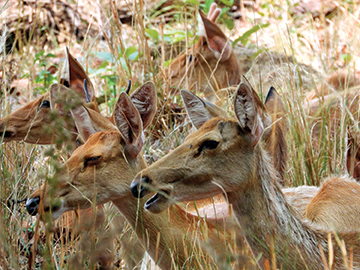
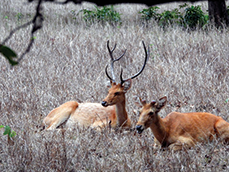
One of the most successful conservation stories in Indian jungles is that of the Hard Ground Barasingha, or Swamp Deer, in Madhya Pradesh’s Kanha National Park.
Entering Kanha National Park in the morning is magical not just because of the lush sal trees but because of its mascot (yes, called Bhoorsingh the Barasingha), the swamp deer. The morning light gives a magical golden hue to the swamp deer, making for a sighting that is completely mesmerizing.
The Species
The hard ground barasingha (Rucervus duvaucelii branderi) is one of three subspecies of swamp deer surviving in India and Nepal, and it occupies a genuinely unusual ecological position among them. The northern barasingha of the Terai, found in Dudhwa, Jhilmil Jheel, and in Nepal’s Shukla Phanta, lives in wet, marshy grasslands, and its ecology reflects that: soft ground, standing water, and seasonally flooded habitats. The eastern barasingha of Kaziranga and Manas similarly depends on floodplain grasslands and riverine habitats. The hard ground barasingha, by contrast, evolved in the dry, open grasslands of Central India, landscapes with a pronounced dry season, shallow soils, and hard ground conditions that would challenge any obligate grazer.
What makes this adaptation remarkable is that it is incomplete in the most ecologically interesting way. “Despite generations of living in a hard-ground landscape, the Kanha barasingha retains a strong ancestral affinity for wetlands and aquatic forage. Field observations at Kanha document animals readily wading into waterbodies to graze on aquatic plants: Hydrilla verticillata, Ceratophyllum demersum, Vallisneria spiralis alongside their primary diet of terrestrial grasses like Saccharum spontaneum, Themeda triandra, and Bothriochloa odorata. The species is classified as an intermediate, selective graminivore; more than 75% of its diet is grass across seasons, but it comfortably adds aquatic and semi-aquatic forage when available. This behavioural flexibility, sitting alongside a narrow dietary niche, is part of what makes the subspecies ecologically distinctive,” says Dr. Neha Awasthi, Independent researcher and ex alumni, Wildlife Institute of India.
Past Woes
However, the presence of the swamp deer was not like today. In the 20th century, a very significant change was observed in the distribution trend of Barasingha in central India. Gradually their number started decreasing as tribals started using the land for agriculture in the valleys of the Narmada, Mahanadi, Godavari, and tributary rivers. Added to this were hunters and biological pressure that made the species disperse. In 1938 when their population was assessed in the national park the numbers kept decreasing continuously and by 1970, only 66 Barasinghas were left in Kanha. “An enclosure was built by the forest officials of Kanha in 1970, which was free from predators. As it was very small, in 2007 this enclosure was expanded to cover 50 hectares. Kanha was declared a tiger reserve in the year 1973, due to which special attention was paid to the conservation of tigers and Barasingha deer. The relocation of villages started from the core area of Kanha. And the displaced villages were converted into large grasslands, and grasslands and ponds were constructed for their food and breeding,” says Ghanshyam Bhanware, Naturalist, Tathastu Kanha.
Making It Work
To save this endangered deer species, efforts were made to reintroduce it to Bandhavgarh Tiger Reserve and Supkhar Range (Kanha); efforts made between 1981 and 1990 failed. In 2015 the forest department relocated the Barasingha to Van Vihar National Park with full preparation, which was successful. “This time the forest department used an African technique called Boma, and a non-invasive capture method was used. After the success in Van Vihar National Park the forest department transferred some Barasingha to Satpura Tiger Reserve in 2015 itself which was a Boma and non-invasive capture method. Thereafter the forest department also transferred Barasingha to again Satpura Tiger Reserve and Bandhavgarh Tiger Reserve using the same method,” says Bhanware.
In fact, the measures that were taken at that time included the relocation of villages for wildlife something that was unheard of at that time and making predator proof enclosures. Durgesh Singh, co-founder of Outpost 12 by Sinali Experiences Pvt Ltd., says. “A proper habitat was created in the park where Barasinghas could have their choice of grasses, as they are very specialized eaters. They have a few species of grasses that they prefer to eat, and they are strictly grassland species that don’t venture into the forest.” Grassland management has been a central strategy in this conservation. “That also meant that big trees were not allowed to come up in the area so that the grasslands were never hampered in terms of growth and proper meadows could be developed. Likewise, de-weeding is a process where you take out the unwanted plants, not native or invasive in the area and that helps the native grass to grow,” adds Singh.
Expanding the Footprint
For nearly 50 years, every hard ground barasingha alive on earth existed within the boundaries of a single protected area. Kanha is exceptionally well-managed, but the conservation logic of having an entire subspecies concentrated in one geographic location, however good the protection, is deeply uncomfortable. “A single disease outbreak, a severe drought coinciding with a population low, an uncontrolled wildfire in a dry year, or an epidemic originating from the livestock populations in the surrounding buffer—any of these could devastate a geographically isolated population before managers have time to mount a response. Historical records from Kanha itself document serious rinderpest outbreaks in 1925–26 and again in 1976 that killed large numbers of gaur, sambar, and chital. The barasingha, confined to small habitat pockets at the time, escaped by chance. Chance is not a conservation strategy,” says Awasthi.
Earlier attempts to establish an alternate population were unsuccessful. In 1982, twelve barasinghas were captured at Kanha using chemical immobilization and transported to Bandhavgarh Tiger Reserve—all twelve died during the long-distance transport. Three further attempts between 1981 and 1990 to translocate animals within the Kanha landscape to Supkhar met with only partial success. “These failures were instructive. They shaped the design of what eventually became the Satpura programme – passive boma capture instead of chemical darting, shorter transport distances, customised vehicles, phased releases, and a predator-proof acclimatisation enclosure at the receiving site,” says Awasthi.
The Satpura reintroduction directly addresses the single-population vulnerability. With a breeding population now established across three grassland sites in Satpura and growing from 98 translocated individuals to 172 by 2023, the subspecies is no longer dependent on one location. Satpura sits around 350 km from Kanha, well within the historical range of the subspecies. Forsyth (1889) and Brander (1923) both documented hard ground barasingha in the Pachmarhi region, making it an ecologically and historically appropriate receptor site.
In Conclusion
At the end, what makes Kanha’s barasingha story special is that it actually represents the global conservation literature. A subspecies that fell to 66 individuals in 1970 and now numbers over a thousand free-ranging animals in Kanha, with an additional breeding population established in Satpura, is a remarkable outcome. It is often cited as one of India’s great conservation successes, and rightly so. “But it is important to understand that this recovery was not spontaneous. It was the product of fifty years of sustained, species-specific management: stringent protection, strategic grassland management, village relocation, controlled burning, water development, predator-prey dynamics management, and now active metapopulation establishment. The barasingha did not recover because Kanha became a good tiger reserve. It became good because the intensive management required to save the barasingha also restored the grassland ecosystem that the entire ungulate community, and through them, the tiger, depends on,” concludes Awasthi.
Bindu Gopal Rao is a freelance writer and photographer from Bengaluu. She enjoys birdwatching and environment, as well as taking the offbeat path when traveling. You can follow her on Instagram @bindugopalrao and find her work on bindugopalrao.com
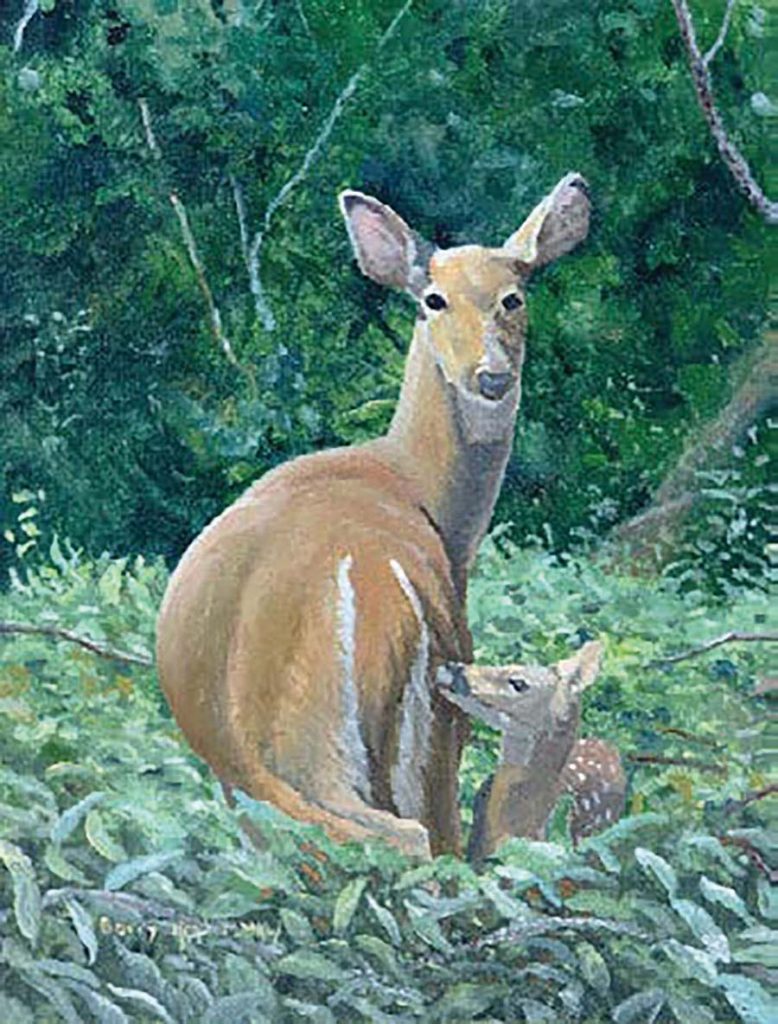
There is, I suspect, no North American mammal more studied, more written about, or more capable of evoking such a wide range of opinions—both positive and negative—than the White-tailed Deer.
A few years ago, I encountered a fawn of about the same age as ones I had seen in a freezer, but happily alive, in a woodlot, standing in oddly filtered light that reminded me of a scene from Fantasia. That moment provided the final inspiration to paint deer.
Their diet is primarily plant-based and remarkably varied, including items such as cacti, poison ivy, and even fungi that are toxic to humans. However, they are opportunistic and have been known to consume small animals such as nestling birds or mice, as well as chewing on bones for minerals. They readily feed on agricultural crops—hay, grasses, white clover, legumes, fruits, nuts, gourds—and are particularly fond of garden plants such as hostas.
A word of caution: White-tailed Deer fawns are cared for by the doe but are not constantly attended. A seemingly abandoned fawn is almost certainly not orphaned and should not be “rescued” unless in immediate danger—and even then, they should only be moved a short distance. The mother is almost always nearby, remaining out of sight.
To be placed on Barry’s email list, please contact: Barry Kent MacKay, Bird Artist, Illustrator, Studio: (905) 472 9731, https://fineartamerica.com/profiles/barry-mackaymimus@sympatico.ca
The Bashakill: A quiet, lush, and pristine location for a Sunday morning kayak and birdwatch. If you’ve never been, this spot is soon to be one of your favorites.
Located in Wurtsboro, NY, just across from Bashakill Vinyards, your day couldn’t be more ideal. Pack your paddling gear, sunscreen, and binoculars, and you’re set to go.
Upon entering the BashaKill, you’ll be welcomed by freshly blossomed, bright yellow, water lilies; their beauty is worth admiring. This first section of paddle is your entry to the larger vein of the Bashakill. You can make a choice to continue left (west facing) or right (east facing), definitely go left! The right is lovely, but the left is unmatched.
Wildflowers, turtles, and birds will guide you along this curvy and wide landscape. The vastness of the view is breathtaking, and you’ll wonder if you’re still in Ulster County.
While paddling, you may see several other kayakers; this spot attracts respectful wildlife watchers, such as yourself, so you’re sure to meet others with a polite “hello.” If you’re there during the week, you might find yourself alone to enjoy the tranquility.
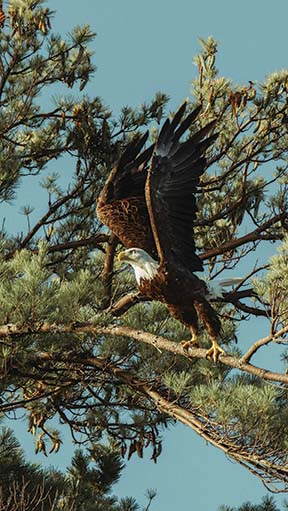
There is one bald eagle nest but, while clearly visible, you have to know what you’re looking for. About 20 minutes in, if you take the initial left (west-facing), there will be a set of large shade trees on your right. This set of trees houses a large eagle nest, directly adjacent to the water’s edge.
Bald eagles are sure to be seen during every kayak here, along with those of many other species. An interesting fact is that bald eagles use the same nest year after year, continuously adding to it, making it even larger and grander than the year before. Some nests have been reused for over 30 years!
This trip will take you roughly 1-3 hours, depending on how much time you take to relax. It is recommended to wear a sun hat if sun is in the forecast! To learn more about bald eagles, visit: https://iere.org/what-is-the-nesting-behavior-of-the-bald-eagle/
Happy paddling!
Logan Lapointe is an avid hiker, climber, kayaker, and nature lover, including insects.
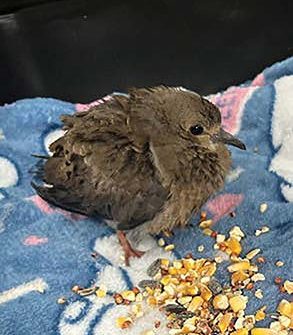
COMING TO THE RESCUE OF A FLEDGLING MOURNING DOVE WHO FELL INTO A STORM DRAIN!!
Fledgling Mourning Dove
Along with the warmer weather, the calls to our hotline grow daily. We recently had a call from a person who was walking near a storm drain during a rainstorm and heard chirping. She peered down through the grating and saw a mourning dove fledgling in quite a predicament. But, how could she help? This incredible rescue is a blueprint for anyone who needs to scoop up a baby bird from a storm drain, and then find his or her mother.
The rehabber would like to stay anonymous, but we are so grateful to her for what she has done and for sharing her technique. First, she used a pole with a net attached to scoop the baby out of the storm drain. Once he was out, the next challenge was to find the fledgling’s Mom. So, the rehabber played the call of both the mother and the youngster, which immediately drew in the mother.
We hope that you make use of these sounds if you ever find a fledgling. Of course, you’ll have to know the species, and a way to find that is by downloading the “Merlin Bird ID” app. It’s chock full of great features.
This is a final update on the status of Albert the Alligator who was confiscated by New York’s DEC in March, 2024.
After years of back-and-forth litigation, the guardian of Albert the Alligator has given up his fight. Albert had been seized by the Department of Environmental Conservation without notifying Tony Cavallaro, in whose home Albert had lived in a special enclosure complete with a swimming pool, for over 30 years.
Tony had faithfully renewed Albert’s special permit for 31 years. Then the NY DEC significantly updated its regulations regarding threatened and endangered species, which affects special permits for certain exotic animals, with changes effective March 2021. According to Tony, at that time the DEC would not respond to his calls and emails regarding the new regulations. Thus, the non-stop court cases began until finally Tony decided to not continue. The DEC finally dropped their appeal which would allow him to reapply for a permit that the State informed would be denied immediately. To continue the case would involve at least a year or two and more attorney’s fees, plus the increasing notoriety the case was bringing to Tony.
As reported previously, Albert is now living in Gator Country in Beaumont, Texas, “the largest alligator adventure park in Southeast Texas”. (gatorrescue.com) Promoting itself as a sanctuary for alligators, Gator Country is where you can experience “hands-on animal encounters, educational feeding shows, and unforgettable wildlife encounters” like letting the kids handle baby gators plus a petting zoo. Some “sanctuary.”
Whether or not one believes a live alligator (or squirrel) should not be considered a pet housed in an inside enclosure for its natural life, isn’t it the point that the State institute protocol to first contact the individual by mail or in-person before sending a slew of law enforcement to his/her home as if they were already judged guilty of a crime? We trust the new DEC Commissioner has seen how (human) lives are traumatized by the heavy-handed acts of her department. The DEC performs vital, lifesaving services which we truly appreciate, but over-stepping their power of authority tarnishes its reputation and is a bad look for a department whose mission it is to protect animals and the environment.
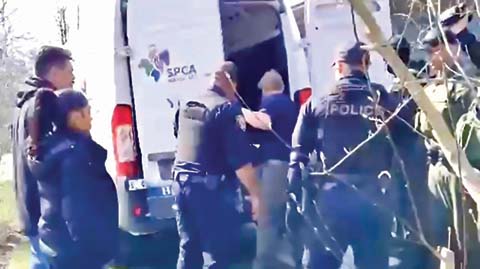
Erie County SPCA and the police have taken Albert from his home. They dropped Albert along the way to the truck.
Maureen Schiener is a Planning Board Member of the League of Humane Voters/NY and a member of C.A.S.H. She has interviewed Tony Cavallaro three times.
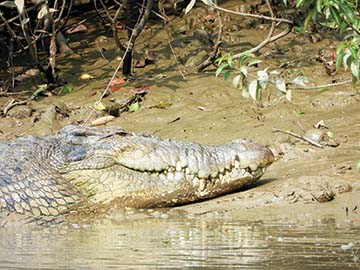
Captive breeding-led crocodile conservation has boosted the population of estuarine crocodiles that was on the brink of extinction during the 1970s to a healthy 1858 today.
Living amidst an intricate network of creeks, channels, tidal rivers, and dense mangroves, saltwater crocodiles are a huge draw in the Bhitarkanika National Park today. In fact, the density of the crocodiles here has meant that local tourism is booming. I recently experienced this firsthand when I got on board the Antara River Cruises’ plush catamaran.
As Antara is the only player that has permission to dock overnight on the Brahmani, Baitarani, Dhamra, and Patasala rivers, I had the rare opportunity to see these crocodiles up close myself.
This species has been placed in Schedule 1 of the Wildlife (Protection) Act, 1972, and in Appendix 1 of CITES (Convention on International Trade in Endangered Species of wild fauna and flora). In India, presently the saltwater crocodiles are limited to Sundarbans, Bhitarkanika, and the Andaman Islands. During the 1950s and 1960s, illegal hunting of crocodiles was at its peak, and the species was on the verge of extinction. To conserve the saltwater crocodiles along with supporting rich biodiversity and to strengthen management practices, Bhitarkanika was declared a wildlife sanctuary in April 1975. The Saltwater Crocodile Research and Conservation Project was established at Dangmal under the technical guidance of Dr. H.R. Bustard, FAO/UNDP. Chief Technical Advisor to the Government of India. The prime objective of the program was the ‘rear and release’ of crocodiles to build up the depleted population in the wild.
This is when, for the first time, a clutch of 48 eggs was collected from the Kalibhanjdian island, surrounded by the Dhamara River, in July 1975. Of these, 24 hatchlings, including one white hatchling (locally known as ‘Sankhua’), hatched in the third week of Aug. 1975. At that time, the number of saltwater crocodiles in the river systems of Bhitarkanika Wildlife Sanctuary was estimated by researcher Dr. Sudhakar Kar to be only 96, including 35 adults as per the 1976-1977 winter census. The first release operation was carried out in Dangmal Creek in April 1977 with a batch of 15 juvenile crocodiles of above 1 m length. The depleted population of estuarine crocodiles in the river systems in and around National Park has been built up gradually. Since 1990, mass egg collection for hatchery incubation and release of young ones has been discontinued. And as per the last census, done via drone, the number stands at a staggering 1858.
Hatchery and rearing complex
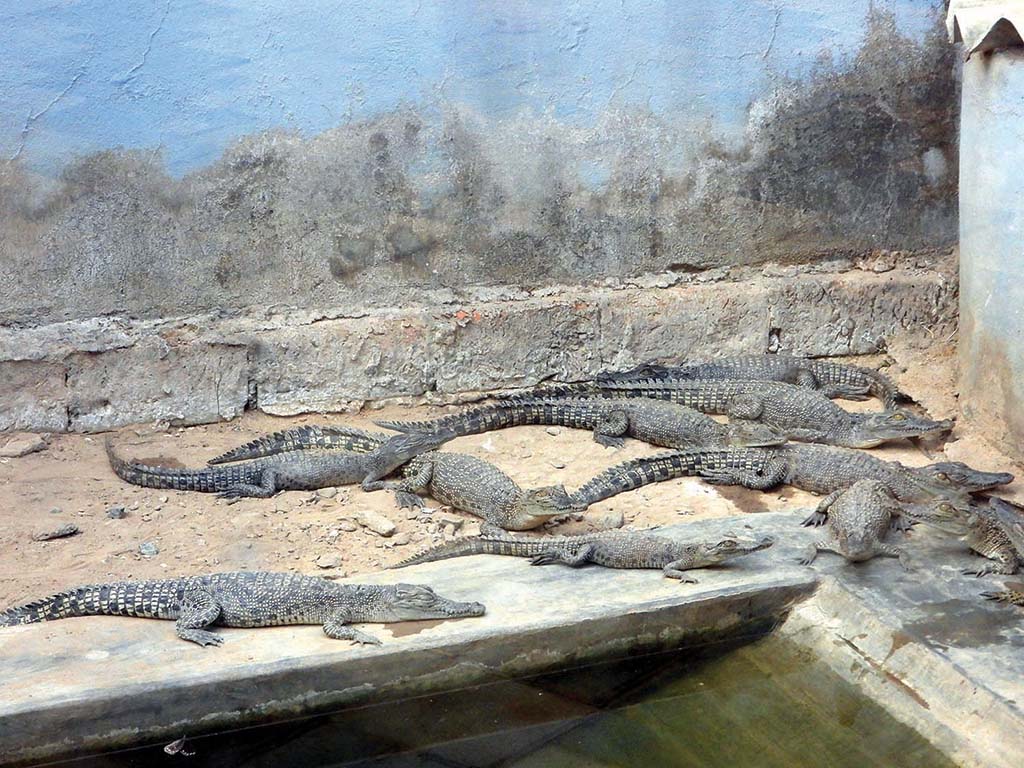
To understand this better, I visited the hatchery and rearing center at the Kanika Wildlife Range in Dangmal. Here the entire lifecycle of the captive breeding is seen in clear steps. Firstly, after diverting the attention of mother crocodile guarding the nests, eggs are collected very carefully in a container by the nest survey team. The exact orientation of the eggs, as was observed in the natural nest, is followed while keeping the eggs in the container.
Artificial nests are prepared after processing leaves of Hental (Phoenix paludosa), Kharkhari (Acrostichum aureum), Nalia (Myriostachya wightiana), etc. The nests are externally applied with mud for regulating the temperature and moisture of the nests. The hatchlings hatched out of the artificial nests are allowed to remain for a week on the sandy bed duly disinfected by potassium permanganate solution for post-birth care and development. The hatchlings are then released into the pools filled with natural brackish water. The hatchlings are fed on small live fish and prawns for better growth.
The incubation period of the eggs varies from 75 to 80 days. Lower incubation temperatures (28°C-32°C) produce mostly females, and higher temperatures (33°C-34°C) produce males. Depending on the size and age of the females, the number of eggs laid in each nest varies from 10 to 70 eggs. The eggs are porcelain-white and hard-shelled, and the average weight is 120 gm (range: 100-140 gm). Only one clutch of eggs is laid annually,” explains my guide Sanghamitra from Antara Cruises. Prehatching vocalization (crocking sound) is produced by the emerging hatchlings as a call to the mother.
After the emergence of hatchlings from the nest, their congregation is seen in the wallows surrounding the nests, in groups called ‘creches.’ Mothers actively guard the newborn hatchlings to save them from predators. In the initial period, hatchlings show gregarious feeding behavior. Males are generally larger and grow above 20 ft (6.1 m), but females can grow up to 12 ft (3.6 m). The maximum weight of an adult male is around 1000 kg, and that of an adult female is around 400 kg, and the snout of a male is U-shaped, whereas that of a female is V-shaped.
At the museum adjoining the hatchery complex I meet Ranjith Biswas, the caretaker, who explains that the largest crocodile here is a whopping 23 feet long. After looking at the various exhibits, including skeletons of these crocodiles, I watch a film that is a fitting ode to this conservation story. The last words I hear in this beautiful film are “There is no better place in the world for a crocodile to call its home than Bhitarkanika.” And as I head back to the cruise and see so many saltwater crocodiles on this cruise, I can’t help but agree.
Bindu Gopal Rao is a freelance writer and photographer from Bengaluu. She enjoys birdwatching and environment, as well as taking the offbeat path when traveling. You can follow her on Instagram @bindugopalrao and find her work on bindugopalrao.com
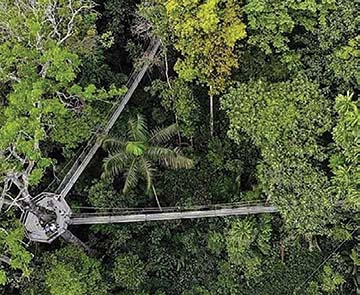
Somewhere above the Peruvian Amazon, in the quiet hours between dusk and midnight, a sloth grips a rope suspended between two trees. It moves in its characteristic slow-motion way, hand over deliberate hand, navigating a structure it had no evolutionary preparation for. A camera trap catches every frame. What it records is not just an animal crossing a gap; it is evidence of an idea that is rapidly remaking how scientists think about forest connectivity.
Artificial canopy bridges; systems of suspended ropes, nets, and platforms strung between treetops have existed as a conservation concept for decades. But a new wave of rigorous field research, now emerging from both the Amazon and Brazil’s Atlantic Forest, is turning scattered observations into hard science, and hard science into policy.
The Problem With Roads
For most wildlife, a road is an inconvenience. For a sloth, a monkey, or a porcupine, it can be a death sentence or something nearly as damaging: a permanent wall.
These animals are obligate canopy-dwellers. They eat, sleep, breed, and travel entirely above the forest floor. Many have no instinct for descending to the ground, and some lack the anatomy for it. When a highway cuts through their forest, they do not simply walk around the problem. They stop. They stay on their side of the road, increasingly isolated from other members of their species, cut off from food sources and potential mates.
The consequences compound with time. Roads isolate animal populations, affecting their genetic diversity and threatening their long-term persistence. A meta-analysis of mammalian species found that arboreal mammals are among those most negatively affected by fragmentation; a pattern that makes intuitive sense. For a flying squirrel or a gibbon, a road is a gap to cross. For a sloth, it may as well not exist as an option.
With the loss of canopy connectivity, animals either come down from the trees and try to cross roads, risking vehicle collisions, or stay at the canopy level and suffer from population isolation, a phenomenon researchers call “the barrier effect.” By some estimates, 475 million vertebrate animals are killed by vehicles every year in Brazil alone.
In late 2025, biologists Justin Santiago and Lindsey Swierk of Binghamton University published findings from a study conducted at the Amazon Conservatory for Tropical Studies in Peru, inside a protected reserve near the city of Iquitos. They set up four camera traps at varying heights along a walkway of ropes and wooden bridges spanning between 6 and 36 meters above the ground, and ran the cameras around the clock for three weeks.
The results were striking. The cameras caught a clear pattern: the forest wakes up when the sun goes down. From 7 p.m. to 10 p.m., mammals crossed the bridges again and again. Among the most consistent visitors were Linnaeus’s two-toed sloths, which remained active until as late as 4 a.m.
The study also documented porcupines and opossums on the bridges, and captured footage of the streaked dwarf porcupine; a species so rarely observed that scientists classify it as data-deficient. The researchers were careful to note what the study does not yet prove. Understanding how animals behave on bridges in continuous, undisturbed forest is the necessary foundation before drawing conclusions about fragmented ones. But the data provides exactly the kind of behavioral baseline that future corridor design will need.
In Brazil, the stakes are more urgent and the scale larger. Brazil has the fourth-largest road network in the world, which continues to expand. Forty percent of primate species are endangered in Brazil, with habitat fragmentation and vehicle collisions among the main threats they face.
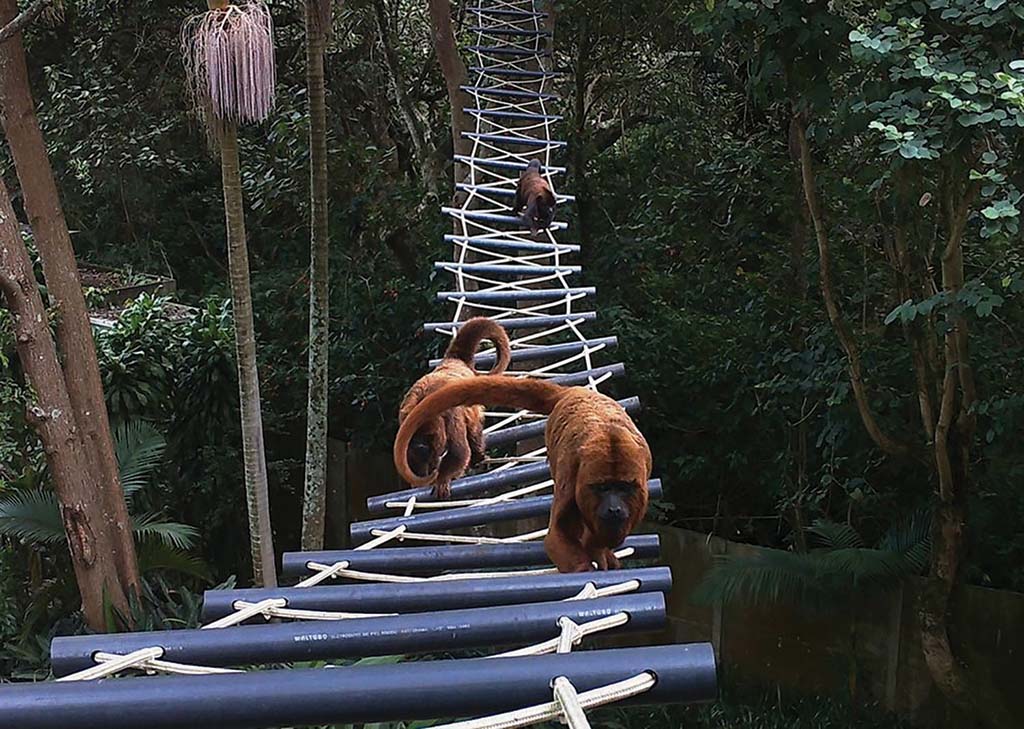
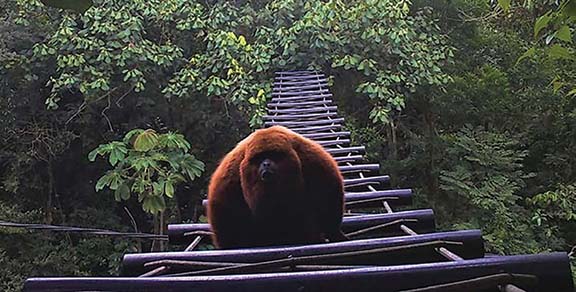
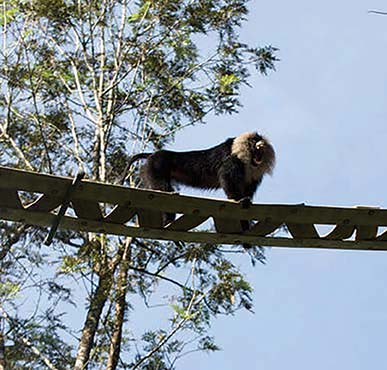
Biologist Fernanda Abra has spent years turning that crisis into a construction project. Her Reconecta Project, based on Highway BR-174; a 3,300-kilometer highway slicing through the Amazon has taken a deliberately practical approach. Each bridge costs around $200 in materials, versus tens of thousands to hundreds of thousands of dollars for a conventional overpass or underpass. The structures consist of steel cables, ropes, and nylon nets anchored to concrete posts, and come in two designs: a rope lattice and a single braided cable. Research has found that kinkajous prefer bridges with X-shaped crossed lines, while monkeys favor mesh netting between the rungs.
By early 2025, the project had constructed 39 bridges and recorded nearly 2,000 crossings by six different species, including black-capped capuchins, critically endangered Alta Floresta titi monkeys, and endangered Schneider’s marmosets.
Central to Reconecta’s success is a partnership that blurs the line between science and indigenous stewardship. The Waimiri-Atroari people have been collecting data on wildlife roadkill along a 125-kilometer stretch of BR-174 that cuts through their territory since 1997; the largest citizen science project involving an indigenous community on the planet. Their ecological knowledge shaped where the bridges were placed. More than 150 community members participated in their construction.
The Design Problem Nobody Talks About
One of the quieter insights emerging from this research is that a bridge designed for one species may be useless or even avoided by another. A two-parallel-rope design created for gibbons in Southeast Asia may not work for spider monkeys in the Amazon. Solutions for one species or habitat may not be applicable for another.
This is why the Peru study, conducted in continuous forest rather than fragmented habitat, carries particular value. By observing how animals interact with bridge structures in the absence of road-related stress, researchers can begin to understand species-specific preferences before imposing those structures in crisis zones.
The momentum is real. Brazil’s national transport department has begun recommending standardized canopy bridge models for highway projects. Brazil’s infrastructure agency, DNIT, is planning to install almost 100 canopy bridges on the BR-319, the road connecting Porto Velho to Manaus. In Peru, WWF has been installing bridges over logging roads in the Madre de Dios region, where species like kinkajous and night monkeys have been documented using the structures.
The images from these projects are not dramatic. They do not require a predator or a crisis. They are simply animals, doing what animals do, in a corridor that humans built and then got out of the way of. That, it turns out, may be the most important thing a conservationist can do.
Samuel Peters is an African ecologist and conservationist with the Wildlife Institute. He can be reached at samuelpete786@gmail.com
This is a much shortened version of what you will read if you are on Barry’s email list. Be sure to contact Barry MacKay, Bird Artist, Illustrator. His contact information is below.
The Red Jungle Fowl has been domesticated for thousands of years. It is widely known as the chicken. There are between about 25 and 35 billion of them, world-wide, give or take a few billion! The Red Jungle Fowl has been domesticated for thousands of years. It is widely known as the chicken. There are between about 25 and 35 billion of them, world-wide, give or take a few billion!
Sadly, the demand for their meat and eggs coupled with greed-driven desire to maximize production of both has resulted in two things: One, the grace, color and elegance of form that contribute to what I see as the beauty of the wild progenitor has, through intensively selective breeding directed at maximum profiting, resulted in a scraggly, essentially or quite flightless all-white bird. And worse, almost all are kept under abysmal conditions that deny them the ability to exercise natural behavior or experience the infinitely textured richness of lives led at the tip of three billion years of past evolutionary history. It’s part of what motivates my own vegan diet.
And yet, I had enjoyed the appearance and strutting behavior of the rooster in charge of a group of most contented hens living, at the moment, under the kind of idyllic conditions featured in children’s books about farm animals, and so I painted my first domestic bird, a rooster.
If you have ever been to Maine, you probably already know that it is one of the wildest frontiers left in the United States. Once you pass the southern Maine coast and Portland, Maine, you’ll encounter huge areas of vast wilderness, with few towns and roads. The coast certainly has more human activity, but due to the sheer amount of shoreline, much of it is still undeveloped, and left to those who respect it the most – the wildlife!
Holbrook Island Sanctuary is situated on Cape Rosier, just north of Deer Isle, and not far from Acadia National Park. While the animals and habitats have a lot in common with those you’ll see in Acadia, you will appreciate that many fewer people are exploring the smaller Holbrook Sanctuary.
Despite being a relatively small sanctuary, Holbrook has a variety of places where you can spend your time searching for wildlife. Starting on Cape Rosier, there are a few trails through the pine forests which are great places to look for woodland individuals. One animal that seems to be relatively common in this area is the porcupine. The two times when I visited the sanctuary I got great looks at these spiny mammals in broad daylight.
Among the woodland trails, the Goose Falls Trail goes along the shoreline and has the best spots to step out of the trees and gaze upon the waters of the Penobscot Bay. The bay is home to a wide variety of marine animals. Loons and cormorants can be seen regularly flying over the bay, or floating on the surface between fishing dives. Also keep an eye out for sea ducks, like Eiders and Scoters, as well as soaring raptors like Bald Eagles and Osprey. This area is one of the few places on the East Coast of the United States where you have a chance to see a species of Auk from shore. Please, check closely to see if one of the birds floating in the bay is the Black Guillemot.
Besides exploring the trails on Cape Rosier, hopefully you have the chance to explore the island that gives the sanctuary its name. If you do have access to a boat, make sure to look for seals and dolphins as you cross the bay in order to get to Holbrook Island. Once on shore, you can continue to search the bay for seabirds and marine mammals.
Holbrook Island is also home to white-tailed deer that can be seen browsing in the meadows. Also, make sure to look in the grass as many garter snakes inhabit the island as well. Holbrook Island Sanctuary is a very wild place where you can escape the crowds while searching onshore and off for many different types of animals. Getting this far up into Maine gives you the opportunity to see species that are rare or not found lower down in the United States. And while these coastal peninsulas are generally not home to Maine’s largest land animal – the moose – you never know when one might wander out there.
Joe Anderson is an avid wildlife watcher, and enjoys sharing his favorite locations with others.
We are a large wildlife rehab rehabilitation center in Michigan that includes the rehabilitation of Whitetail fawns. The Michigan DNR requires they be released by October 1 and if they are not ready to be released, then they have to be euthanized. The picture of the fawn you saw is a fawn that we had in 2020 and the DNR ordered that the three of them be euthanized because they were too young to be released. They were born late in the year. We went to court to fight them over the euthanasia order For Healthy fawns, and by the time the judge ruled, we had already rehabilitated and released them. We frequently have issues with the DNR in Michigan ordering to kill Fawns. We just had another one that was non-releasable this year and we transferred it to a facility that can keep fawns for education and the DNR ordered it to be euthanized. There was a public outcry and we had legislators involved and thankfully the fawn’s life was saved.
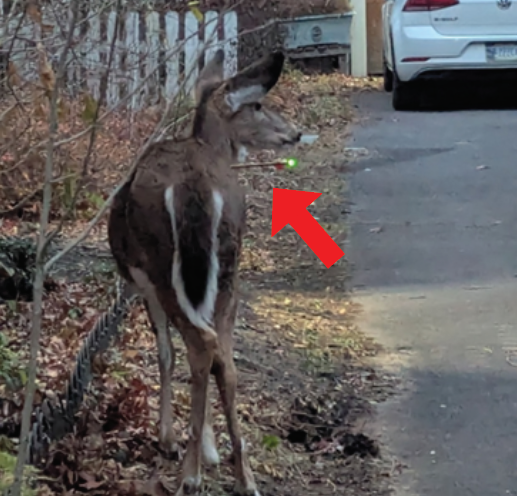
Wildlife Watch caller sent this heartbreaking photo.
A call came to the Wildlife Watch hotline from a woman in Ulster County, NY, who said that she saw a deer with an arrow in him. The unfortunate deer was outside her house in the Village of New Paltz, a densely packed university town. She reported that the arrow had a green glow at the end, and “yes,” she was fortunately able to get a photo.
A call came to the Wildlife Watch hotline from a woman in Ulster County, NY, who said that she saw a deer with an arrow in him. The unfortunate deer was outside her house in the Village of New Paltz, a densely packed university town. She reported that the arrow had a green glow at the end, and “yes,” she was fortunately able to get a photo.
We don’t know where he was shot, but he was found on the first day of firearms hunting. A check revealed that crossbows can be used during the regular firearms season. dec.ny.gov/sites/default/files/2025-08/crossbowqanda.pdf (See the third question.) We gave the caller the number of a deer rehabilitator and a veterinarian who is also a wildlife rehabilitator.
The deer rehabilitator told her that there were regulations preventing her from helping adult deer; we are waiting to hear from the veterinarian.
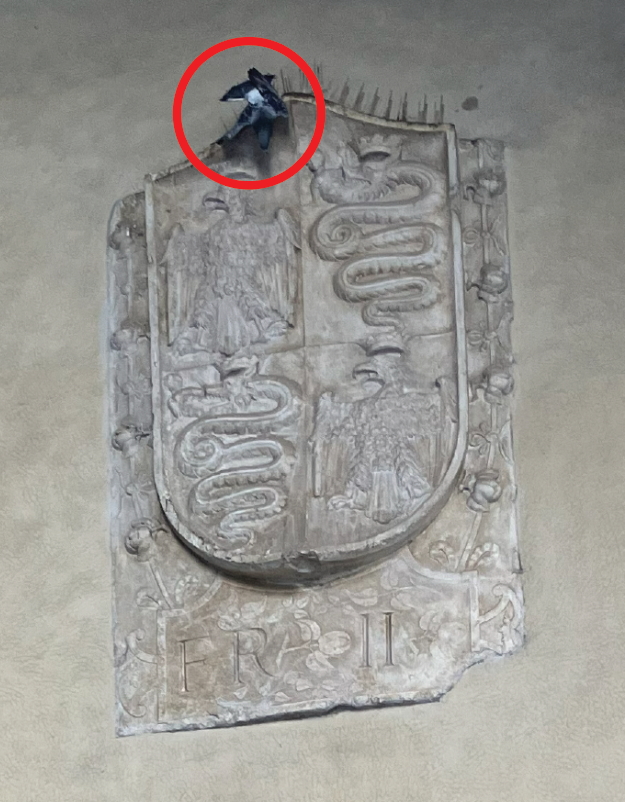
At the end of July, Wildlife Watch was contacted by two young American music students who were studying in Italy for the summer. They were shocked by the spikes that were placed above doorways to keep pigeons from landing. This one pigeon became impaled on the spikes and was left to die. They had a performance to give the following evening, and yet they spent the entire day reaching out to help the suffering pigeon who was in full view above an entry to the building. Not having lists of wildlife rehabbers in Italy, we contacted a friend who was fluent in Italian so she could talk to the management of the building. Though we didn’t hear what ultimately happened, we are certain that with their perseverance, they were able to get help for the pigeon.
Despite their sometimes negative reputation, pigeons are another animal trying to survive during a difficult time for wildlife. At least they deserve to be treated humanely and receive care when needed.
Protecting wildlife is getting a tech boost that overcomes the challenges of terrain, weather, and limited manpower to study, protect, monitor, and plan strategic conservation goals. India’s wilderness is learning to speak a new language, one written in signals, sensors, and silent data.
Making a Difference
Technology is being extensively used in wildlife conservation in India through diverse and innovative tools such as Unmanned Aerial Vehicles (UAVs), GPS tracking collars, camera traps, AI, and geospatial technologies. These technologies enable efficient monitoring, protection, and management of wildlife and their habitats. India’s wildlife conservation efforts leverage a synergistic integration of technologies to enhance wildlife monitoring, combat poaching, and manage habitats more efficiently, thus contributing to the preservation of its rich biodiversity. The Wildlife Trust of India (WTI) has also developed HAWK (Hostile Activity Watch Kernel), a cloud-based, centralized forest and wildlife crime management system, which is currently adopted by four government Forest Departments.
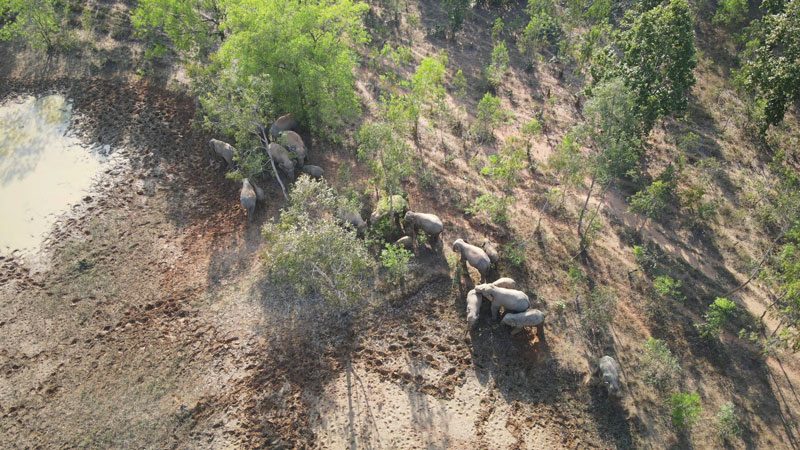
GPS tracking collars, drones, and GIS/satellite imagery are being used in the forests and wildlife corridors for monitoring animal movements and habitats. GPS tracking collars are regularly used to monitor the movements of all sorts of wildlife. Either for ecology studies or tracking potentially problematic individuals—tigers or elephants in particular—integrating GPS collar signals with GIS-integrated layer maps to understand migration patterns, home ranges, land use, and vulnerable areas that animals may be moving to improve management of wildlife and protected areas. Thermal camera-equipped drones are used to monitor fires and human and wildlife movement in dense cover, track specific species like rhinos or elephants in flood-affected or hard-to-access country, do corridor mapping, do anti-poaching, and check on fires. They are used as they can cover much larger areas quickly to get real-time information on water holes, habitats, fences, and wildlife, especially in open country like grasslands or trans-Himalayan desert landscapes. Many projects combine multiple technologies—drones with thermal sensors & cameras, GPS, camera traps, and alert systems—connecting these with ground teams, especially regarding poaching and wildfires.
THE HAWK TEAM: From (L) to (R)_ Shri. D. Jayaprasad IFS, PCCF (Wildlife) & CWLW, Kerala Forest Department, Shri. Ganga Singh IFS, CCF (HoFF), Shri. K R Jyothi | Photo courtesy of the Wildlife Trust of India (WTI)
Conservation Cues
Across Central India, GPS collars on tigers and leopards have revealed how they move between forest patches and community lands, crossing rivers, roads, and railway lines under the cover of night. This has helped conservation planners identify corridors that might otherwise have been lost to human expansion. Thermal drones are now used to monitor and reduce conflict by spotting elephants or tigers near village fringes during night patrols, allowing staff to respond before any damage or panic occurs. Similar drone-based monitoring has also been extended to wolves. Technology listens as much as it sees: Acoustic monitoring devices, small mouthpiece-style detectors, record ultrasonic calls of bats, allowing scientists to identify species purely through sound frequencies. “It’s a remarkable way of mapping hidden diversity, especially in rainforest canopies.” says Amith Bangre, an award-winning naturalist, conservationist, and wildlife educator. Together, these innovations have made conservation less about guesswork and more about understanding, giving us new ways to protect old wisdom.
In 2022, to better understand the ecology and behavior of sloth bears (Melursus ursinus), Wildlife SOS, in collaboration with the Karnataka Forest Department, collared ten sloth bears in three districts. The long-term study monitors how these bears navigate fragmented forests and agricultural landscapes, collecting detailed data on movement, habitat use, and interactions with human-populated areas. Kartick Satyanarayan, co-founder and CEO of Wildlife SOS, says, “In 2023, in Sonmarg, Jammu & Kashmir, six Himalayan brown bears (Ursus arctos isabellinus) were fitted with GPS collars to study their movement across alpine terrain and proximity to human settlements. Preliminary findings highlighted brown bears frequently visiting garbage dumps in human-adjacent areas, guiding conservation planning and conflict mitigation. In 2018, in Mahasamund, Chhattisgarh, GPS-enabled collars tracked Van Devi, the matriarch of a 21-member elephant herd, forming the backbone of the Early Warning Alert System (EWAS). The system helped prevent human–elephant conflict by sending alerts to nearby villages as the herd moves through croplands and human habitations.” Across all initiatives, GPS technology provides fine-scale spatial and temporal data essential for identifying conflict hotspots, critical corridors, feeding grounds, and seasonal migration routes, enabling targeted conservation measures and safe coexistence between wildlife and local communities.
These layers reveal how the land changes over time: grasslands, forest cover, and river courses. Satellite mapping has guided the restoration of grasslands for swamp deer recovery. In the Anamalai–Parambikulam region, GIS mapping identified elephant corridors through plantations, helping direct mitigation measures. Dr. Sandeep Kumar Soni, Assistant Manager and OiC (GIS Cell), Wildlife Trust of India, says, “GIS mapping technology plays a crucial role in wildlife conservation by providing powerful tools for habitat mapping, protecting habitat suitability, distribution modelling, species tracking and movement behavior, risk analysis, and conservation planning. Through spatial data integration and analysis, GIS empowers conservationists to make informed, precise decisions to protect wildlife and habitats and plan interventions on a scientific basis.”
GIS is the memory of the landscape; it layers the past and present into a single living map. GIS mapping has shown how fire patterns and vegetation cycles shift with changing rainfall. In Kanha, it guides habitat restoration, marking zones for controlled burning or grassland regeneration. “And in the Western Ghats, GIS has traced elephant and gaur movement through fragmented tea and cardamom estates, influencing how buffer zones are planned. In simple terms, GIS helps us see what fieldwork alone cannot do—how land, water, and wildlife interact across time and space,” says Bangre. Geospatial and remote sensing platforms enable near real-time monitoring and analysis. These tools allow large-scale, high-frequency data collection, assessment of environmental changes (like deforestation and wildfires), and the early detection of risks for timely mitigation. “GIS analysis identifies spatial patterns, tracks pollution, measures event impacts, and produces maps that support policymaking, collaboration, and public communication. Such data-driven geospatial analysis has become a backbone for modern conservation decision-making and resource management. Over the years, WTI has utilized geospatial tools for markhor and wild buffalo habitat suitability modelling, as well as thematic mapping across six forest divisions in Odisha to support forest management planning,” adds Soni.
In Ramdurga Valley, Karnataka, radio telemetry was used to track 12 repatriated Indian star tortoises released into the wild. The transmitters emit short-range radio signals, which means researchers must physically enter the habitat with specialized receivers to detect each tortoise’s location. “While telemetry provides signals that allow researchers to plot movements over time, field teams still need to walk through the habitat to pick up these signals, locate each tortoise, and record observations. By tracking their positions over several weeks or months, researchers can identify preferred microhabitats, feeding zones, and dispersal ranges—valuable data that helps assess the success of reintroduction programs and refine future release protocols,” says Dr. A Sha Arun, Director of Research and Veterinary Operations, Wildlife SOS.
Across India, over 26,000 camera traps now record millions of images each year, identifying individual tigers, leopards, and other species. The data has made India’s tiger census one of the most scientifically robust in the world. GPS data from collared tigers and leopards have directly shaped corridor conservation projects. Thermal drones have reduced human–wildlife conflict incidents by providing early warnings, especially during crop seasons and flood periods. “In Central India, GPS-enabled safari vehicles regulate speed and route adherence, ensuring low disturbance to wildlife. These systems also record sightings and tourist movement patterns, allowing authorities to plan future tourism zones more sustainably. GIS and satellite mapping have helped identify areas most prone to fire or illegal grazing, allowing targeted protection and better resource allocation, making patrolling more efficient and strategic,” says Bangre. GPS tracking collars, unmanned aerial vehicles (UAVs), and GIS/satellite imagery are advanced technologies used for monitoring animal movements and their habitats, each serving specific functions in wildlife research and conservation. “Together, these technologies provide conservationists with powerful, complementary methods to collect, integrate, and analyze spatial and behavioral data, driving data-driven conservation efforts and more precise wildlife protection strategies,” says Soni of the Wildlife Trust of India.
Kashmir Markhor struggling in rough terrain.|Photo courtesy of Wildlife Trust of India (WTI)
Human Connection
Technology has undeniably changed conservation, but it works best when paired with field intuition and local knowledge. A ranger’s instincts, a villager’s warning about elephant movement, or the naturalist’s quiet observation are still irreplaceable. GPS helps track where we go; empathy helps decide why we go there. In many ways, the future of conservation in India lies in merging the two—letting technology serve intuition and allowing data to reflect care. The forest doesn’t need us to outsmart it, only to understand it more deeply, with every tool at our disposal.
Bindu Gopal Raois a freelance writer and photographer from Bengaluu. She enjoys birdwatching and environment, as well as taking the offbeat path when traveling. You can follow her on Instagram @bindugopalrao and find her work on bindugopalrao.com
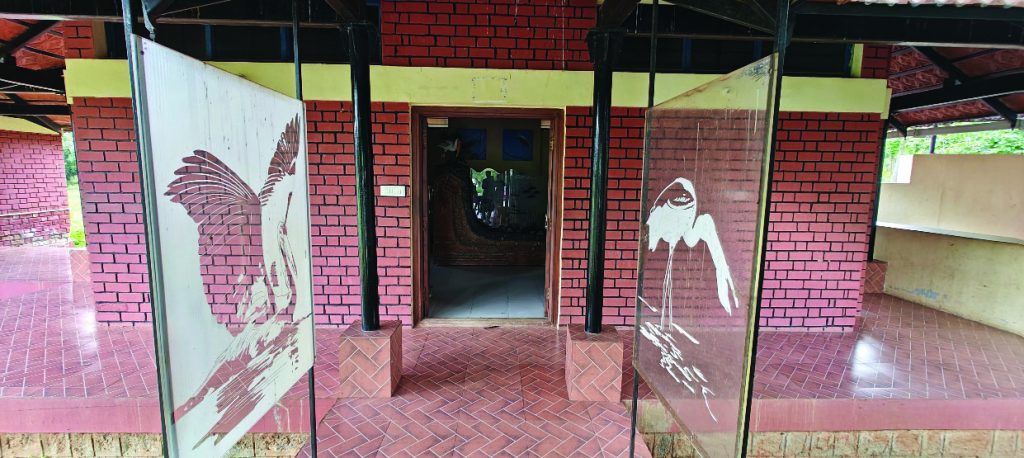
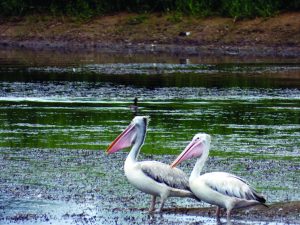
A small hamlet located about 75 kilometers from Bengaluru, India, is Kokkarebellur, which ensures birds like painted storks and pelicans can breed in peace.
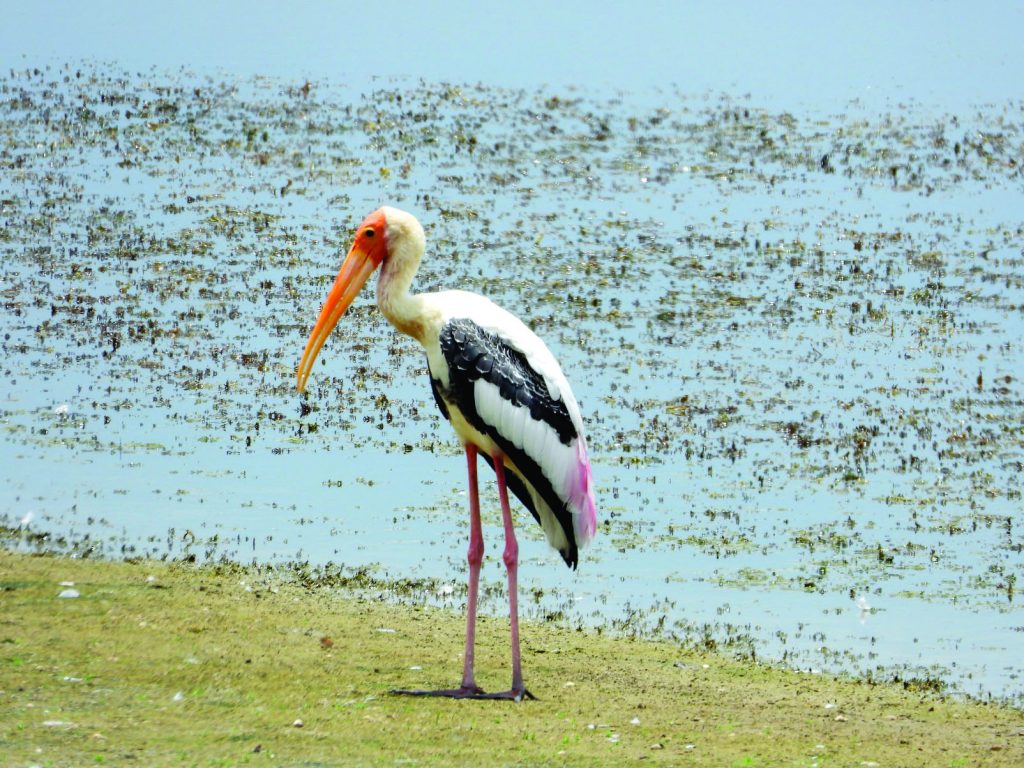
Did you know that there is a village in Karnataka’s Mandya District that is not a bird sanctuary and yet sees hundreds of migratory birds that come to breed? Well, this is Kokkarebellur, a village that is named after the painted stork (Ibis leucocephalus), locally called ‘kokkare’ in Kannada.
EXEMPLARY HUMAN-ANIMAL COEXISTENCE
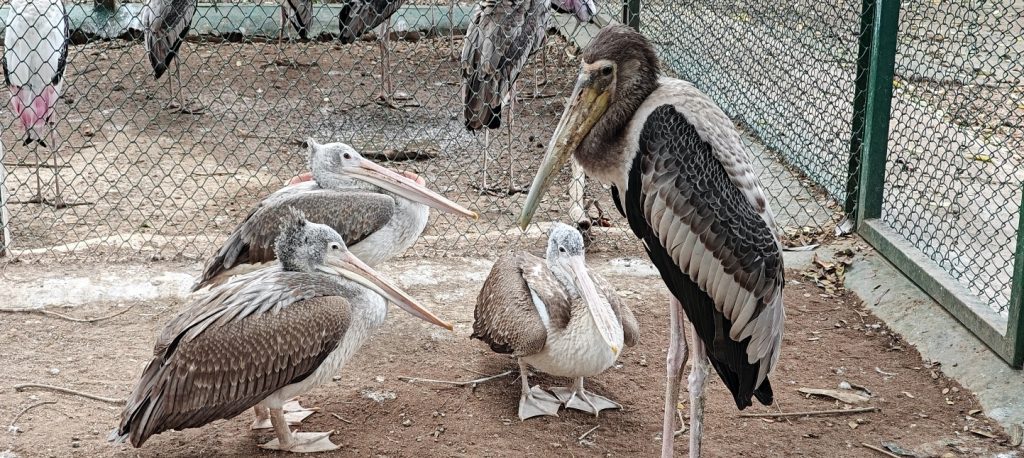
The first ever historical mention of Kokkarebellur and its pelicanry was made by British naturalist T.C. Jerdon. An outbreak of plague forced the villagers, pelicans, and storks to move from the old location on the banks of River Shimsha to a new site 800 meters away. Interestingly, this is the only community reserve in Karnataka and one of the 45 across the country and one of the 21 breeding sites of the spot-billed pelican in South India (listed by IUCN as Near Threatened).
Recovering birds
At a time when there is a lot of noise around man-animal conflict, the villagers here work in tandem to ensure that the birds can breed safely. This is a bond that goes back centuries and is deeply embedded in the culture of the local communities and in the unique behavior of the birds that prefer proximity to people. Viewed as harbingers of good fortune, the birds are welcomed each season as they set up nests in the tree canopies of banyan and tamarind. This relationship nurtures both, demonstrating an example of how living so closely with nature can benefit the health of the ecosystem. In fact, even the children of the village have been taught that it is their duty to take care of the birds and not disturb them or their nests. This is why the tamarind is not harvested, as the birds prefer to roost on specific trees only. The bird droppings are a source of ‘guano’ that is used as manure for farming, and this is exactly why there is a symbiotic sustenance seen here. Venkatesh, a resident of the village, says, “These birds are harbingers of good fortune, and we believe that by coming here each year, they are doing us a good turn.”
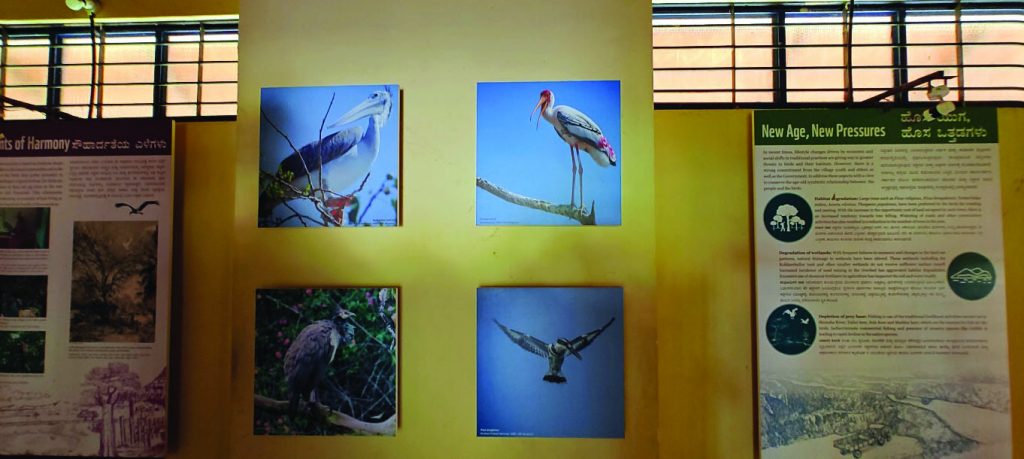
The village now has a nature interpretation center that is open to visitors who can come here and learn all about the place. Hejjarle Balaga (Friends of the Pelicans), local communities Gram Panchayat, CHESCOM, the Forest Department, and WWF-India have come together to conserve the biodiversity and natural resources of Kokkarebellur. K. Sri Krishna, a member of Hejjarle Balaga who also looks after the center, says, “I have been here since 2008, and I am working on educating the community as well on the need for conservation here. As birds are declining, we need this interpretation center, as we have several infographics here that serve to educate and create awareness of this area.” He also runs small camps for the locals to reinforce conservation methods as well.
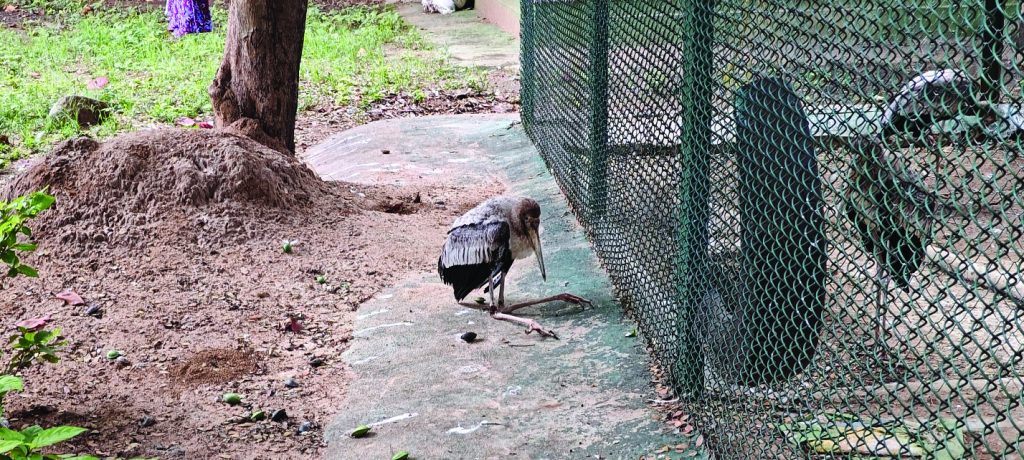
Located near the Nature Interpretation Centre is a place where Lokesh P, a forest watcher, takes care of injured birds. As Kokkarebellur is not really a formal bird sanctuary, there are cases when birds fall off the nest or sustain injuries, and Lokesh works tirelessly to help them get back on their feet. “If the bird is on the ground, it is abandoned by the family. This is when we take care by rescuing and feeding them. Once they are fit, they are released so that they can live a regular life,” says Lokesh. At the center, I saw him apply medicine on an injured foot of a pelican, and as a visitor, you can also contribute (it is completely voluntary) for the food (fish feed) for these injured birds. “Some birds cannot survive in the wild, as their injury has crippled them, and that is why we keep them in an enclosure here,” adds Lokesh.
Hejjarle Balaga, in association with local communities, conducts periodic awareness programs to educate community members, schoolchildren, and the youth on the significance of this ecosystem and the means to protect it. They have also intervened successfully to stop the felling of trees by people, reduce the chemical and water use, and provide financial compensation to the owner of the tree where the birds nest. Electrical cables throughout Kokkarebellur were insulated at a cost of Rs. 45 lakh (approximately USD 52K) by the Chamundeshwari Electricity Supply Company, which has resulted in the prevention of accidental electrocution of the birds. Sustainable agricultural practices like the use of organic manure and biopesticides are being adopted in this village as well. Various initiatives have been undertaken by local communities in association with the Forest Department and WWF-India to plant trees in the area.
CHALLENGES GALORE
However, there are several issues that are behind the steady decline in the number of birds. Large trees such as Ficus religiosa, Ficus Bengalensis, Tamarindus indica, Acacia nilotica, and Thespesia populenea have been preferred by the birds for roosting and nesting. With the increase in the opportunity cost of land occupied by such trees, there is an increased tendency towards tree felling. Widening of roads and other construction activities have also resulted in a reduction in the number of trees in the area. With frequent failures in monsoon and changes in the land use patterns, natural drainage to wetlands has been altered. These wetlands, including Kokkarebellur tank and other smaller wetlands, do not receive sufficient surface runoff. Increased incidence of sand mining in the riverbed has aggravated habitat degradation. Fishing is one of the traditional livelihood activities carried out in the Shimsha River, Tailur Kere, Sole Kere, and Maddur Kere (lakes in and around the region), which are the sources of fish for the birds. Indiscriminate commercial fishing and the presence of invasive species like catfish are leading to a rapid decline in the native species. However, with proper intervention, many of these challenges can be and are being mitigated. There is more to be done, and one hopes that this unique habitat and relationship between man and bird withstands the test of time.
Bindu Gopal Rao is a freelance writer and photographer from Bengaluu. She enjoys birdwatching and environment, as well as taking the offbeat path when traveling. You can follow her on Instagram @bindugopalrao and find her work on bindugopalrao.com
Background: The alligator’s guardian, Tony Cavallaro of Hamburg, NY, had for many years held a special permit to possess Albert. He invested thousands of dollars to enhance Albert’s living quarters, including a specially built swimming pool. According to Tony, the DEC then informed him that double-doors were a new requirement so Albert wouldn’t be able to escape. Tony contacted the DEC to request Albert’s home situation to be grandfathered in as there was little chance he could escape. Tony received no response and no communication after Covid in 2021.
Then, in March 2024, Tony was blindsided by an onslaught of vehicles in his driveway from local law enforcement, fire department, the DEC, and local SPCA—invading his home to take Albert away.
Since then, Tony has been fighting in the courts to bring back Albert, who had lived with him for over 30 years. Tony reports he had contacted the DEC multiple times receiving no response. In December 2024, Tony sued the DEC, calling the seizure of Albert “excessive” and his license to possess Albert unreasonably denied. This past February a judge ruled in Tony’s favor: the DEC was in error and must process Tony’s application for a permit to possess Albert. If approved, it would allow Albert to return to Tony’s home.
In March the DEC appealed the decision and has from 6–9 months to present its case. In the meantime, Albert is living in a Texas theme park, away from the only home he has ever known. Tony believes he’s not being taken care of properly but won’t visit because he feels it might upset Albert.
Tony obviously cares deeply for Albert—he never displayed him for money or exploited him in any way. Friends would visit; one even swam in the pool with Albert. Tony’s determined to keep fighting for Albert; he’s spent $15,000 thus far in legal fees. Perhaps the new acting Commissioner of the New York State Department of Environmental Conservation will be more empathetic to our neighbors who try to do right by the animals.
Albert remains somewhere in this amusement park in Beaumont, Texas: gatorrescue.com/about
TAKE ACTION: To express your opinion, please contact the NYS DEC, Attn: Amanda Lefton, Acting Commissioner, DEC. contact@dec.ny.gov
Ask them to return Albert!
Maureen Schiener is on the board of the League of Humane Voters/NY
As soon as the weather warms up, more folks are outside hiking and biking, strolling, and encountering wild animals who need help! Wildlife Watch’s national mnemonic number, 877 WILDHELP, is given out by game agencies, veterinary offices, police, and folks who find it online.
This year has been no exception. As always, fawns, Canada geese, turtles, fledglings and bunnies have been the species we’ve had the most calls about.
Much injury and death of wildlife is caused accidentally by drivers. While it’s upsetting when it happens accidentally, it’s infuriating when it happens intentionally.
Normally, youngsters follow their moms onto the roads, so the mother is likely the first to be struck, leaving the surviving young ones without direction. Unfortunately, speed limits increase significantly in areas where it’s more likely that wildlife will be killed. Have you noticed that the more rural the area, the higher the speed limit?
One caller said she witnessed a Canada goose being struck on the road by a driver who indifferently hit the goose. She sent this photo and report:
A car driving by hit the mother as the babies were following her across the road. The driver just drove off. The goose is alive, but bleeding from the beak and can’t walk. I have her in my car.
Wildlife Watch provided several numbers of wildlife rehabbers, but in a short time, a veterinary hospital said they would take the goose.
We’re following up with the caller and hoping that this particular goose can have a chance at life again and be reunited with her family. Sadly, in a follow-up text we learned the mom will never fly again.
The heavy flooding in May in the Mid-Hudson Valley, which is where we’re located, caused the rivers to rise with strong currents. It put water where it hadn’t been before. Calls came in about disoriented goslings that had become separated from their parents and siblings and found themselves far from water when the water receded.
The good news is that Canada geese are magnanimous and they will adopt the goslings of other adults. We suggested that they find a flock and let the goslings go to them. That explains why you see so many goslings with two adults.