

by Barry Kent MacKay
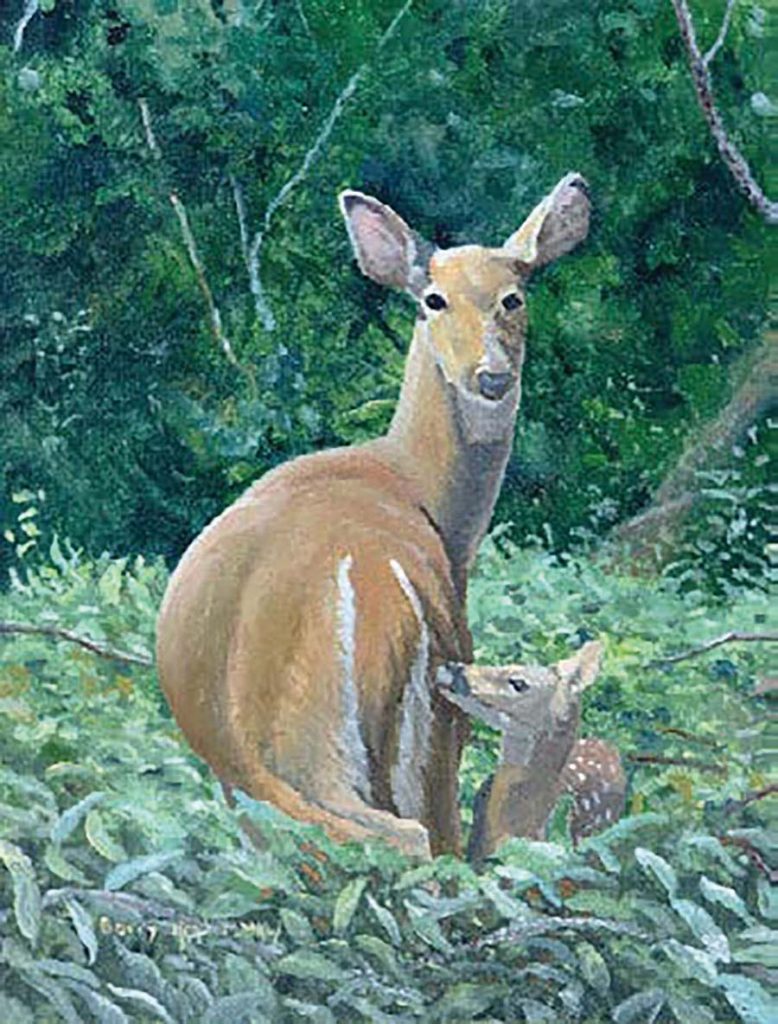
There is, I suspect, no North American mammal more studied, more written about, or more capable of evoking such a wide range of opinions—both positive and negative—than the White-tailed Deer.
A few years ago, I encountered a fawn of about the same age as ones I had seen in a freezer, but happily alive, in a woodlot, standing in oddly filtered light that reminded me of a scene from Fantasia. That moment provided the final inspiration to paint deer.
Their diet is primarily plant-based and remarkably varied, including items such as cacti, poison ivy, and even fungi that are toxic to humans. However, they are opportunistic and have been known to consume small animals such as nestling birds or mice, as well as chewing on bones for minerals. They readily feed on agricultural crops—hay, grasses, white clover, legumes, fruits, nuts, gourds—and are particularly fond of garden plants such as hostas.
A word of caution: White-tailed Deer fawns are cared for by the doe but are not constantly attended. A seemingly abandoned fawn is almost certainly not orphaned and should not be “rescued” unless in immediate danger—and even then, they should only be moved a short distance. The mother is almost always nearby, remaining out of sight.
To be placed on Barry’s email list, please contact: Barry Kent MacKay, Bird Artist, Illustrator, Studio: (905) 472 9731, https://fineartamerica.com/profiles/barry-mackaymimus@sympatico.ca