

Glue Traps Have to Go!
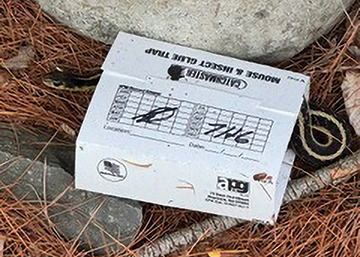
Normally Intended for mice, these traps are a nightmare for any animal who becomes adhered to the sticky substance of the trap. People have put glue traps in trees to kill insects, instead birds have become adhered to the glue inside the traps. As mammals, reptiles and amphibians, and avian species alike struggle to get free, they tear their insides out and suffer for hours or days.
A caller to the Wildlife Watch Hotline sent this photo of a snake that had gotten into a glue trap intended for mice. What can rehabbers do to help the victims?
If you find an animal in a glue trap, the first thing to keep in mind is that you don’t want to pull the animal off. It will take a very gentle approach of de-gluing. (Glue, by the way, is usually made by boiling animal by-products.)
We called the rehabber, Michele Gallo, to find out how she released him. She said that VERY GENTLY she worked some vegetable oil between the snake and the glue, while keeping some cardboard under the unglued part of the snake, and with a Q-Tip, she gently worked the snake free and he took off immediately.
See this Peta video to know what mice actually go through: https://www.peta.org/lifestyle/humane-home/five-things-didnt-know-glue-traps/
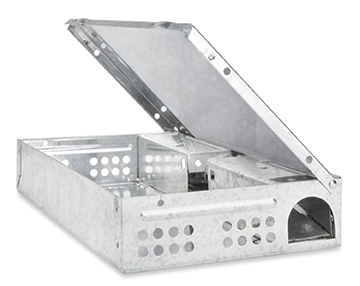
Wildlife Watch believes that traps that kill or maim animals should be made illegal for the suffering they cause. There are highly effective non-lethal traps that are excellent. To the right is one with which Wildlife Watch has had a lot of success.
Once the mouse is caught, he has enough food (peanut butter or corn flakes and some water) for at least 12 hours. We then release him in a safe area and continue to release others in the same location in case they’re all related.