

R.O.C.K. – Rehabbers Offer Care and Kindness – Page 5
EYE ON THE NEWS THE WEST AFRICAN BLACK RHINO IS EXTINCT – Page 6
Let’s Go Wildlife Watching – Page 6
In Australia: ANIMAL RIGHTS CAMPAIGNER MARK PEARSON HAS WON A SEAT IN THE NEW SOUTH WALES UPPER HOUSE. – Page 7
GO VEGGIE FOR THE SAKE OF THE PLANET – Page 7
CECIL THE LION – Page 8
NATIVE SPECIES GOOD; NON-NATIVE SPECIES BAD?

Photo credit: from the USFWS site - a honeybee
“Invasive Species” is a term used by naturalists and conservationists to describe introduced species that have an undesirable affect on native wildlife or flora.
Without question, some non-native species can be very damaging, but something that is overlooked far too often is the benefit to natural areas that is derived from the presence of non-natives. National Geographic published an interesting opinion piece on July 24, 2014 on this very topic. “It's Time to Stop Thinking That All Non-Native Species Are Evil” challenges us to examine the common knee-jerk reaction of wanting to eliminate introduced plants and animals, because many species are having a beneficial effect on their new homes.
The simplest example of this is found in something all of us do every day. Many of the plants we farm for our dinner tables did not originate in North America, and in addition to being our main source of food, these crops also provide food and shelter to countless numbers of native wildlife. It’s hard to imagine an argument against the benefits derived by these non-native plant species.
On the more exotic front, we can look to California to see how the establishment of non-native species can be a positive.
When naturalists there ripped out and poisoned spartina grass, they found that their efforts were harming the endangered California clapper rail. Efforts to eradicate the grass have been discontinued as a result and spartina grass will stay put.
Thankfully, a new school of thought among ecologists is blooming that is considering the value of leaving non-native species alone. The best example of the benefits of non-native species is that of the honey bee. As we know, honeybees pollinate fruit and vegetable crops and carry out the same service for many species of wild plants. They are one of the most important species in North America yet they are not native to the New World, having been brought here several times in the 1600s.
Though we’ve been taught to think “Native, good; non-native, bad,” native species are not always beneficial species. The insect that is killing more trees than any other in North America is the mountain pine beetle Dendroctonus ponderosae – a species native to North America. Non-native beetles are not having such a devastating effect.
“We predict the proportion of non-native species that are viewed as benign or even desirable will slowly increase over time,” wrote ecologist Martin Schlaepfer of the State University of New York in a paper published Feb. 22 in Conservation Biology. Because only a fraction of non-native species will cause biological and economic damage, researchers predict the opinion of non-native species will slowly become more positive as their contributions become recognized.

Photo credit: from the USFWS site - a California clapper rail
CONCILIATION BIOLOGY
Scott Carroll of the University of California, Davis calls for a new kind of science he termed “conciliation biology.” Simply trying to eradicate all exotic species can be costly, he argues, and can harm native species. Introduced cats were eradicated from Maquarie Island off the coast of Australia after having driven two of the island’s bird species extinct, but with the cats gone an introduced population of rabbits exploded, devouring the native plants.
Surely, challenging our beliefs about non-native species can lead to a greater understanding of the role they play. It should be kept in mind that non-native wildlife are individuals who enjoy their lives as we do, and killing them has ethical as well as scientific implications.
Another significant point to remember is that the species that has had the most devastating effect on the environment is Homo Sapiens. Human activity devastates wildlife species and their native environment and it is the activity of this single species that has harmed biodiversity more than all others combined.
Before vilifying non-native species and cursing them with the tag “invasive,” we should look closely at who they are and what they do, and perhaps come to appreciate both.
Please visit:
http://www.fs.fed.us/global/iitf/pubs/ja_iitf_2011_Davis001.pdf?
------------------------
Joe Miele is a writer for the C.A.S.H. Courier. He works for a spay/neuter group and is a non-native resident of New Mexico
STOP LETHAL DEER MANAGEMENT IN NYC
Sent by GooseWatchNYC
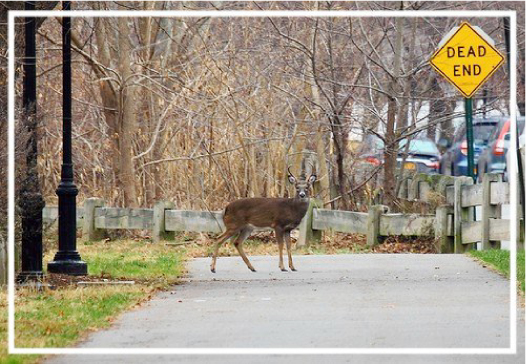
New York City is currently exploring ways to manage deer on Staten Island and in the Bronx. The city has assembled an Interagency Deer Task Force, which is in the process of considering various management options to address complaints about a growing deer population on Staten Island. The city's management must be approved by the New York State Department of Environmental Conservation (DEC), and the DEC will not approve any management plan that isn't “tied to” a USDA environmental assessment (EA).
Earlier this month, the USDA put forward an EA that covers the entire state of New York, providing information about various lethal and non-lethal management options as well as guidance, which can be used by municipalities across the state in the development of local deer-management plans.
Get involved: GooseWatch NYC is a volunteer-run organization, we need your help! Join our listserv to get more involved and discuss ideas, strategy, and actions we plan to take.
The USDA's EA presents three potential courses for its future role in deer management in New York State: (While it’s too late for formal comments, this will give you an idea of the options being considered.)
Alternative 1: (USDA Wildlife Service's preferred alternative): Continue the Current White-tailed Deer Management Program. Under this alternative, Wildlife Services would continue to assist property owners and managers with lethal management, as permitted by the DEC. USDA favors lethal management as necessary to control deer and reduce their population.
Alternative 2: White-tailed deer Damage Management by Wildlife Services through Technical Assistance Only. Under this alternative, Wildlife Services would provide those requesting assistance with technical aid only. The implementation of methods and techniques to resolve or prevent damage would be the responsibility of the requester.
Alternative 3: No White-tailed deer Damage Management Conducted by Wildlife Services. Wildlife Services would have no involvement with any aspect of white-tailed deer damage management in New York.
GoosewatchNYC supports Alternative 3: No White-tailed Deer Management Conducted by Wildlife Services, or if selected, Alternative 1 or Alternative 2 but with strict reliance on humane and non-lethal strategies over lethal management.
Although many assume that "culling" is necessary, deer populations have not exceeded their biological carrying capacity, and in some cases are peripatetic — the end result of deer slaughters will be more deer, more expense, a failure to address underlying problems, and a never-ending cycle of killing.
--------------------------
GooseWatchNYC can be reached at goosewatching@gmail.com
EYE ON THE NEWS: FISHING HURTS

Whether non-human animals suffer pain has long been debated. Comparative brain physiology and behavioral reactions have been used to argue the point.
Scientists in relevant fields have been able to make the case that all vertebrates experience pain, and also some invertebrates, such as octopi. In 2012, many noted specialists signed the Cambridge Declaration on Consciousness, which states that many non-human animals have consciousness not unlike our own. This implies that they can also suffer pain as we do.
This is an important finding because animal protection advocates have raised concerns about the possible suffering of fish caused by angling. In fact, Germany has banned specific types of fishing because of the infliction of pain upon the fish.
Looked at logically, it seems absurd that anyone could think that getting a sharp metal hook caught in your lip or in your gut would not hurt terribly. Not to mention the pain caused when it is ripped out, and then the fish is left to suffocate in the open air.
Recognizing that fish do indeed feel pain is a long overdue acknowledgement, and ideally, should lead to banning angling worldwide. We think this is a good beginning towards a more humane society.
------------------------
We promised that we would continue to publish writings by Eileen Fay that have no expiration date. Eileen was passionate about all species. Seafood is another area of concern as our consciousness expands to all beings. It is also clear that our choice to become vegan is the only way we can help to stop the suffering of "food" animals.
By E.M. Fay (Published posthumously)
HELP THEM TO HELP WILD ANIMALS – WILDLIFE REHABILITATORS NEED PROTECTIVE LAWS AS WELL
As members of Wildlife Watch know, wildlife rehabilitation is our primary focus. We are so grateful to the too few wildlife rehabilitators who give of their time and money to help wild animals.
Over the years of maintaining wildlife rehabilitation lists, we have been struck by the fact that each year results in ever increasing attrition.
Rehabbers are forced to stop practicing due to money and time resources, but also due to continuing regulations that put them at risk of violating state laws. That, and the harassment they suffer by the game agencies from which they obtain their permits.

While the bureaus of wildlife give permits (for which they charge), they give wildlife rehabbers no help to do their work. In fact, they do not allow wildlife rehabbers to charge for their services, yet they do allow "nuisance trappers," who usually use lethal means, to charge fees. If your permit is to capture and kill a wild animal, you will get support, but if it is to help a wild animal in distress, you will get no support and often the opposite.
Particularly appalling is when wildlife rehabilitation of an entire species is prohibited.
Ohio has stopped allowing the rehabilitation of deer, including fawns. This past 2015 baby season (spring and summer) was sad and disturbing when calls came in to Wildlife Watch from Ohio residents who had found fawns in distress, some next to dead mothers. To compound the public’s concern and anxiety, we had no choice but to tell them that fawn rehabilitation was not allowed in Ohio.
One of our Ohio friends believes, as we do - that deer matter. She, along with a medical doctor who feels similarly, introduced a bill called "Trooper's Law" to bring back deer rehabilitation to Ohio. Wildlife Watch was asked to write a letter on behalf of the law, and this is what we wrote:
November 16, 2015
Sent to all of the Honorables of the Energy and Natural Resources Committee
PLEASE SUPPORT TROOPER'S LAW AND ALLOW DEER REHABILITATION
Dear Representative Landis:
Wildlife Watch is a not for profit organization that operates one of the leading national hotlines for injured and orphaned wild animals. The hotline is referred to the public by police departments, towns, veterinarians, and SPCAs across the country.
This past spring and summer, scores of calls came from concerned OH citizens about orphaned deer, raccoons, and other species found in distress.
What struck me was that people from all walks of life, including hunters, were appalled to learn that OH did not allow the rehabilitation of fawns. When we asked if they would be willing to support an OH bill that would bring back fawn rehabilitation, they overwhelmingly said, "Yes." Wildlife rehabbers and the field of wildlife rehabilitation should be on a par with other community services, such as ambulance squads, fire departments, police departments, and community services that assist people in need. This is a public need, not only a wildlife need. By allowing deer rehabilitation, the public is not placed at risk, and the animals are not given the wrong help by well-meaning but unqualified individuals.
Wildlife Watch fully supports the efforts of Ohioans to bring wildlife rehabilitation back to OH. We have been hugely saddened and incapacitated by Ohio's policy of withholding care for deer and raccoons in need and look forward to a change of policy.
We hope that laws pass, or policies change, to favor those who are helping the public by helping them to save wild animals.
Sincerely,
Anne Muller, President
-------------------------
Follow-up:
Sadly, this law appears to be dying in committee (not moving). If you are in Ohio and agree with us, please let us hear from you. We will get you in touch with people who feel the same way and would like to push Trooper’s Law along, or reintroduce it in the new session. There's strength in numbers. If you are a wildlife rehabilitator in another state and are facing similar restrictions, we'd like to hear from you as well. Contact us at wildwatch@verizon.net.
Letter to the Editor GRAND ISLAND SHOULD BAN TRAPPING ON ALL PUBLIC LAND

Published in the Buffalo News Jan. 7, 2015
While it's a step in the right direction that the Grand Island Town Board has banned recreational trapping on George Alt Boulevard, for the protection of both wild and domestic animals the ban should be extended to all public land.
Sadly, there are many documented cases of wildlife and domestic dogs and cats losing their limbs or their lives because of legally placed leghold traps, and residents should not have to fear for the safety of their four-legged family members whenever they choose to enjoy a day at the park or just a walk down the road.
Contrary to the opinions of inexperienced trappers, leghold traps indeed shatter the bones of animals smaller than those that are targeted. Countless owls and other birds of prey fall victim to traps each year, as any wildlife rehabilitator can attest to. Leghold traps are like land mines for animals, and these relics of a more violent time have no place in a modern society that should have evolved past their use a long time ago.
Leghold traps are currently legal but the law is not a static entity; it is subject to change as society changes around it, and the time to change the town's liberal trapping laws has certainly arrived.
Grand Island need not be a dangerous place for wildlife to live and for domestic animals to enjoy an afternoon with their caregivers, and a trapping ban on all public land would make Grand Island a safer and more welcoming place for all.
Joe Miele, Wildlife Watch, Inc.
To see more about the controversy, Click Here:
THE EXTRACTIONISTS ARE ALWAYS THERE, EVEN ON HOLY LAND THE LAND OF THE WHITE DEER IS UP FOR SALE! “PROTECTED AREAS: NONE”

Acting as plain vanilla realtors, the Seneca County Industrial Development Agency (IDA) has put land up for sale. They are calling for bids from private buyers. This isn’t just any land, this is the only habitat of the white deer. In the opinion of Wildlife Watch, it is holy land.
On its website, the IDA offers this description:
FEATURES USE AND OPPORTUNITY • Actively managed conservation area to preserve wildlife unique to the depot • Cohabitate with alternative energy • White deer: unique breed of white-tailed deer that are rare, but not protected • Other important flora/fauna typical to this part of NY State and similar to other area parks • Protected areas: None
http://senecaarmydepotreuse.com/pdf/SenecaDepot_Wildlife.pdf
Presently, there is a struggle going on between two groups: those who want economic development of any kind, and those who want only ecotourism that will allow for some hunting. Of course, Wildlife Watch wants to see ecotourism, but WITHOUT HUNTING.
If you want to help preserve this land for ecotourism without hunting, then do jump into the fray.
The Industrial Development Agency is presently taking bids!
The website of Seneca White Deer the group that would like ecotourism including some hunting states:
Hunting
The Army Corps of Engineers has conducted an annual deer hunt on the Depot to keep the deer population within the carrying capacity of the habitat. Over-population of the deer has led to starvation and disease in the past. The most efficient and cost-effective population control method has been found to be a strictly regulated hunt. These hunts have been held in November and have been open to active and retired military members on a lottery basis. If you are interested in hunting on the Depot, you can contact Stephen M. Absolom, Installation Manager, at
stephen.m.absolom@us.army.mil, (607) 869-1309, to get information on how to apply for the hunt.
- See more at:
http://senecawhitedeer.org/about/news-events/#sthash.Smo9xXso.dpuf
http://senecawhitedeer.org/about/news-events/
Please don’t think that the NYS Bureau of Wildlife (BOW) within the Department of Environmental Conservation (DEC) will help, as their mission is to promote more hunting.
In 2008, Wildlife Watch and Peter Muller were extremely involved in the local political process affecting the white deer of Seneca. Peter Muller wrote the Encyclopedia Britannica/Advocacy article at that time, when the deer were initially put at risk. This is an interesting and informative read. Be sure to read all of the comments as well, please visit:
Comments flew back and forth among those who saw no way to avoid hunting, those who wanted hunting regardless of whether it was needed, and those who strongly opposed hunting. A well-respected photographer, Lee Brun, whose photos of the white deer are in the Britannica article said that hunting was necessary to reduce the population. Peter Muller responded this way:
Lee, we all greatly respect and appreciate your wildlife photography, especially your images of the Seneca white deer.
… As you know, I made a serious effort extending over several months, with countless meetings, to work with Dennis Money and his group. I offered many scenarios to accommodate them. It was their total intransigence when it came to giving immunocontraception a chance that broke up the effort at a “grand coalition.”
…As a wildlife biologist, you surely know of the many successful applications by pioneers of immunocontraception, such as Dr. Jay Kirkpatrick, using immunocontraception in precisely such settings (closed site with little or no in-migration or out-migration). If hunting were to be introduced in the park — it would be solely to increase the revenues of the enterprise not out of necessity for deer population management.
Humane and non-lethal solutions can be found to any overpopulation.
----------------
If you are in the Seneca County area and would like to promote ecotourism without hunting, please let us hear from you. Contact us at wildwatch@verizon.net